Department of Otolaryngology, Head and Neck Surgery, The First Affiliated Hospital of Zhengzhou University, Zhengzhou, Henan, China (mainland).
Department of Otolaryngology, Henan Provincial People's Hospital, Zhengzhou, Henan, China (mainland).
Med Sci Monit. 2018 Feb 7;24:768-781. doi: 10.12659/msm.907468.
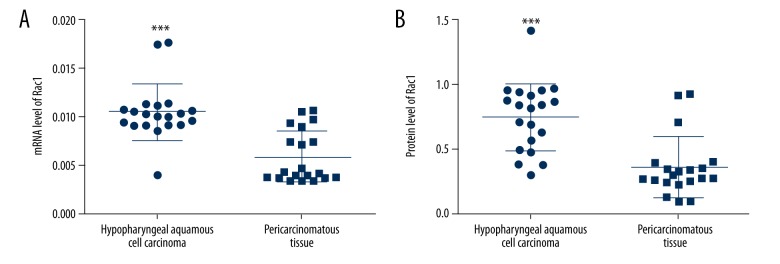
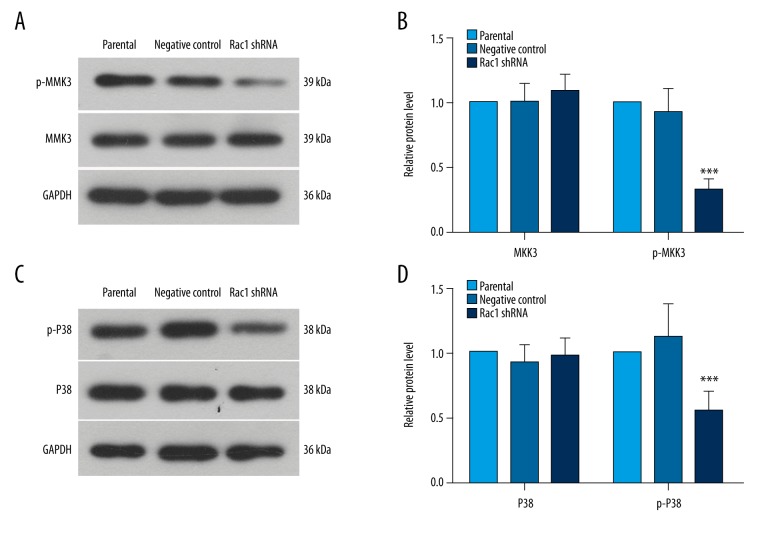
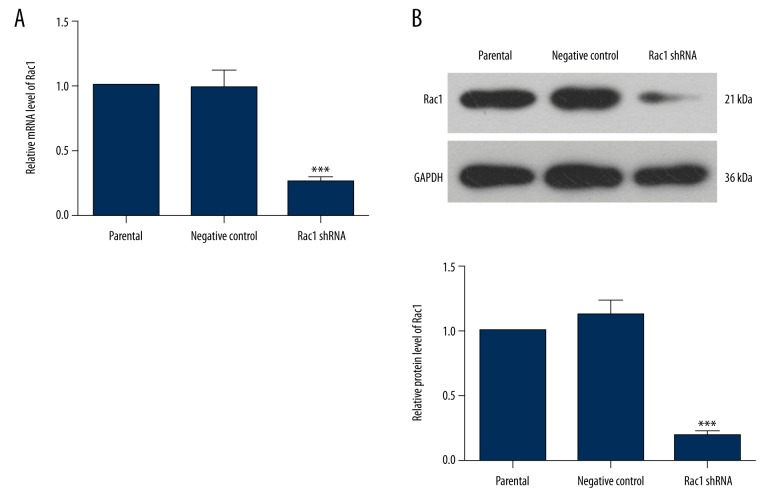
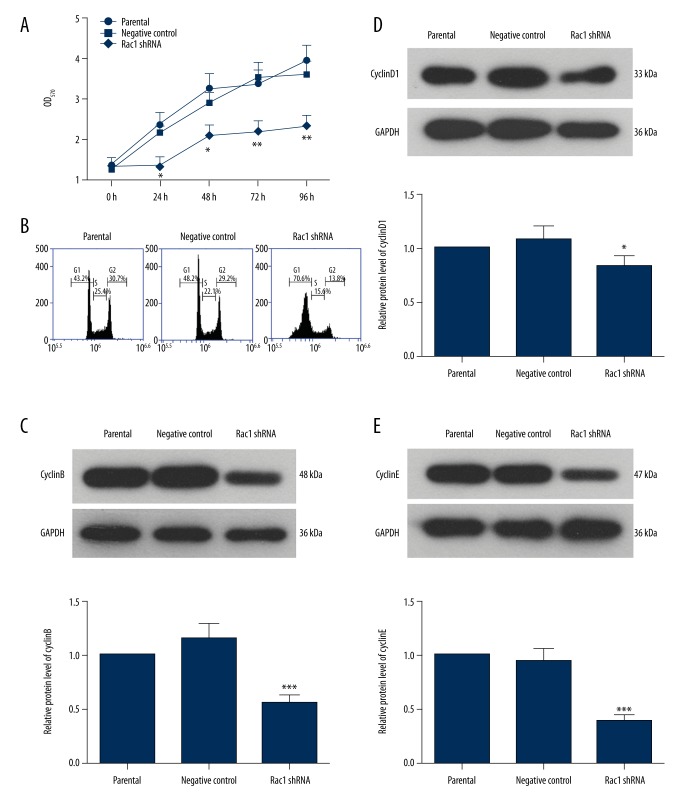
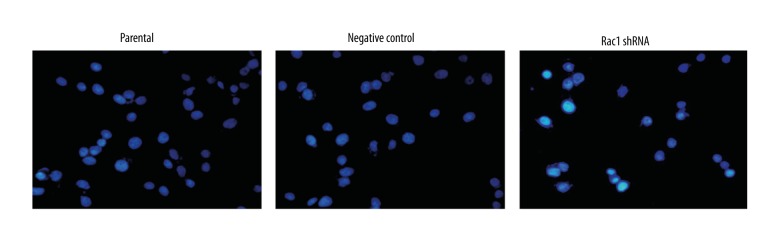
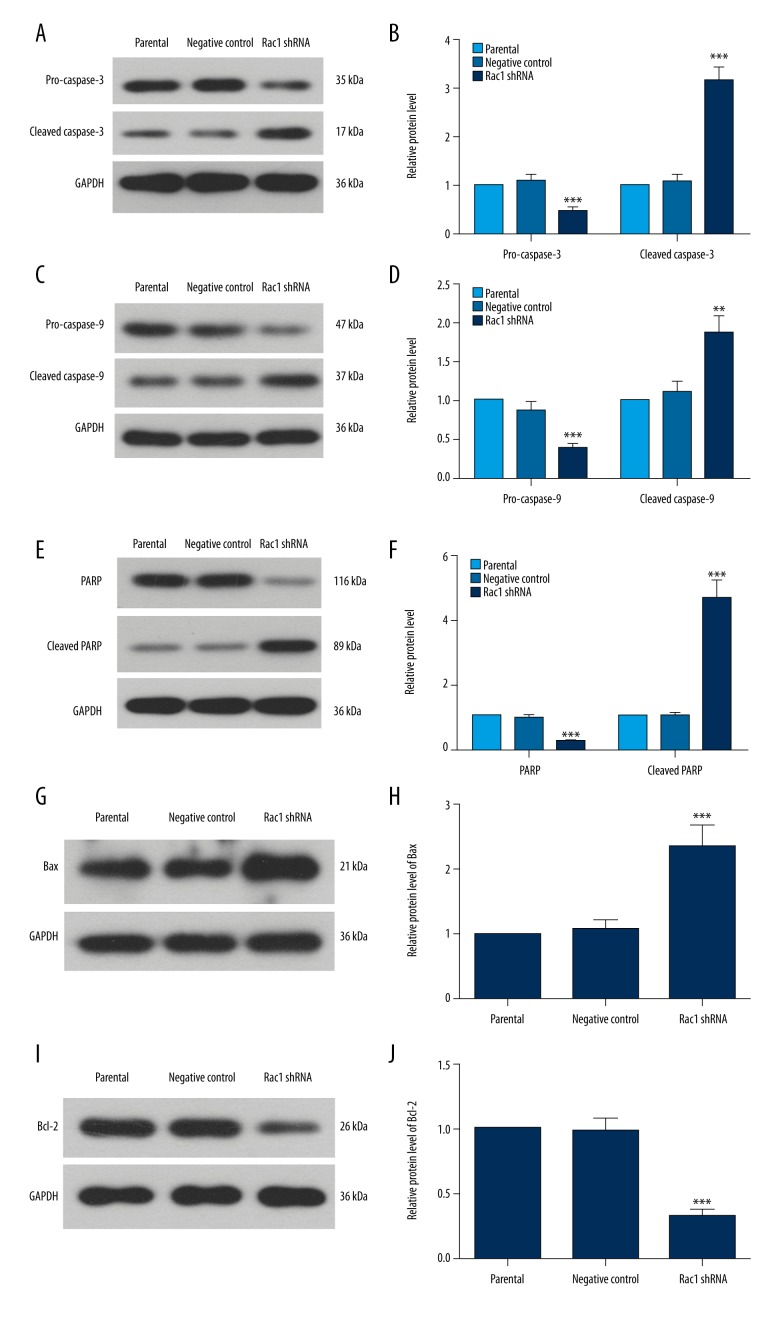
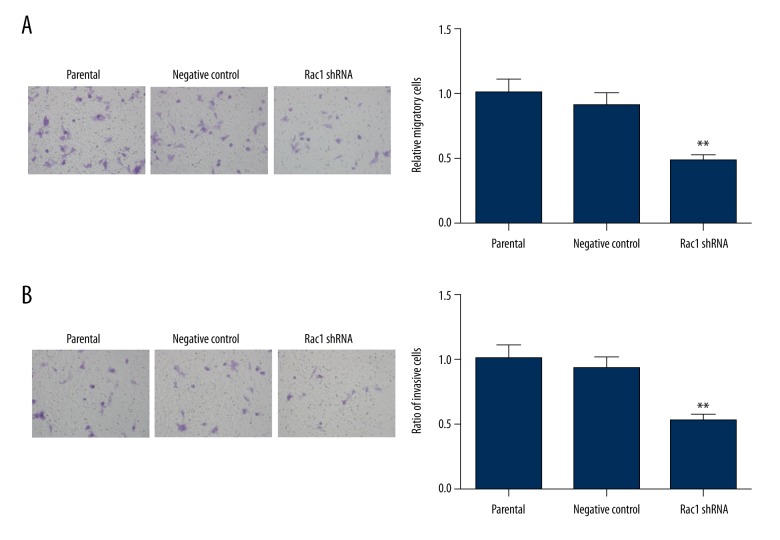
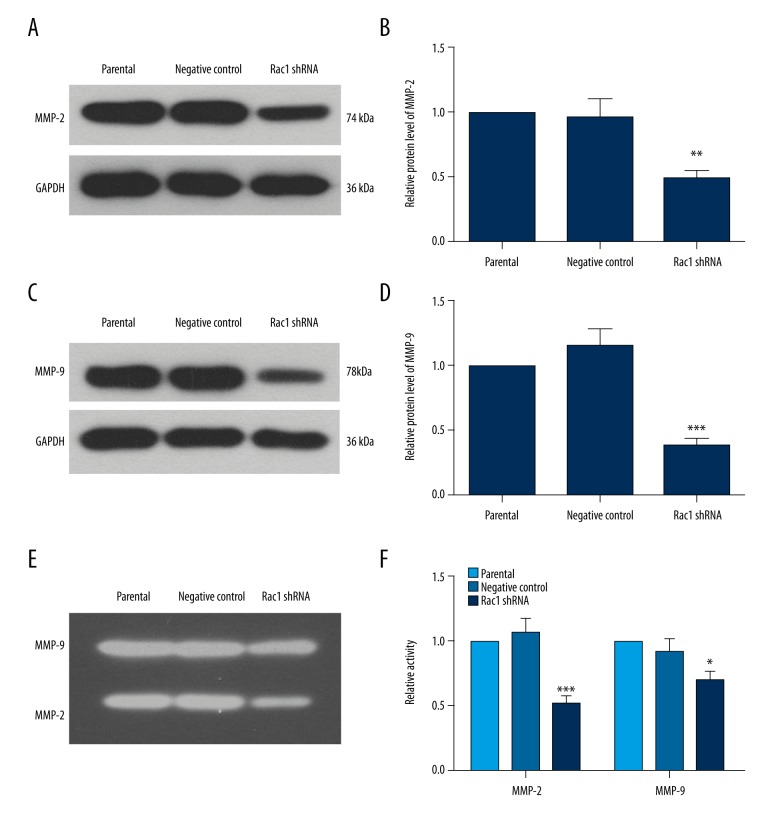
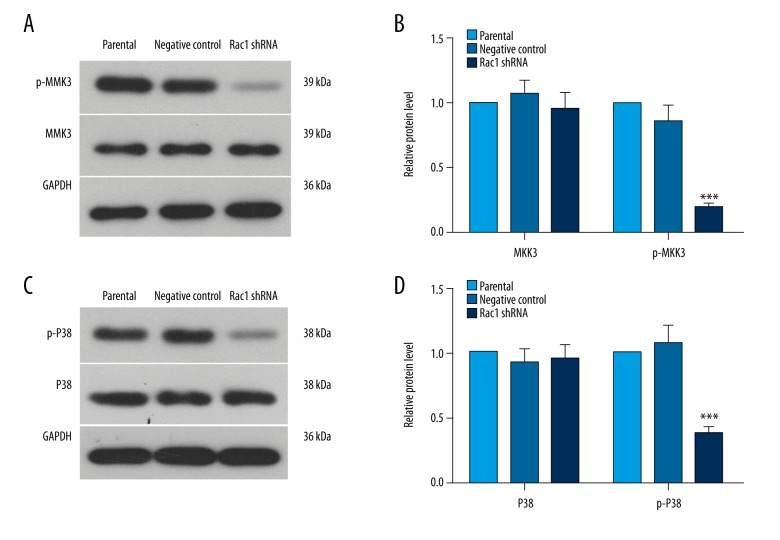
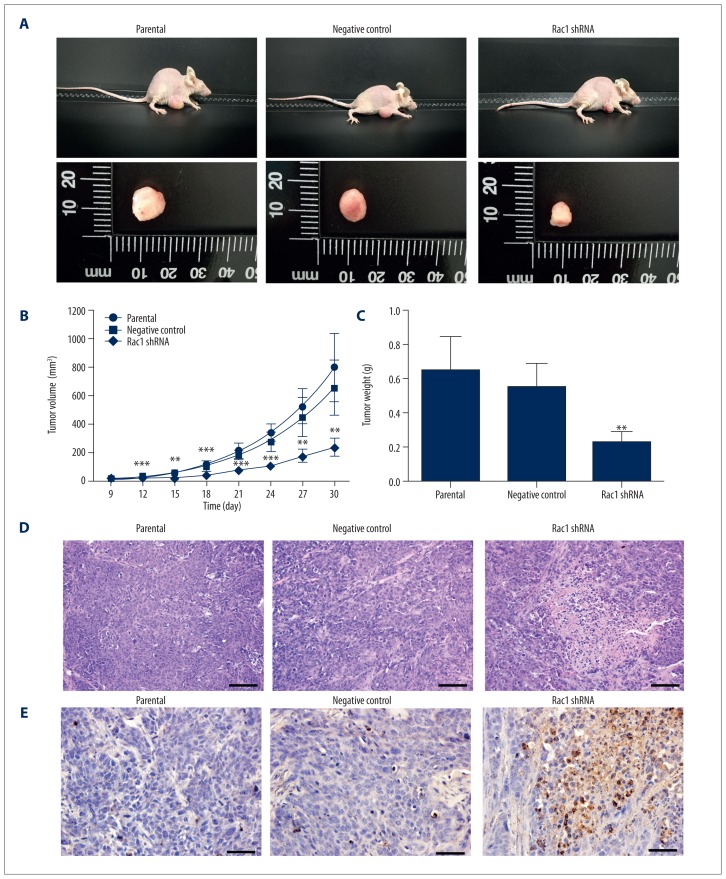
BACKGROUND Ras-related C3 botulinum toxin substrate 1 (Rac1) is implicated in a variety of cellular functions and is related to tumor growth and metastasis. This study aimed to explore the role of Rac1 in hypopharyngeal squamous cell carcinoma (HSCC). MATERIAL AND METHODS The Rac1 expression in HSCC tissues was determined by quantitative real-time polymerase chain reaction and Western blot analysis. The level of Rac1 in HSCC cells was downregulated by a Rac1-specific shRNA. Then, the growth and metastasis of HSCC cells were assessed in vitro by 3-(4,5-dimethyl-2-thiazolyl)-2,5-diphenyl-2-H-tetrazolium bromide assay, flow cytometry, Hoechst staining, and Transwell assay. Moreover, cells transfected with Rac1 shRNA or negative control were injected subcutaneously into the right axilla of mice, and then the effects of Rac1 silencing on the growth of HSCC were also explored in vivo. Additionally, activation of the P38 mitogen-activated protein kinase (MAPK) signaling pathway was assessed by Western blot. RESULTS Rac1 was highly expressed in HSCC tissues. Silencing Rac1 inhibited the proliferation and cell cycle progress of HSCC cells, and induced their apoptosis. Rac1 silencing also suppressed the migration and invasion of HSCC cells. In vivo study showed that silencing Rac1 suppressed the growth of tumor bodies. Moreover, the P38 MAPK signaling pathway was implicated in the tumor-suppressing effect of Rac1 silencing in vitro and in vivo. CONCLUSIONS Silencing Rac1 suppressed the growth and migration of HSCC through the P38 MAPK signaling pathway. Due to its contribution in HSCC, Rac1 has the potential to become a promising antitumor therapeutic target for HSCC.
Ras 相关 C3 肉毒杆菌毒素底物 1(Rac1)参与多种细胞功能,与肿瘤生长和转移有关。本研究旨在探讨 Rac1 在下咽鳞状细胞癌(HSCC)中的作用。
通过定量实时聚合酶链反应和 Western blot 分析测定 HSCC 组织中的 Rac1 表达。用 Rac1 特异性 shRNA 下调 HSCC 细胞中的 Rac1 水平。然后,通过 3-(4,5-二甲基-2-噻唑基)-2,5-二苯基-2-H-四唑溴盐测定法、流式细胞术、Hoechst 染色和 Transwell 测定法评估 HSCC 细胞的体外生长和转移。此外,将 Rac1 shRNA 或阴性对照转染的细胞皮下注射到小鼠右侧腋窝中,并在体内探索 Rac1 沉默对 HSCC 生长的影响。此外,通过 Western blot 评估 P38 丝裂原活化蛋白激酶(MAPK)信号通路的激活情况。
Rac1 在 HSCC 组织中高表达。沉默 Rac1 抑制 HSCC 细胞的增殖和细胞周期进展,并诱导其凋亡。Rac1 沉默还抑制了 HSCC 细胞的迁移和侵袭。体内研究表明,沉默 Rac1 抑制了肿瘤体的生长。此外,P38 MAPK 信号通路参与了 Rac1 沉默在体外和体内的抑瘤作用。
沉默 Rac1 通过 P38 MAPK 信号通路抑制 HSCC 的生长和迁移。由于 Rac1 在 HSCC 中的作用,它有可能成为 HSCC 有前途的抗肿瘤治疗靶点。