Laboratory of Neural Systems (SisNe), Department of Physics, University of São Paulo, Ribeirão Preto, SP, Brazil.
Center for Mathematics, Computation and Cognition, Federal University of ABC, São Bernardo do Campo, SP, Brazil.
Sci Rep. 2018 Feb 6;8(1):2480. doi: 10.1038/s41598-018-20842-y.
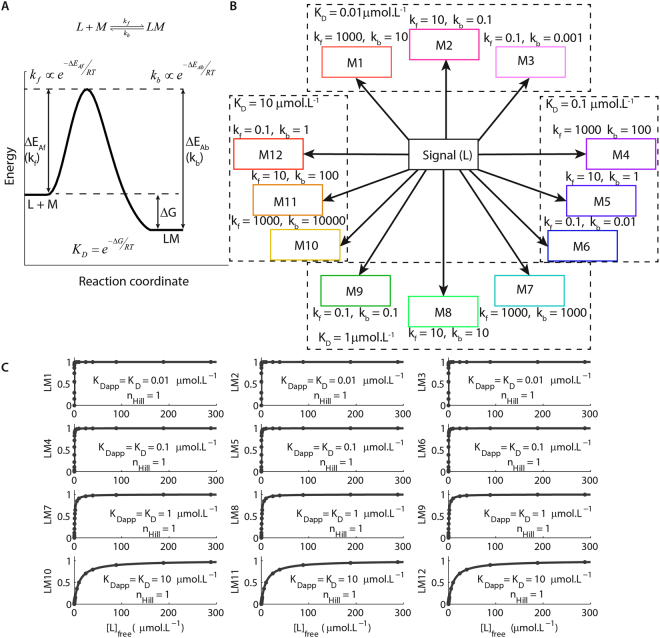
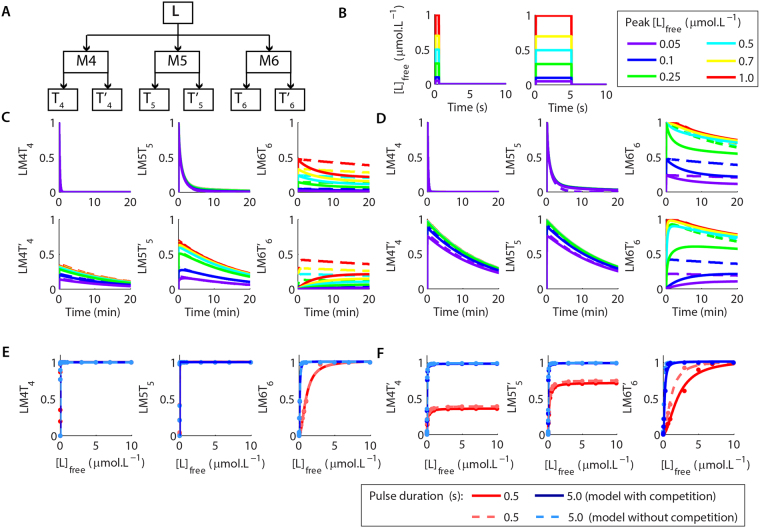
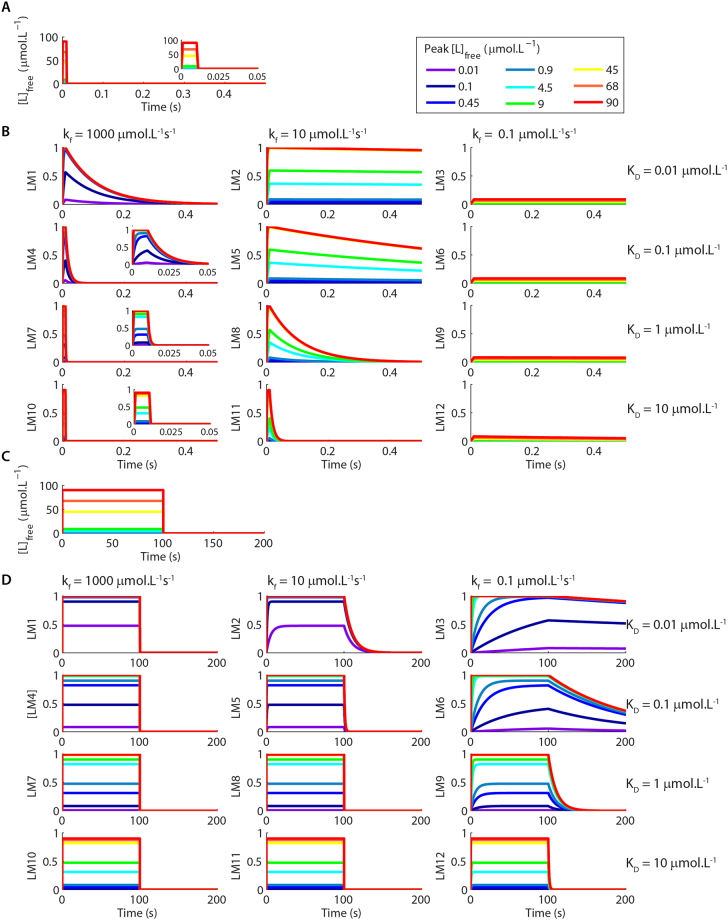
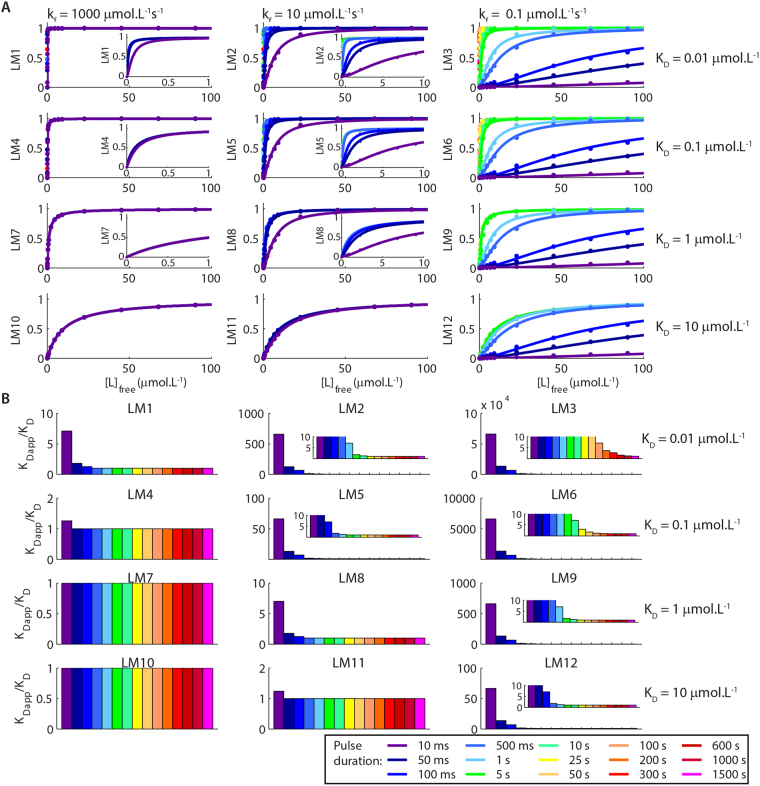
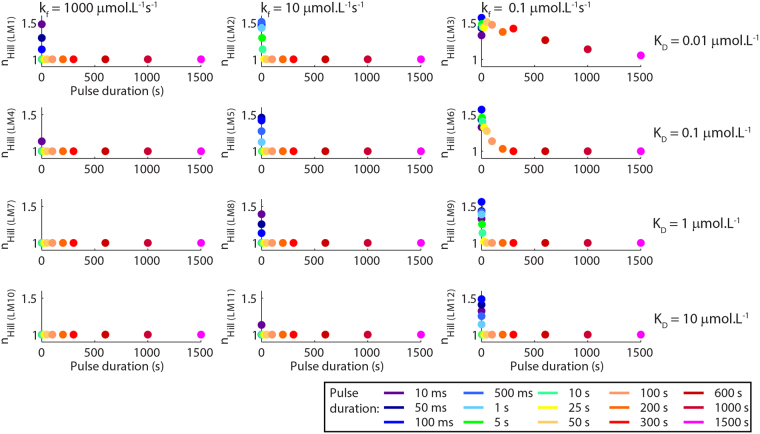
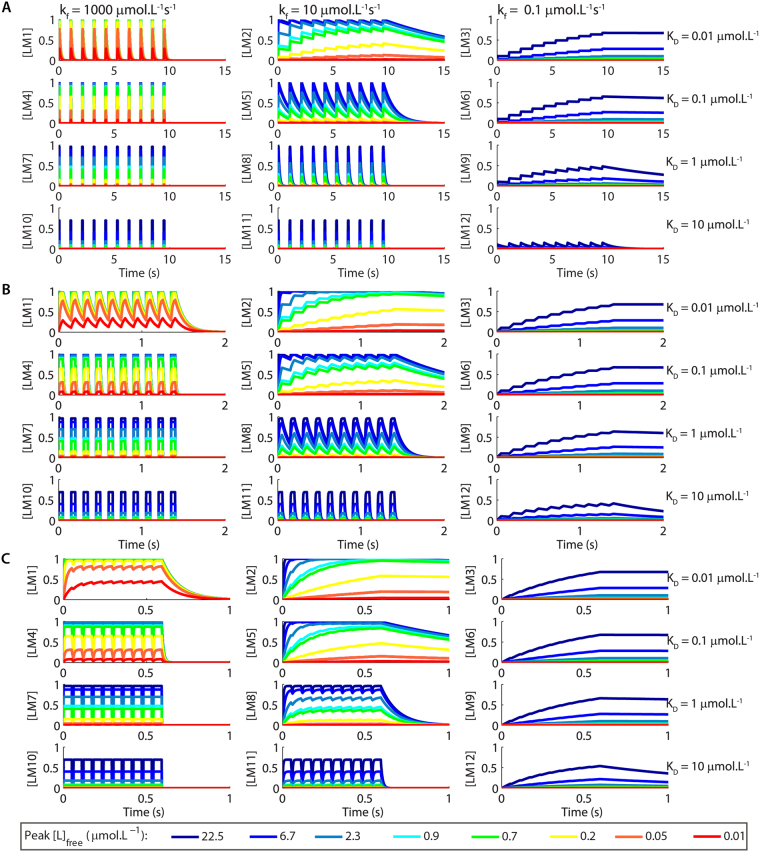
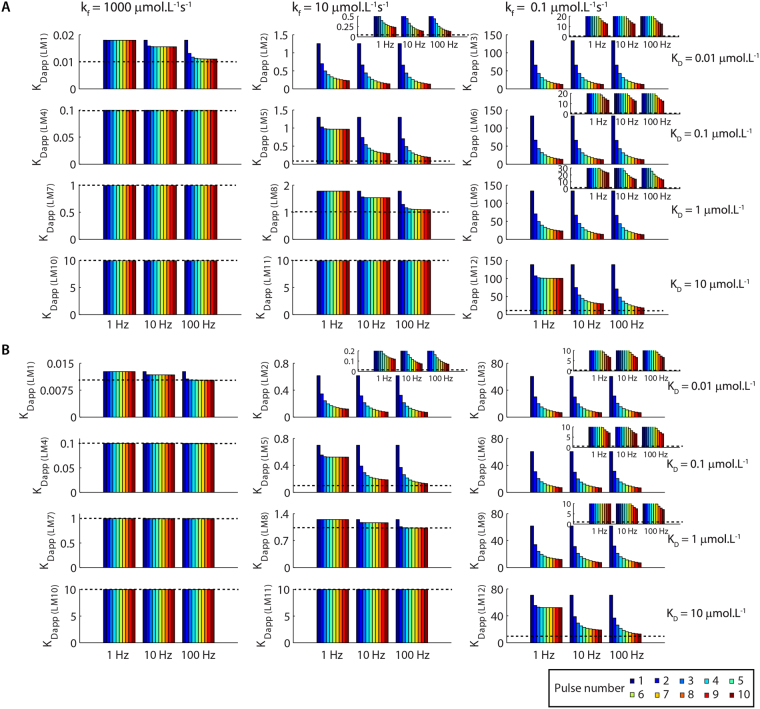
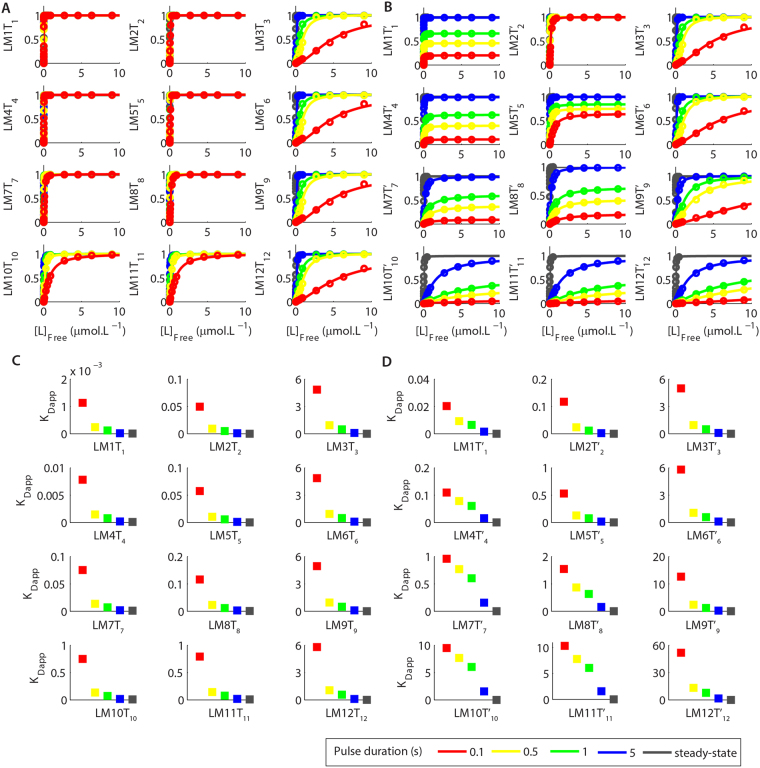
Many molecules decode not only the concentration of cellular signals, but also their temporal dynamics. However, little is known about the mechanisms that underlie the detection and discrimination of dynamic signals. We used computational modelling of the interaction of a ligand with multiple targets to investigate how kinetic and thermodynamic parameters regulate their capabilities to respond to dynamic signals. Our results demonstrated that the detection and discrimination of temporal features of signal inputs occur for reactions proceeding outside mass-action equilibrium. For these reactions, thermodynamic parameters such as affinity do not predict their outcomes. Additionally, we showed that, at non-equilibrium, the association rate constants determine the amount of product formed in reversible reactions. In contrast, the dissociation rate constants regulate the time interval required for reversible reactions to achieve equilibrium and, consequently, control their ability to detect and discriminate dynamic features of cellular signals.
许多分子不仅可以解码细胞信号的浓度,还可以解码其时间动态。然而,关于动态信号检测和区分的机制知之甚少。我们使用配体与多个靶标相互作用的计算模型来研究动力学和热力学参数如何调节它们对动态信号做出响应的能力。我们的研究结果表明,在非质量作用平衡的反应中,信号输入的时间特征的检测和区分会发生。对于这些反应,亲和力等热力学参数不能预测其结果。此外,我们还表明,在非平衡条件下,缔合速率常数决定了可逆反应中形成的产物量。相比之下,离解速率常数调节可逆反应达到平衡所需的时间间隔,从而控制它们检测和区分细胞信号时间动态的能力。