Fink David S, Santaella-Tenorio Julian, Keyes Katherine M
Department of Epidemiology, Columbia University, New York, New York, United States of America.
PLoS One. 2018 Feb 7;13(2):e0191405. doi: 10.1371/journal.pone.0191405. eCollection 2018.
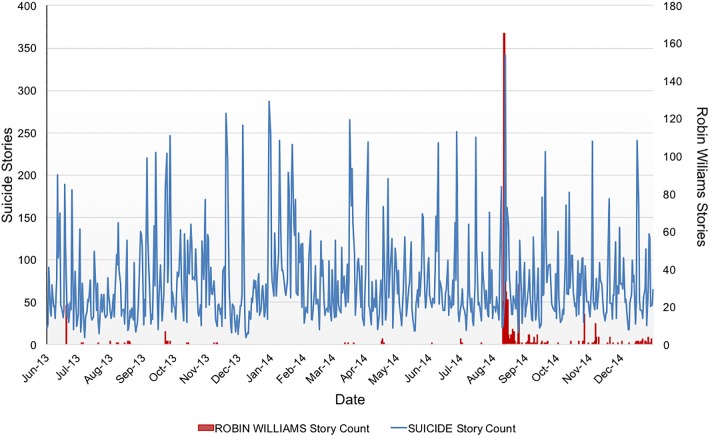
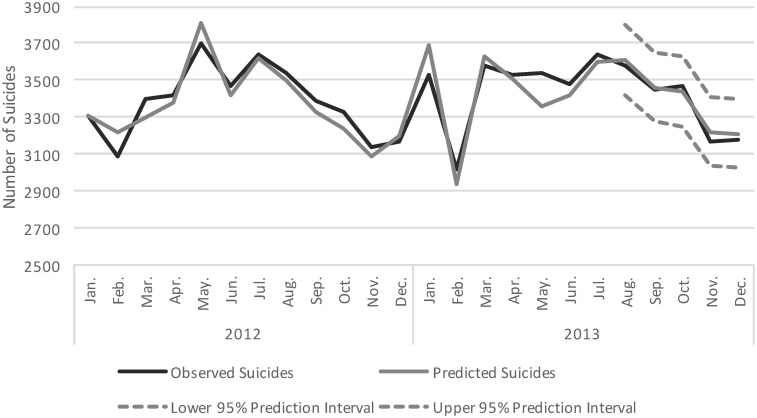
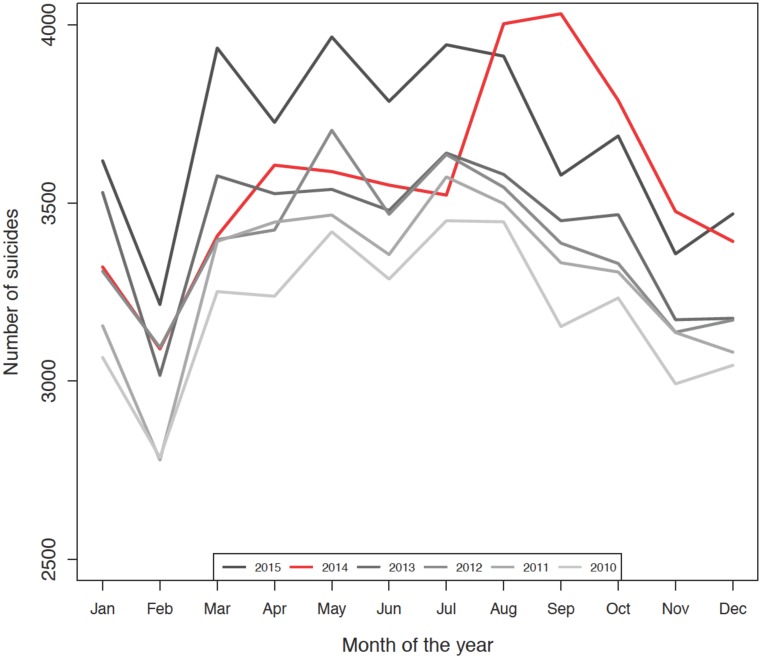
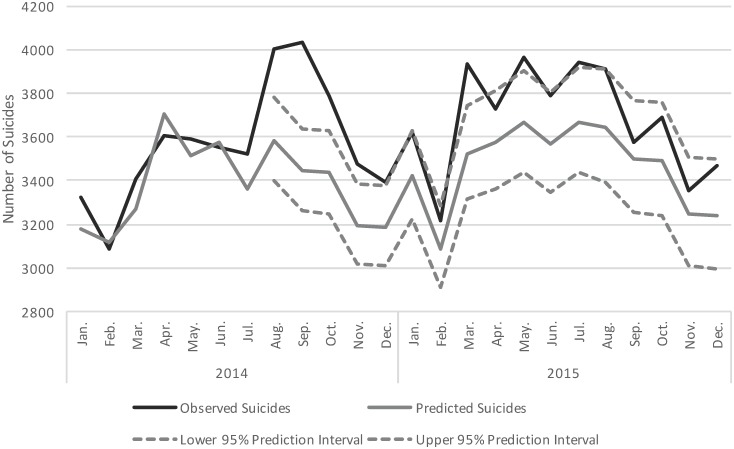
Investigating suicides following the death of Robin Williams, a beloved actor and comedian, on August 11th, 2014, we used time-series analysis to estimate the expected number of suicides during the months following Williams' death. Monthly suicide count data in the US (1999-2015) were from the Centers for Disease Control and Prevention Wide-ranging ONline Data for Epidemiologic Research (CDC WONDER). Expected suicides were calculated using a seasonal autoregressive integrated moving averages model to account for both the seasonal patterns and autoregression. Time-series models indicated that we would expect 16,849 suicides from August to December 2014; however, we observed 18,690 suicides in that period, suggesting an excess of 1,841 cases (9.85% increase). Although excess suicides were observed across gender and age groups, males and persons aged 30-44 had the greatest increase in excess suicide events. This study documents associations between Robin Williams' death and suicide deaths in the population thereafter.
在调查深受喜爱的演员兼喜剧演员罗宾·威廉姆斯于2014年8月11日去世后的自杀情况时,我们运用时间序列分析来估算威廉姆斯去世后的几个月里的预期自杀人数。美国1999年至2015年的月度自杀人数数据来自疾病控制与预防中心的广泛流行病学在线数据(CDC WONDER)。预期自杀人数通过季节性自回归积分滑动平均模型计算得出,以兼顾季节性模式和自回归因素。时间序列模型表明,2014年8月至12月我们预期会有16,849例自杀;然而,我们在该期间观察到18,690例自杀,这表明多出了1,841例(增加了9.85%)。尽管在各个性别和年龄组中都观察到了自杀人数的增加,但男性以及年龄在30至44岁之间的人群自杀人数增加幅度最大。本研究记录了罗宾·威廉姆斯的去世与之后人群中的自杀死亡之间的关联。