Department of International Health, Liverpool School of Tropical Medicine, Liverpool, United Kingdom.
Health Research and Social Development Forum, Kathmandu, Nepal.
Health Res Policy Syst. 2018 Feb 7;16(1):6. doi: 10.1186/s12961-018-0285-1.
Health workers are critical to the performance of health systems; yet, evidence about their coping strategies and support needs during and post crisis is lacking. There is very limited discussion about how research teams should respond when unexpected crises occur during on-going research. This paper critically presents the approaches and findings of two health systems research projects that explored and evaluated health worker performance and were adapted during crises, and provides lessons learnt on re-orientating research when the unexpected occurs.
Health systems research was adapted post crisis to assess health workers' experiences and coping strategies. Qualitative in-depth interviews were conducted with 14 health workers in a heavily affected earthquake district in Nepal and 25 frontline health workers in four districts in Ebola-affected Sierra Leone. All data were transcribed and analysed using the framework approach, which included developing coding frameworks for each study, applying the frameworks, developing charts and describing the themes. A second layer of analysis included analysis across the two contexts, whereas a third layer involved the research teams reflecting on the approaches used to adapt the research during these crises and what was learned as individuals and research teams.
In Sierra Leone, health workers were heavily stigmatised by the epidemic, leading to a breakdown of trust. Coping strategies included finding renewed purpose in continuing to serve their community, peer and family support (in some cases), and religion. In Nepal, individual determination, a sense of responsibility to the community and professional duty compelled staff to stay or return to their workplace. The research teams had trusting relationships with policy-makers and practitioners, which brought credibility and legitimacy to the change of research direction as well as the relationships to maximise the opportunity for findings to inform practice.
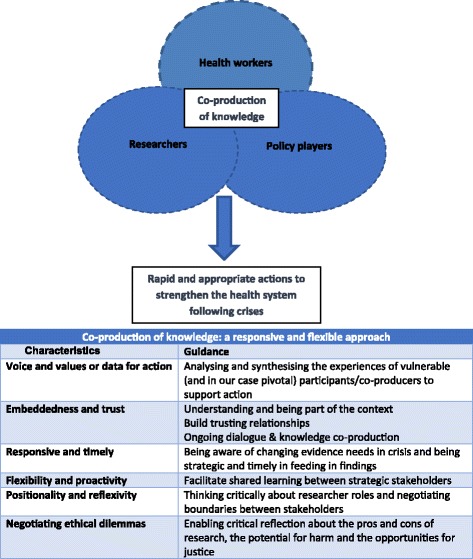
In both contexts, health workers demonstrated considerable resilience in continuing to provide services despite limited support. Embedded researchers and institutions are arguably best placed to navigate emerging ethical and social justice challenges and are strategically positioned to support the co-production of knowledge and ensure research findings have impact.
卫生工作者是卫生系统运作的关键;然而,在危机期间和之后,关于他们的应对策略和支持需求的证据却很缺乏。在研究过程中发生意外危机时,研究团队应该如何应对,这方面的讨论非常有限。本文批判性地介绍了两项卫生系统研究项目的方法和发现,这两个项目在危机期间探索和评估了卫生工作者的表现,并对其进行了调整,并就意外情况发生时如何重新调整研究方向提供了经验教训。
在危机后,对卫生系统研究进行了调整,以评估卫生工作者的经验和应对策略。在尼泊尔受地震严重影响的一个地区,对 14 名卫生工作者进行了深入的定性访谈;在塞拉利昂受埃博拉疫情影响的四个地区,对 25 名一线卫生工作者进行了访谈。所有数据都经过转录,并使用框架方法进行分析,该方法包括为每项研究制定编码框架,应用框架,制作图表和描述主题。第二层分析包括对两个背景进行分析,第三层则涉及研究团队反思在这些危机中适应研究的方法以及个人和研究团队从中获得的经验。
在塞拉利昂,卫生工作者受到疫情的严重污名化,导致信任破裂。应对策略包括在继续为社区、同行和家人提供服务中找到新的目标(在某些情况下),以及依靠宗教。在尼泊尔,个人的决心、对社区的责任感和职业职责促使员工留在或返回工作场所。研究团队与政策制定者和实践者建立了互相信任的关系,这为改变研究方向以及建立关系以最大程度地为实践提供研究结果提供了可信度和合法性。
在这两种情况下,卫生工作者都表现出了相当大的韧性,尽管支持有限,但仍继续提供服务。嵌入式研究人员和机构可以说是应对新出现的伦理和社会正义挑战的最佳人选,他们处于战略位置,可以支持知识的共同生产,并确保研究结果产生影响。