Raven Joanna, Akweongo Patricia, Baba Amuda, Baine Sebastian Olikira, Sall Mohamadou Guelaye, Buzuzi Stephen, Martineau Tim
Department of International Public Health, Liverpool School of Tropical Medicine, Liverpool, UK.
School of Public Health, University of Ghana, Accra, Ghana.
Hum Resour Health. 2015 Sep 1;13:45. doi: 10.1186/s12960-015-0034-2.
Like any other health worker, community health workers (CHWs) need to be supported to ensure that they are able to contribute effectively to health programmes. Management challenges, similar to those of managing any other health worker, relate to improving attraction, retention and performance.
Exploratory case studies of CHW programmes in the Democratic Republic of Congo, Ghana, Senegal, Uganda and Zimbabwe were conducted to provide an understanding of the practices for supporting and managing CHWs from a multi-actor perspective. Document reviews (n = 43), in-depth interviews with programme managers, supervisors and community members involved in managing CHWs (n = 31) and focus group discussions with CHWs (n = 13) were conducted across the five countries. Data were transcribed, translated and analysed using the framework approach.
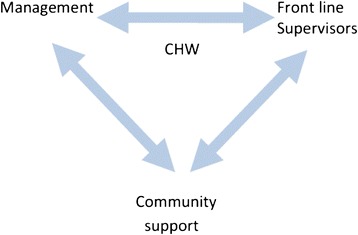
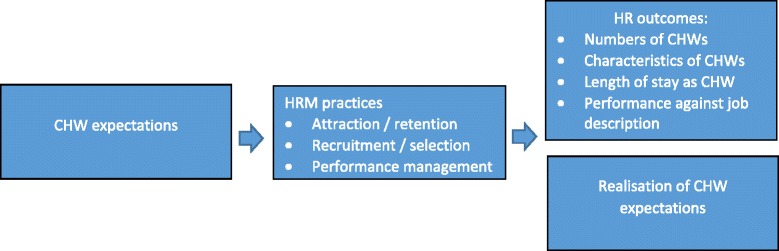
CHWs had many expectations of their role in healthcare, including serving the community, enhancing skills, receiving financial benefits and their role as a CHW fitting in with their other responsibilities. Many human resource management (HRM) practices are employed, but how well they are implemented, the degree to which they meet the expectations of the CHWs and their effects on human resource (HR) outcomes vary across contexts. Front-line supervisors, such as health centre nurses and senior CHWs, play a major role in the management of CHWs and are central to the implementation of HRM practices. On the other hand, community members and programme managers have little involvement with managing the CHWs.
This study highlighted that CHW expectations are not always met through HRM practices. This paper calls for a coordinated HRM approach to support CHWs, whereby HRM practices are designed to not only address expectations but also ensure that the CHW programme meets its goals. There is a need to work with all three groups of management actors (front-line supervisors, programme managers and community members) to ensure the use of an effective HRM approach. A larger multi-country study is needed to test an HRM approach that integrates context-appropriate strategies and coordinates relevant management actors. Ensuring that CHWs are adequately supported is vital if CHWs are to fulfil the critical role that they can play in improving the health of their communities.
与其他卫生工作者一样,社区卫生工作者(CHWs)需要得到支持,以确保他们能够有效地为卫生项目做出贡献。管理方面的挑战与管理其他卫生工作者类似,涉及提高吸引力、留用率和绩效。
对刚果民主共和国、加纳、塞内加尔、乌干达和津巴布韦的社区卫生工作者项目进行探索性案例研究,以便从多行为体角度了解支持和管理社区卫生工作者的做法。在这五个国家开展了文献回顾(n = 43)、对参与管理社区卫生工作者的项目管理人员、督导人员和社区成员进行深入访谈(n = 31)以及与社区卫生工作者进行焦点小组讨论(n = 13)。使用框架方法对数据进行转录、翻译和分析。
社区卫生工作者对其在医疗保健中的角色有诸多期望,包括服务社区、提升技能、获得经济收益以及其作为社区卫生工作者的角色与其其他职责相契合。采用了许多人力资源管理(HRM)做法,但这些做法的实施效果、满足社区卫生工作者期望的程度以及对人力资源(HR)成果的影响因情况而异。一线督导人员,如卫生中心护士和资深社区卫生工作者,在社区卫生工作者的管理中发挥着主要作用,并且是人力资源管理做法实施的核心。另一方面,社区成员和项目管理人员很少参与社区卫生工作者的管理。
本研究强调,人力资源管理做法并不总能满足社区卫生工作者的期望。本文呼吁采用协调一致的人力资源管理方法来支持社区卫生工作者,即人力资源管理做法的设计不仅要满足期望,还要确保社区卫生工作者项目实现其目标。需要与所有三组管理行为体(一线督导人员、项目管理人员和社区成员)合作,以确保采用有效的人力资源管理方法。需要开展一项更大规模的多国研究,以测试一种整合适合具体情况的策略并协调相关管理行为体的人力资源管理方法。如果社区卫生工作者要发挥其在改善社区健康方面所能发挥的关键作用,确保他们得到充分支持至关重要。