Kishida Shigefumi, Kato-Mori Yuko, Hagiwara Katsuro
School of Veterinary Medicine, Rakuno Gakuen University, Ebetsu, Hokkaido 069-8501 Japan.
Graduate School of Science, Technology and Innovation, Kobe University, Hyogo 657-8501, Japan.
J Vet Med Sci. 2018 Mar 24;80(3):440-446. doi: 10.1292/jvms.17-0485. Epub 2018 Feb 8.
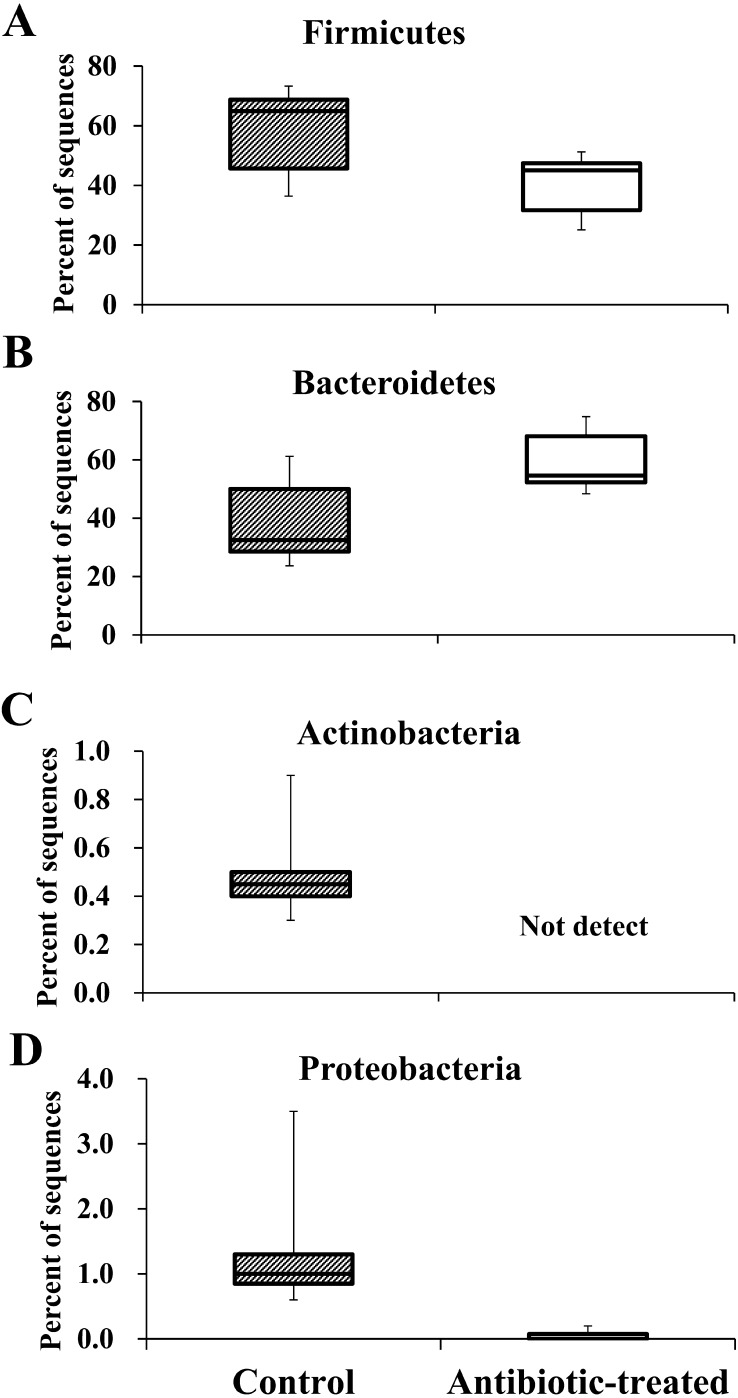
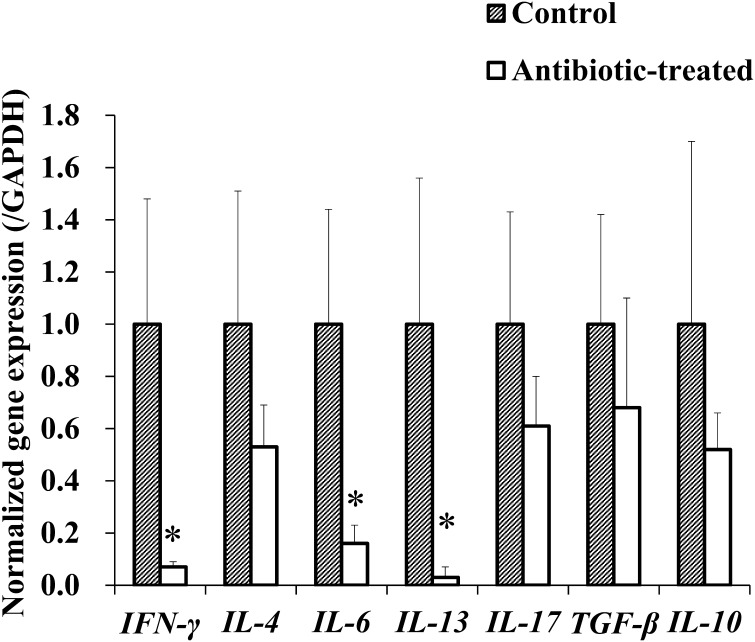
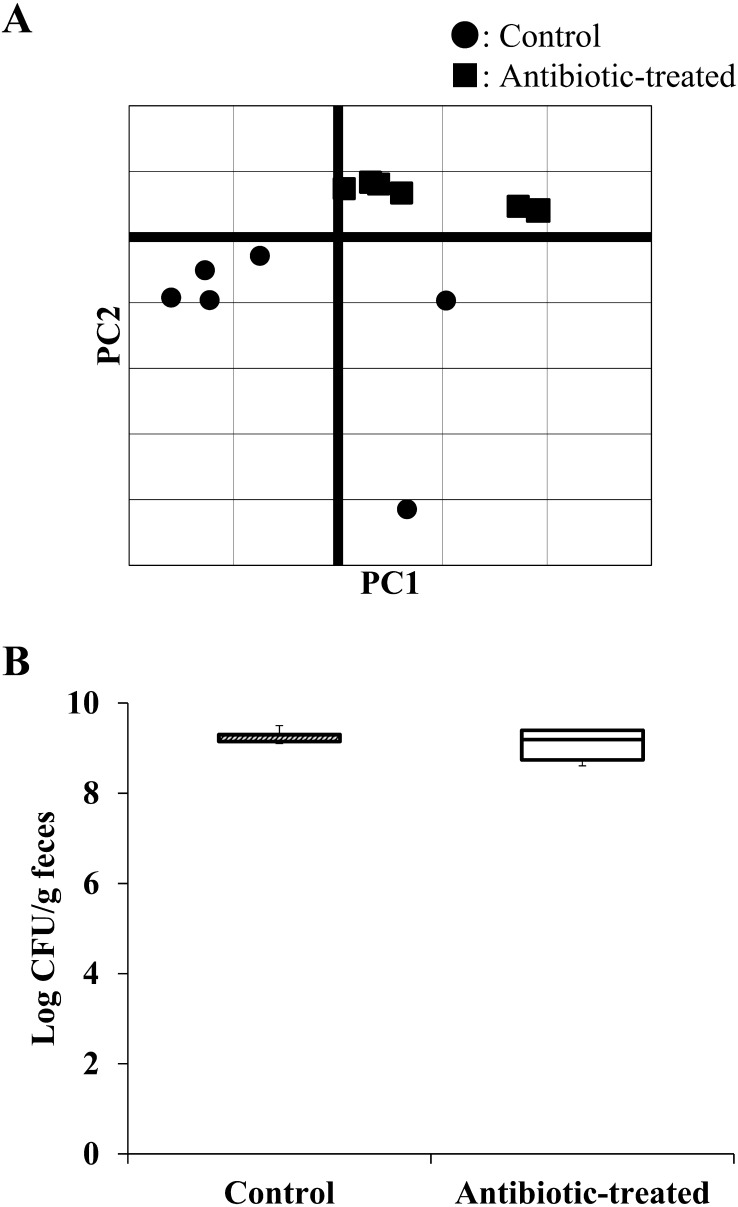
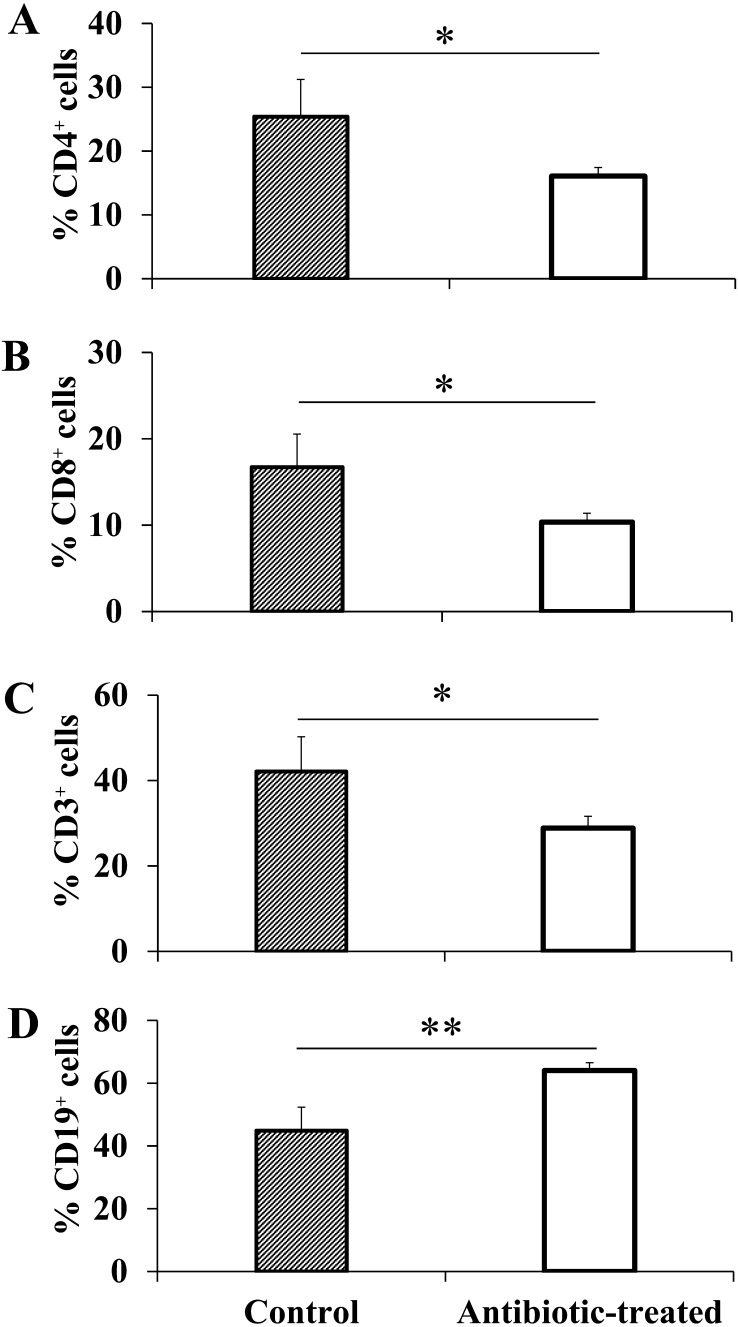
The composition of the intestinal microbiota is related to the health and immune function of the host. Administration of antibiotics affects the composition of the intestinal microbiota. However, the effects of immune function on the composition of the intestinal microbiota are still unclear. In this study, we investigated the lymphocyte composition and determined the relationships between lymphocyte function and the intestinal microbiota following antibiotic treatment in mice. To change the composition of the intestinal microbiota, mice were treated with or without antibiotics. Analysis of intestinal microbiota was performed by metagenomic analysis targeting 16S rRNA. Lymphocyte subsets of splenocytes were measured by flow cytometry. For functional analysis of T cells, splenocytes were stimulated with concanavalin (Con A), and cytokine gene expression was measured by real-time polymerase chain reaction. Firmicutes were predominant in the control group, whereas Bacteroidetes predominated in the antibiotic-treated group, as determined by metagenomic analysis. The diversity of the microbiota decreased in the antibiotic-treated group. Analysis of lymphocyte subsets showed that CD3 cells decreased, whereas CD19 cells increased in the antibiotic-treated group. All cytokine genes in splenocytes treated with Con A were downregulated in the antibiotic-treated group; in particular, genes encoding interferon-γ, interleukin (IL)-6, and IL-13 significantly decreased. Taken together, these results revealed that changes in the composition of the intestinal microbiota by antibiotic treatment influenced the population of lymphocytes in splenocytes and affected the immune response.
肠道微生物群的组成与宿主的健康和免疫功能相关。抗生素的使用会影响肠道微生物群的组成。然而,免疫功能对肠道微生物群组成的影响仍不清楚。在本研究中,我们调查了淋巴细胞组成,并确定了小鼠抗生素治疗后淋巴细胞功能与肠道微生物群之间的关系。为了改变肠道微生物群的组成,对小鼠进行了有无抗生素治疗。通过针对16S rRNA的宏基因组分析进行肠道微生物群分析。通过流式细胞术测量脾细胞的淋巴细胞亚群。为了对T细胞进行功能分析,用伴刀豆球蛋白(Con A)刺激脾细胞,并通过实时聚合酶链反应测量细胞因子基因表达。宏基因组分析确定,对照组中厚壁菌门占主导,而抗生素治疗组中拟杆菌门占主导。抗生素治疗组中微生物群的多样性降低。淋巴细胞亚群分析表明,抗生素治疗组中CD3细胞减少,而CD19细胞增加。用Con A处理的脾细胞中的所有细胞因子基因在抗生素治疗组中均下调;特别是,编码干扰素-γ、白细胞介素(IL)-6和IL-13的基因显著减少。综上所述,这些结果表明抗生素治疗引起的肠道微生物群组成变化影响了脾细胞中淋巴细胞的数量,并影响了免疫反应。