Life and Medical Sciences (LIMES) Institute, Chemical Biology & Medicinal Chemistry Unit, c/o Kekulé Institute of Organic Chemistry and Biochemistry, Gerhard-Domagk-Strasse 1, 53121, Bonn, Germany.
Stiftung Caesar, Max-Planck-Fellowship Group Chemical Biology, Ludwig-Erhard-Allee 2, 53175, Bonn, Germany.
Nat Commun. 2018 Feb 7;9(1):535. doi: 10.1038/s41467-018-02929-2.
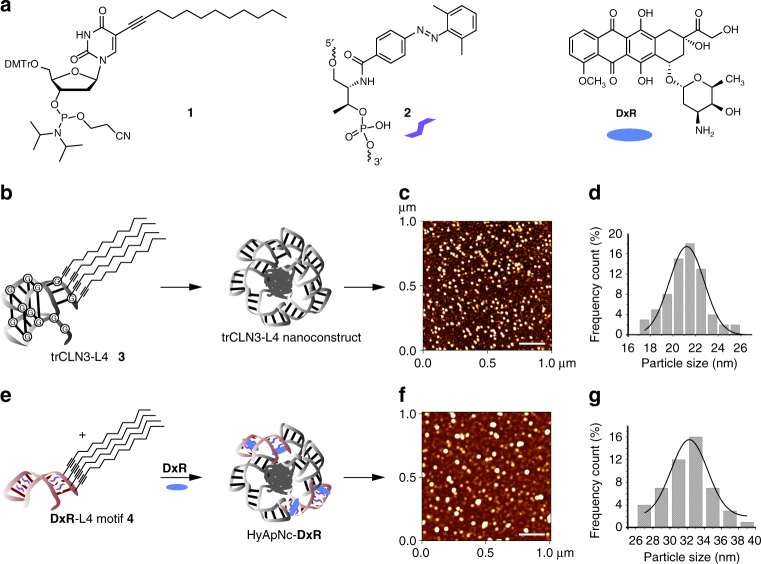
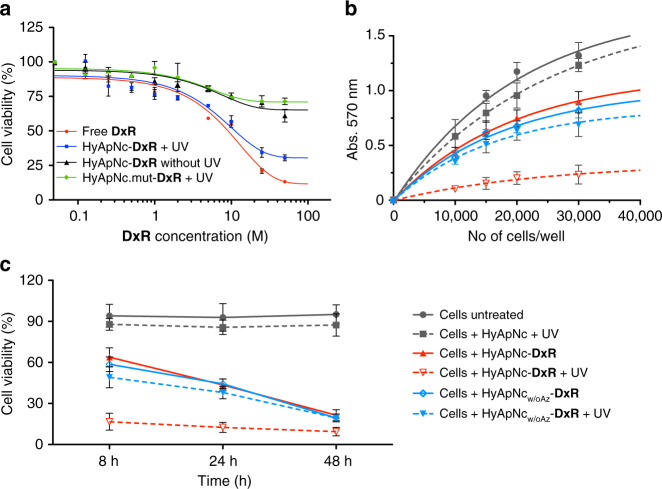
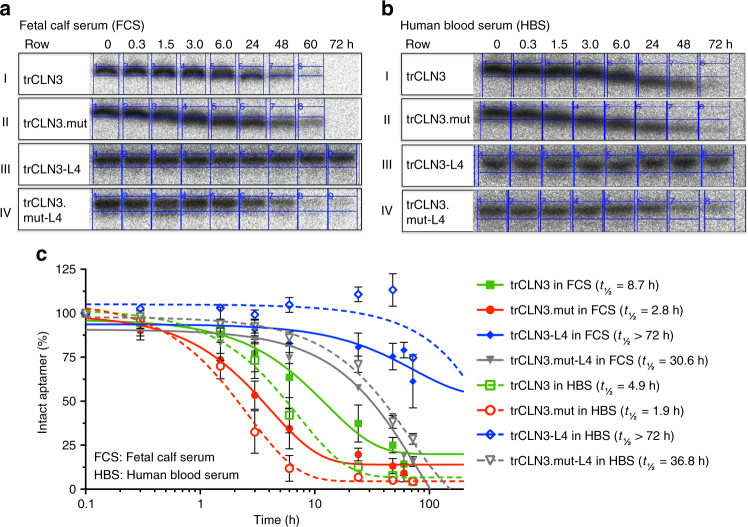
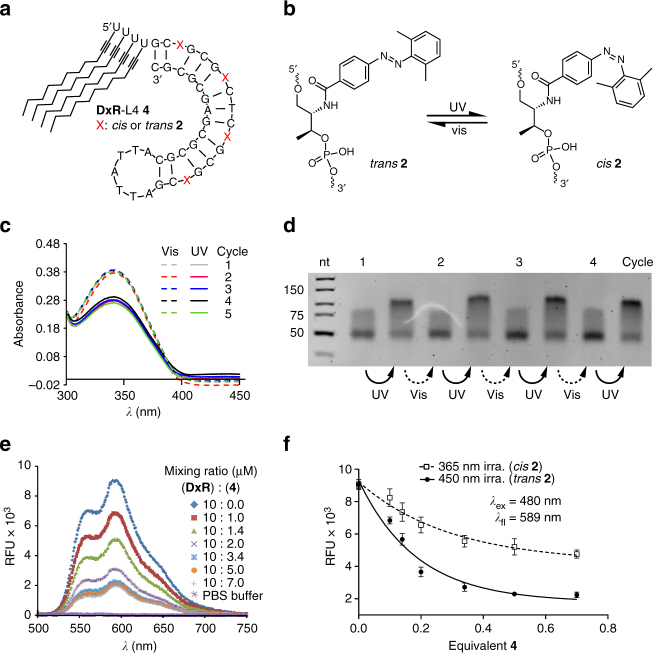
Platforms for targeted drug-delivery must simultaneously exhibit serum stability, efficient directed cell internalization, and triggered drug release. Here, using lipid-mediated self-assembly of aptamers, we combine multiple structural motifs into a single nanoconstruct that targets hepatocyte growth factor receptor (cMet). The nanocarrier consists of lipidated versions of a cMet-binding aptamer and a separate lipidated GC-rich DNA hairpin motif loaded with intercalated doxorubicin. Multiple 2',6'-dimethylazobenzene moieties are incorporated into the doxorubicin-binding motif to trigger the release of the chemotherapeutics by photoisomerization. The lipidated DNA scaffolds self-assemble into spherical hybrid-nanoconstructs that specifically bind cMet. The combined features of the nanocarriers increase serum nuclease resistance, favor their import into cells presumably mediated by endocytosis, and allow selective photo-release of the chemotherapeutic into the targeted cells. cMet-expressing H1838 tumor cells specifically internalize drug-loaded nanoconstructs, and subsequent UV exposure enhances cell mortality. This modular approach thus paves the way for novel classes of powerful aptamer-based therapeutics.
靶向药物输送平台必须同时具有血清稳定性、高效靶向细胞内化和触发药物释放的功能。在这里,我们使用适体介导的脂质自组装,将多个结构基序组合成一个单一的纳米结构,该纳米结构靶向肝细胞生长因子受体 (cMet)。纳米载体由与 cMet 结合的适体的脂质化版本和单独的脂质化富含 GC 的 DNA 发夹基序组成,该基序装载有嵌入的阿霉素。多个 2',6'-二甲基偶氮苯基团被掺入到阿霉素结合基序中,通过光异构化触发化学治疗药物的释放。脂质化 DNA 支架自组装成特异性结合 cMet 的球形杂化纳米结构。纳米载体的综合特性增加了血清核酸酶的抗性,有利于它们通过内吞作用进入细胞,并且允许将化学治疗药物选择性地释放到靶向细胞中。表达 cMet 的 H1838 肿瘤细胞特异性内化载药纳米结构,随后的 UV 暴露增强了细胞死亡率。这种模块化方法为新型强大的基于适体的治疗方法铺平了道路。