Hunter Mandana, Demarais Nicholas J, Faull Richard L M, Grey Angus C, Curtis Maurice A
Centre for Brain Research, University of Auckland, Auckland, 1023, New Zealand.
Department of Pharmacology and Clinical Pharmacology, Faculty of Medical and Health Sciences, University of Auckland, Auckland, 1023, New Zealand.
Sci Rep. 2018 Feb 7;8(1):2551. doi: 10.1038/s41598-018-20793-4.
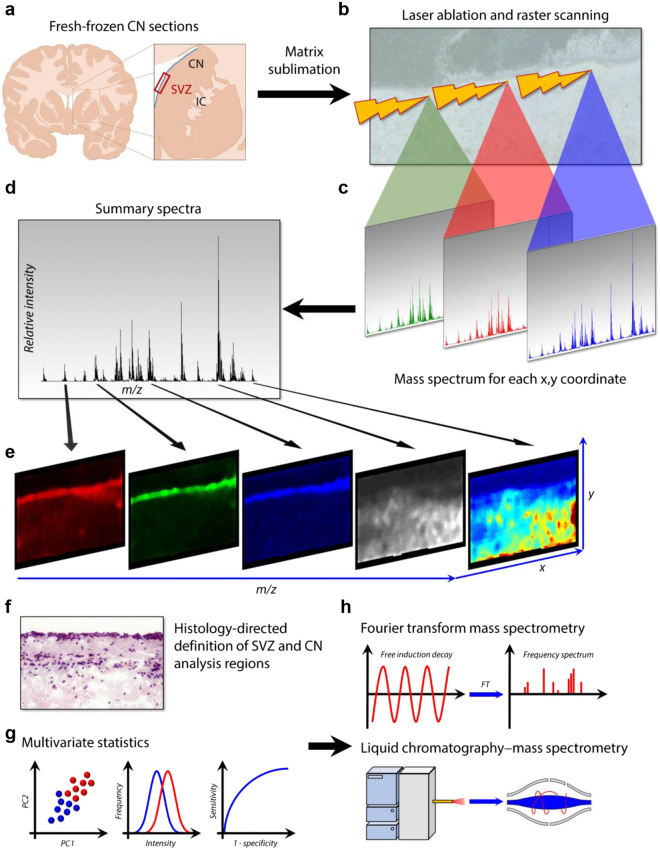
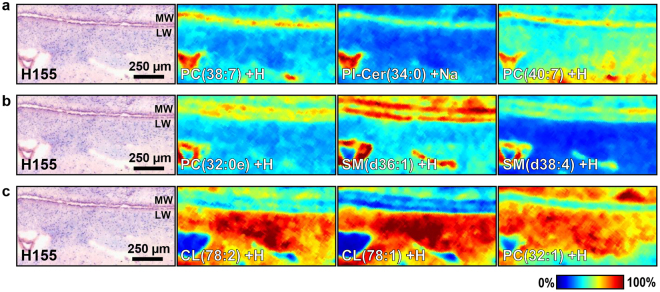
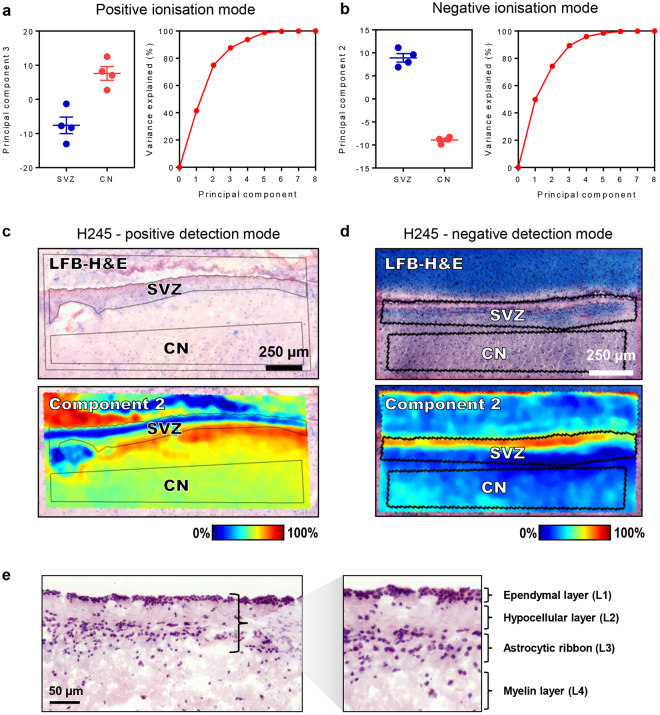
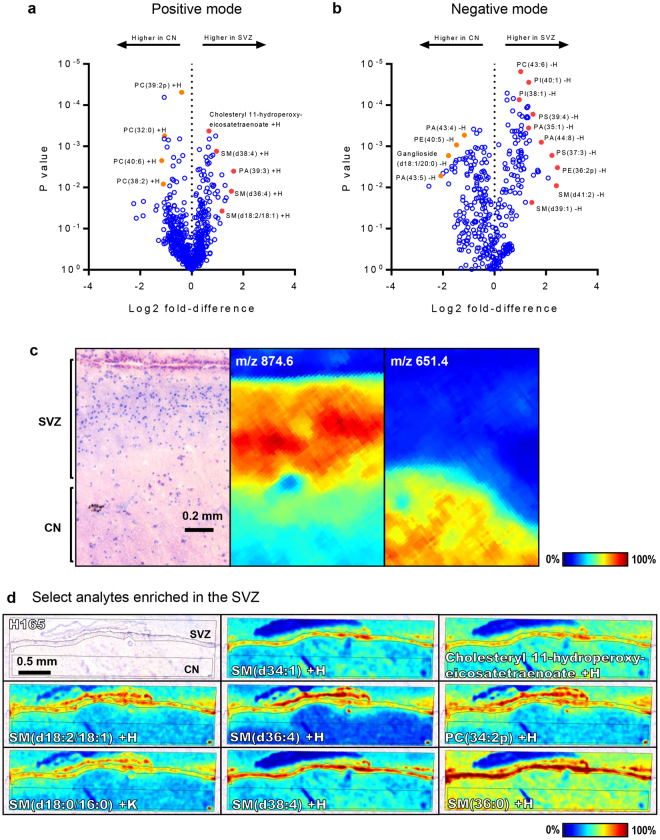
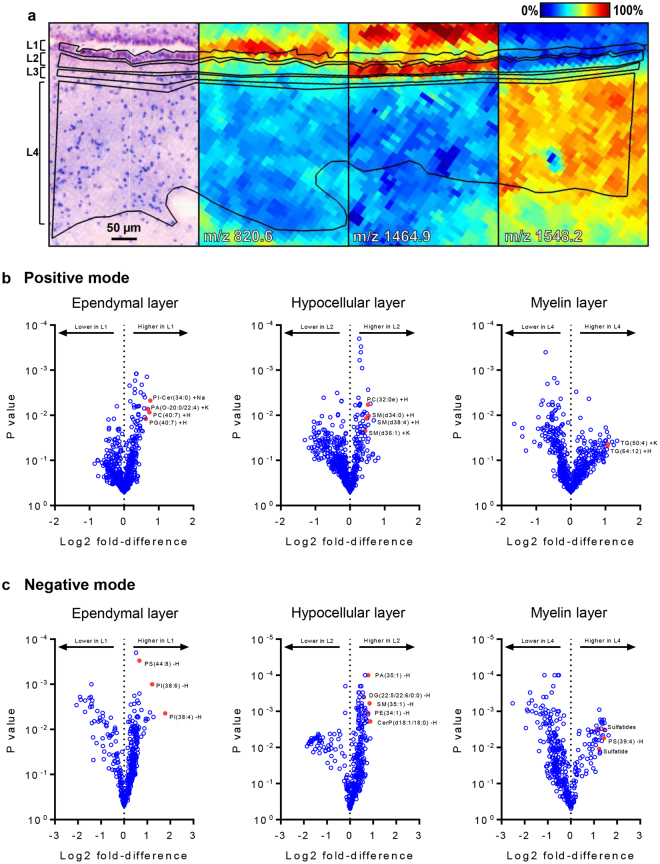
The subventricular zone is a key site of adult neurogenesis and is also implicated in neurodegenerative diseases and brain cancers. In the subventricular zone, cell proliferation, migration and differentiation of nascent stem cells and neuroblasts are regulated at least in part by lipids. The human subventricular zone is distinctly layered and each layer contains discrete cell types that support the processes of neuroblast migration and neurogenesis. We set out to determine the lipid signatures of each subventricular layer in the adult human brain (n = 4). We utilised matrix-assisted laser desorption/ionisation (MALDI) imaging mass spectrometry and liquid chromatography-mass spectrometry to characterise the lipidome of the subventricular zone, with histology and microscopy used for identifying anatomical landmarks. Our findings showed that the subventricular zone was rich in sphingomyelins and phosphatidylserines but deficient in phosphatidylethanolamines. The ependymal layer had an abundance of phosphatidylinositols, whereas the myelin layer was rich in sulfatides and triglycerides. The hypocellular layer showed enrichment of sphingomyelins. No discrete lipid signature was seen in the astrocytic ribbon. The biochemical functions of these lipid classes are consistent with the localisation we observed within the SVZ. Our study may, therefore, shed new light on the role of lipids in the regulation of adult neurogenesis.
脑室下区是成体神经发生的关键部位,也与神经退行性疾病和脑癌有关。在脑室下区,新生干细胞和神经母细胞的细胞增殖、迁移和分化至少部分受脂质调节。人类脑室下区具有明显的分层,每层包含不同的细胞类型,这些细胞类型支持神经母细胞迁移和神经发生过程。我们着手确定成人大脑(n = 4)中每个脑室下层的脂质特征。我们利用基质辅助激光解吸/电离(MALDI)成像质谱和液相色谱-质谱来表征脑室下区的脂质组,并使用组织学和显微镜技术来识别解剖学标志。我们的研究结果表明,脑室下区富含鞘磷脂和磷脂酰丝氨酸,但磷脂酰乙醇胺含量不足。室管膜层富含磷脂酰肌醇,而髓鞘层富含硫脂和甘油三酯。细胞稀少层显示鞘磷脂富集。在星形胶质细胞带中未观察到离散的脂质特征。这些脂质类别的生化功能与我们在脑室下区观察到的定位一致。因此,我们的研究可能为脂质在成体神经发生调节中的作用提供新的线索。