Antoun Stephanie, Atallah David, Tahtouh Roula, Alaaeddine Nada, Moubarak Malak, Khaddage Abir, Ayoub Eliane Nasr, Chahine George, Hilal George
1Cancer and Metabolism Laboratory, Faculty of Medicine, Saint Joseph University, Damascus Road, Riad el Solh, Beirut, 1107 2180 Lebanon.
2Obstetrics and Gynecology Department, Hotel-Dieu De France Hospital, Beirut, Lebanon.
Cancer Cell Int. 2018 Jan 30;18:14. doi: 10.1186/s12935-018-0514-2. eCollection 2018.
p53 is a tumor suppressor and key regulator of glycolysis in cancer cells, however highly mutated in tumors. In ovarian cancer, studies concerning p53 mutations focus on the DNA binding domain since the majority of hotspot mutations affects this region. Yet, mutations in other regions such as the proline rich domain may also affect the protein's expression and activity. The aim of this study is to investigate the effect of various positions of mutations in TP53 gene on glycolysis, apoptosis and transcription of p53 target genes.
Mutations frequency and their effect on p53 expression were assessed by PCR-SSCP, sequencing and immunohistochemistry on 30 ovarian cancer biopsies. Six tumors were cultured, as well as SK-OV-3, OVCAR-3 and Igrov-1. SK-OV-3 cells were transfected with 2 TP53 mutants. p53 transcriptional activity was assayed by qPCR, apoptosis by flow cytometry and glycolysis by glucose and lactate measurements, with quantification of glycolytic enzymes expression.
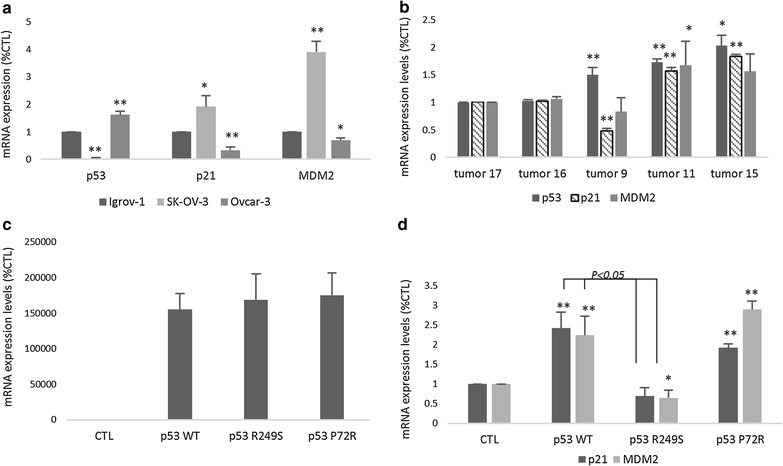
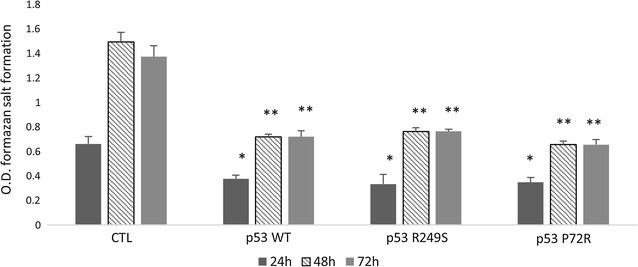
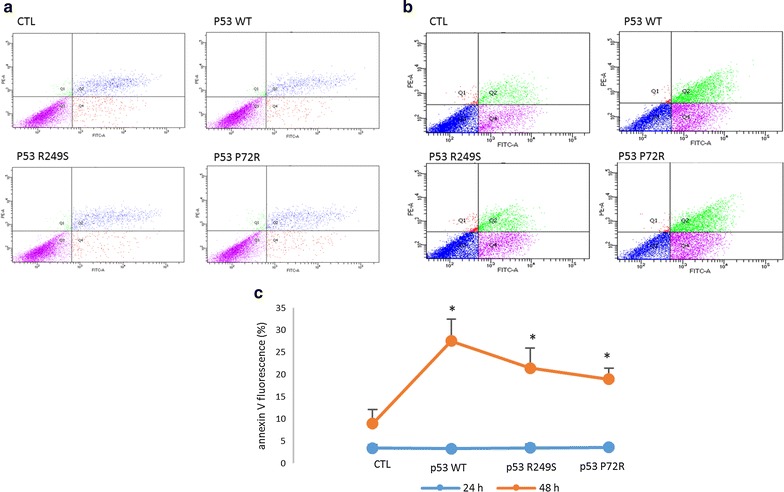
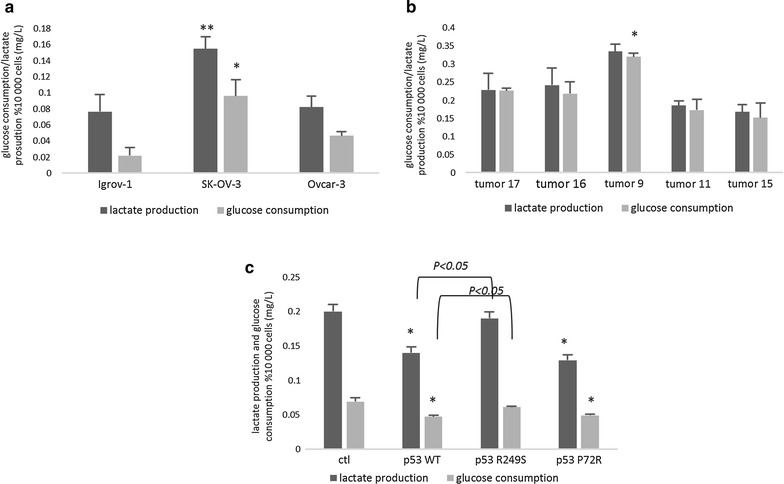
Our results showed a high frequency of the P72R mutant, associated with p53 overexpression in the ovarian biopsies. However, P72R mutant cells showed similar apoptosis and glycolysis as WT cells. DNA binding domain mutations decreased the transcriptional activity of the protein and increased glucose consumption and lactate production.
Despite the overexpression of the P72R mutated protein in the biopsies, it showed a similar apoptotic activity and glucose regulation ability as WT p53. Knowing that p53 expression status is used for chemotherapeutic approaches and prognosis in ovarian cancer, the results obtained highlight the importance of locating TP53 mutations.
p53是一种肿瘤抑制因子,也是癌细胞糖酵解的关键调节因子,然而在肿瘤中高度突变。在卵巢癌中,关于p53突变的研究主要集中在DNA结合结构域,因为大多数热点突变影响该区域。然而,其他区域如富含脯氨酸结构域的突变也可能影响蛋白质的表达和活性。本研究的目的是探讨TP53基因不同位置突变对糖酵解、细胞凋亡以及p53靶基因转录的影响。
通过PCR-SSCP、测序和免疫组织化学对30例卵巢癌活检组织评估突变频率及其对p53表达的影响。培养了6个肿瘤组织,以及SK-OV-3、OVCAR-3和Igrov-1细胞系。用2种TP53突变体转染SK-OV-3细胞。通过qPCR检测p53转录活性,通过流式细胞术检测细胞凋亡,通过测量葡萄糖和乳酸含量检测糖酵解,并对糖酵解酶表达进行定量分析。
我们的结果显示P72R突变体频率较高,与卵巢活检组织中p53过表达相关。然而,P72R突变体细胞与野生型(WT)细胞表现出相似的细胞凋亡和糖酵解情况。DNA结合结构域突变降低了蛋白质的转录活性,并增加了葡萄糖消耗和乳酸生成。
尽管活检组织中P72R突变蛋白过表达,但其表现出与野生型p53相似的凋亡活性和葡萄糖调节能力。鉴于p53表达状态用于卵巢癌的化疗方案制定和预后评估,所得结果凸显了定位TP53突变的重要性。