Percival Christopher J, Green Rebecca, Roseman Charles C, Gatti Daniel M, Morgan Judith L, Murray Stephen A, Donahue Leah Rae, Mayeux Jessica M, Pollard K Michael, Hua Kunjie, Pomp Daniel, Marcucio Ralph, Hallgrímsson Benedikt
1Department of Anthropology, Stony Brook University, Stony Brook, NY USA.
2Alberta Children's Hospital Institute for Child and Maternal Health, University of Calgary, Calgary, AB Canada.
Evodevo. 2018 Jan 27;9:3. doi: 10.1186/s13227-018-0092-3. eCollection 2018.
Previous analysis suggested that the relative contribution of individual bones to regional skull lengths differ between inbred mouse strains. If the negative correlation of adjacent bone lengths is associated with genetic variation in a heterogeneous population, it would be an example of negative pleiotropy, which occurs when a genetic factor leads to opposite effects in two phenotypes. Confirming negative pleiotropy and determining its basis may reveal important information about the maintenance of overall skull integration and developmental constraint on skull morphology.
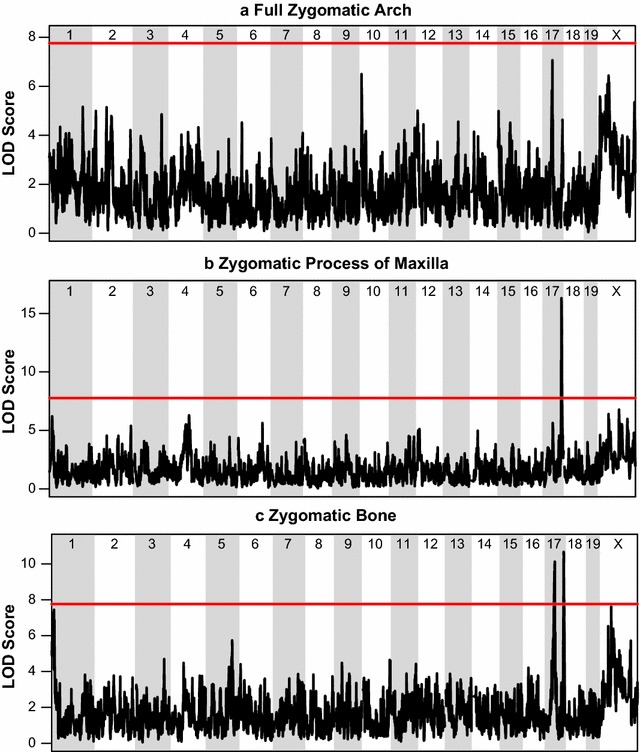
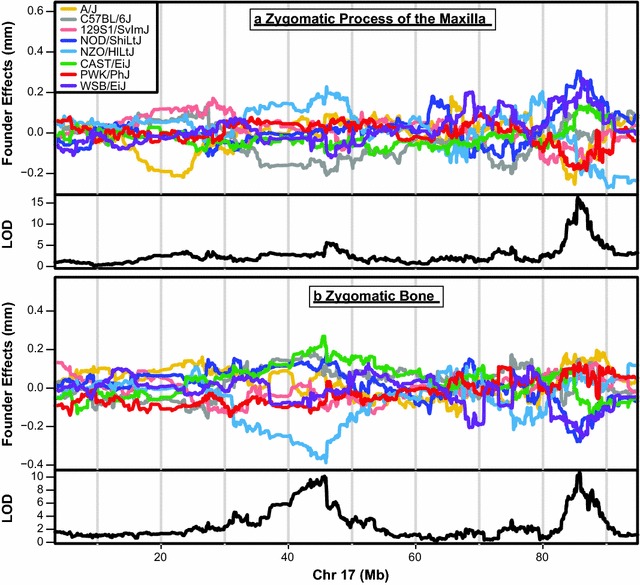
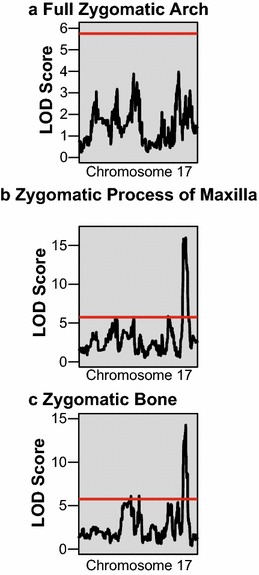
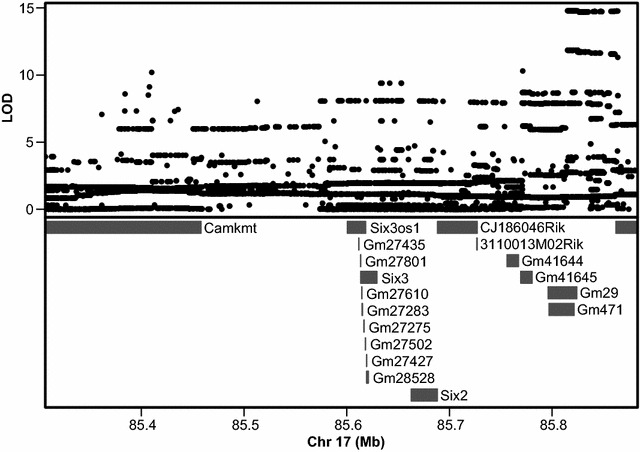
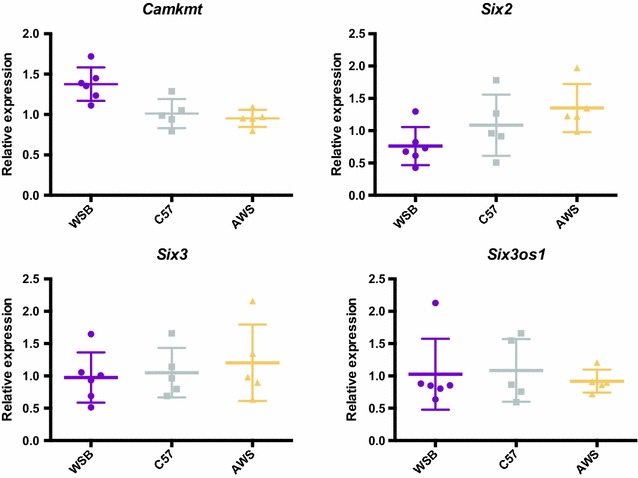
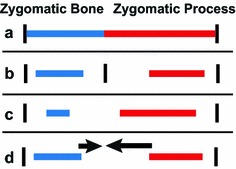
We identified negative correlations between the lengths of the frontal and parietal bones in the midline cranial vault as well as the zygomatic bone and zygomatic process of the maxilla, which contribute to the zygomatic arch. Through gene association mapping of a large heterogeneous population of Diversity Outbred (DO) mice, we identified a quantitative trait locus on chromosome 17 driving the antagonistic contribution of these two zygomatic arch bones to total zygomatic arch length. Candidate genes in this region were identified and real-time PCR of the maxillary processes of DO founder strain embryos indicated differences in the RNA expression levels for two of the candidate genes, and .
A genomic region underlying negative pleiotropy of two zygomatic arch bones was identified, which provides a mechanism for antagonism in component bone lengths while constraining overall zygomatic arch length. This type of mechanism may have led to variation in the contribution of individual bones to the zygomatic arch noted across mammals. Given that similar genetic and developmental mechanisms may underlie negative correlations in other parts of the skull, these results provide an important step toward understanding the developmental basis of evolutionary variation and constraint in skull morphology.
先前的分析表明,近交系小鼠品系中,各块骨头对颅骨区域长度的相对贡献有所不同。如果相邻骨头长度的负相关与异质群体中的遗传变异相关,那么这将是负向多效性的一个例子,负向多效性是指一个遗传因素在两种表型中产生相反效应的情况。证实负向多效性并确定其基础,可能会揭示有关颅骨整体整合的维持以及颅骨形态发育限制的重要信息。
我们发现颅顶中线处额骨和顶骨的长度之间,以及构成颧弓的颧骨和上颌骨颧突之间存在负相关。通过对大量多样化杂交(DO)小鼠的异质群体进行基因关联图谱分析,我们在17号染色体上确定了一个数量性状基因座,该基因座驱动这两块颧弓骨对总颧弓长度的拮抗作用。确定了该区域的候选基因,对DO奠基者品系胚胎上颌突进行的实时PCR表明,两个候选基因 和 的RNA表达水平存在差异。
确定了一个基因组区域,该区域是两块颧弓骨负向多效性的基础,它提供了一种机制,在限制颧弓总长度的同时,使组成骨头的长度产生拮抗作用。这种机制可能导致了在整个哺乳动物中观察到的各块骨头对颧弓贡献的差异。鉴于颅骨其他部位的负相关可能有类似的遗传和发育机制,这些结果为理解颅骨形态进化变异和限制的发育基础迈出了重要一步。