Pallares Luisa F, Carbonetto Peter, Gopalakrishnan Shyam, Parker Clarissa C, Ackert-Bicknell Cheryl L, Palmer Abraham A, Tautz Diethard
Department of Evolutionary Genetics, Max Planck Institute for Evolutionary Biology, Plön, Germany.
Department of Human Genetics, University of Chicago, Chicago, Illinois, United States of America.
PLoS Genet. 2015 Nov 2;11(11):e1005607. doi: 10.1371/journal.pgen.1005607. eCollection 2015 Nov.
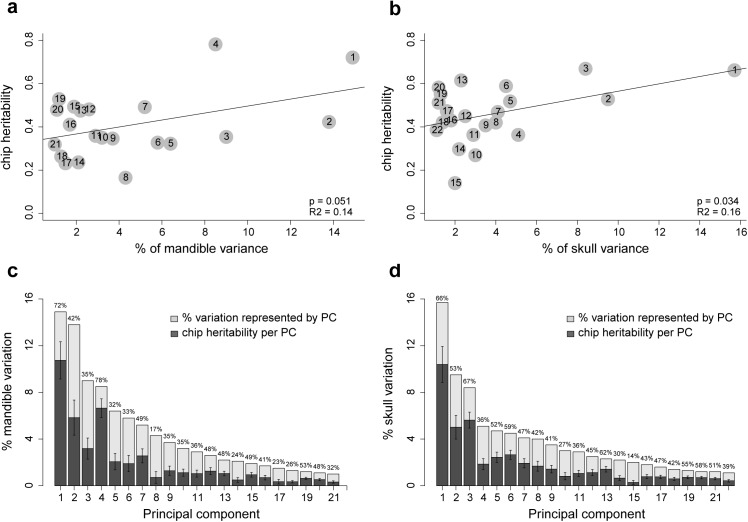
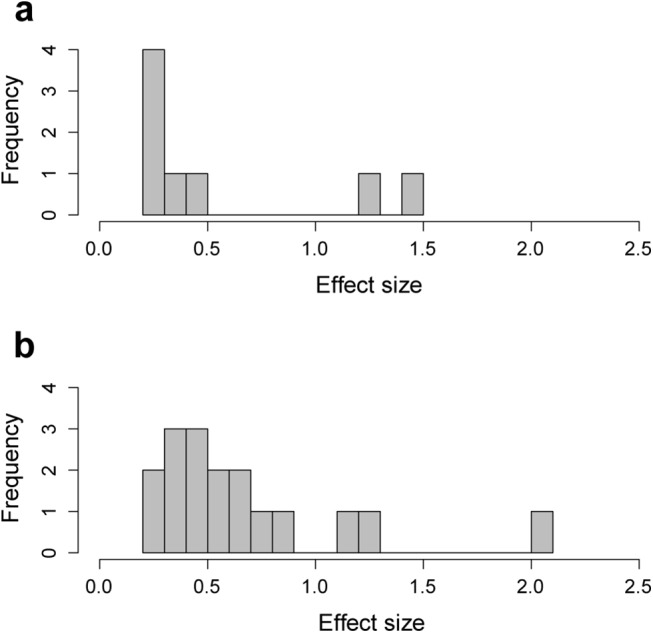
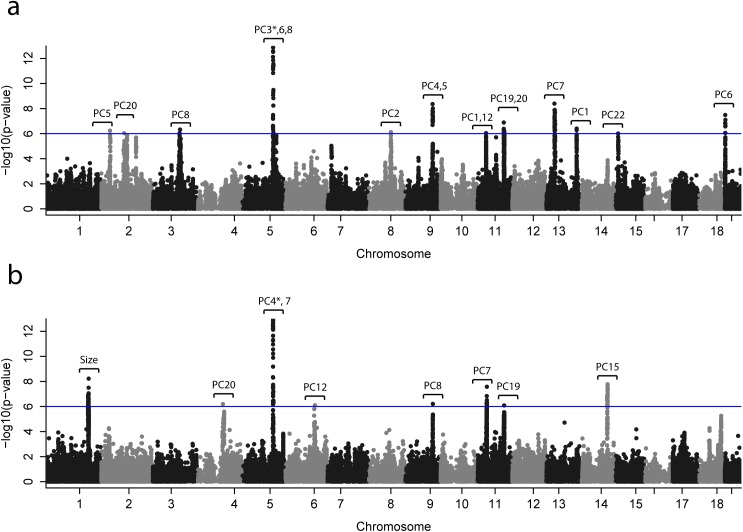
The vertebrate cranium is a prime example of the high evolvability of complex traits. While evidence of genes and developmental pathways underlying craniofacial shape determination is accumulating, we are still far from understanding how such variation at the genetic level is translated into craniofacial shape variation. Here we used 3D geometric morphometrics to map genes involved in shape determination in a population of outbred mice (Carworth Farms White, or CFW). We defined shape traits via principal component analysis of 3D skull and mandible measurements. We mapped genetic loci associated with shape traits at ~80,000 candidate single nucleotide polymorphisms in ~700 male mice. We found that craniofacial shape and size are highly heritable, polygenic traits. Despite the polygenic nature of the traits, we identified 17 loci that explain variation in skull shape, and 8 loci associated with variation in mandible shape. Together, the associated variants account for 11.4% of skull and 4.4% of mandible shape variation, however, the total additive genetic variance associated with phenotypic variation was estimated in ~45%. Candidate genes within the associated loci have known roles in craniofacial development; this includes 6 transcription factors and several regulators of bone developmental pathways. One gene, Mn1, has an unusually large effect on shape variation in our study. A knockout of this gene was previously shown to affect negatively the development of membranous bones of the cranial skeleton, and evolutionary analysis shows that the gene has arisen at the base of the bony vertebrates (Eutelostomi), where the ossified head first appeared. Therefore, Mn1 emerges as a key gene for both skull formation and within-population shape variation. Our study shows that it is possible to identify important developmental genes through genome-wide mapping of high-dimensional shape features in an outbred population.
脊椎动物的颅骨是复杂性状具有高度可进化性的一个典型例子。虽然关于颅面形状决定的基因和发育途径的证据不断积累,但我们距离理解遗传水平上的这种变异如何转化为颅面形状变异仍有很大差距。在这里,我们使用三维几何形态测量学来绘制远交群小鼠(Carworth Farms White,简称CFW)群体中参与形状决定的基因图谱。我们通过对三维颅骨和下颌骨测量进行主成分分析来定义形状特征。我们在约700只雄性小鼠的约80000个候选单核苷酸多态性位点上绘制了与形状特征相关的基因座。我们发现颅面形状和大小是高度可遗传的多基因性状。尽管这些性状具有多基因性质,但我们鉴定出17个解释颅骨形状变异的基因座,以及8个与下颌骨形状变异相关的基因座。这些相关变异共同解释了11.4%的颅骨形状变异和4.4%的下颌骨形状变异,然而,与表型变异相关的总加性遗传方差估计约为45%。相关基因座内的候选基因在颅面发育中具有已知作用;这包括6种转录因子和几种骨发育途径的调节因子。在我们的研究中,一个基因Mn1对形状变异有异常大的影响。此前已表明该基因敲除会对颅骨骨骼的膜性骨发育产生负面影响,进化分析表明该基因出现在硬骨脊椎动物(真骨鱼类)基部,在那里首次出现了骨质化的头部。因此,Mn1成为颅骨形成和群体内形状变异的关键基因。我们的研究表明,通过在远交群体中对高维形状特征进行全基因组图谱绘制来鉴定重要的发育基因是可行的。