Seo Yukako, Nonaka Manabu, Yamamura Yukie, Pawankar Ruby, Tagaya Etsuko
Department of Otolaryngology, Tokyo Women's Medical University, Tokyo 162-8666, Japan.
Department of Pediatrics, Nippon Medical School, Tokyo 113-0022, Japan.
Asia Pac Allergy. 2018 Jan 24;8(1):e5. doi: 10.5415/apallergy.2018.8.e5. eCollection 2018 Jan.
Eosinophilic otitis media (EOM) is often associated with comorbid asthma. The middle ear cavity is part of the upper airway. Therefore, EOM and asthma can be considered to be a crucial part of the "one airway, one disease" phenomenon. Based on the concept of one airway, one disease in the context of allergic rhinitis and asthma, optimal level of inhalation therapy for better asthma control leads to improvement in allergic rhinitis.
We conducted a pilot study to determine whether appropriate strengthening of inhalation therapy for asthma is effective for EOM.
Fifteen patients with EOM and comorbid asthma were enrolled in this study. Eight patients were randomly selected and administered appropriately strengthened inhalation therapy for asthma (strengthened group). The effect of the therapy on EOM was assessed by comparing a questionnaire for ear symptoms, clinical characteristic score, pure tone audiometry, blood tests and temporal bone computed tomography (CT) examination before and after the therapy. Seven other EOM + asthma patients without the above mentioned therapy were included as controls.
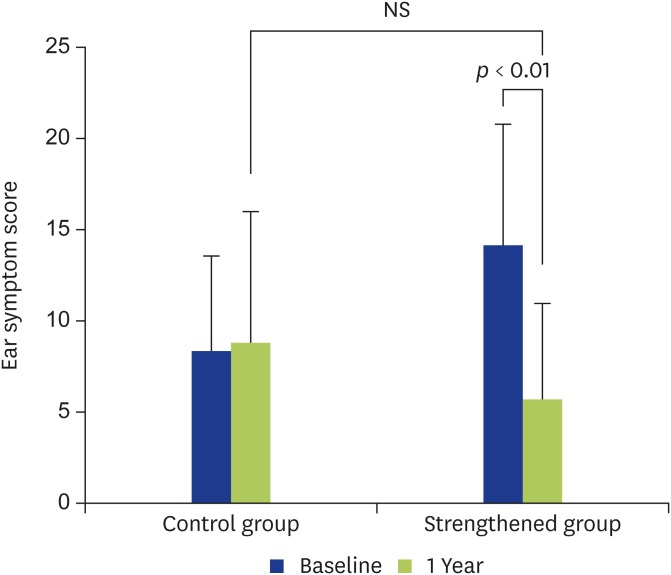
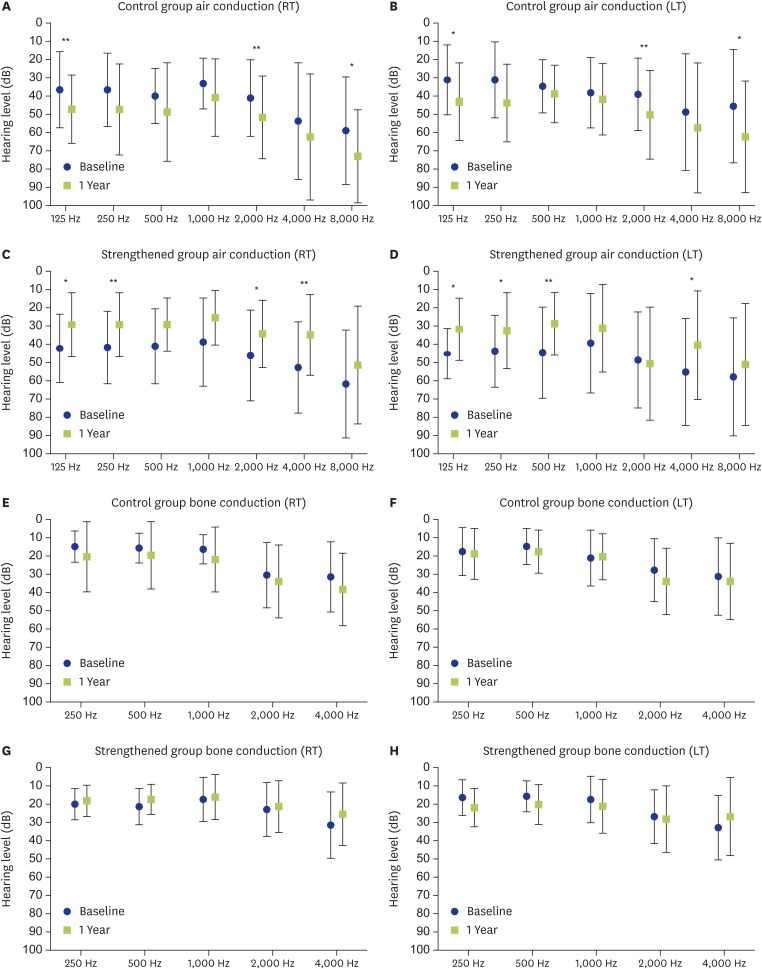
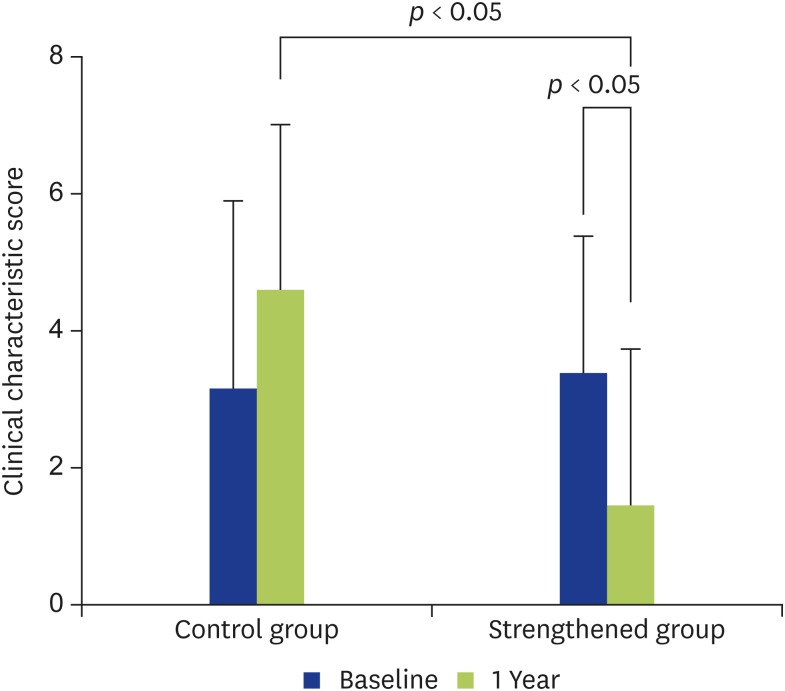
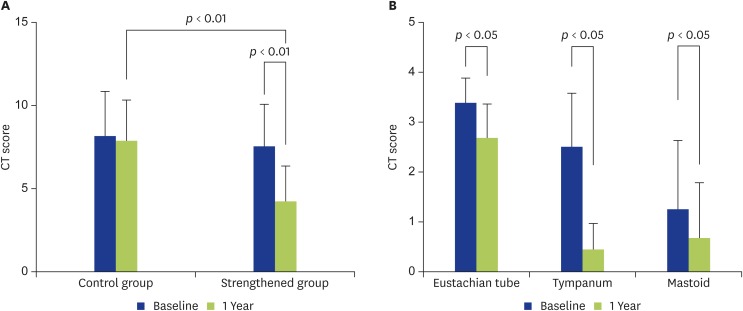
In the strengthened group, the score of ear symptoms, clinical characteristics score, peripheral blood eosinophil count, CT score, and air conduction hearing level improved significantly after strengthening the inhalation therapy, but not in the control group. The lung function tests (forced vital capacity [%predicted], forced expiratory volume in 1 second [FEV] [L], and FEV [%predicted]) significantly increased in the strengthened group after the therapy, but not in the control group.
In this study we demonstrated that EOM improved along with improved lung function when appropriately optimal inhalation therapy was implemented in patients with EOM and asthma. Administration of optimizing therapy for asthma might be effective for concomitant EOM.
嗜酸性粒细胞性中耳炎(EOM)常与合并哮喘相关。中耳腔是上呼吸道的一部分。因此,EOM和哮喘可被视为“同一气道,同一种疾病”现象的关键部分。基于变应性鼻炎和哮喘中“同一气道,同一种疾病”的概念,为更好地控制哮喘而进行的最佳吸入治疗水平可改善变应性鼻炎。
我们进行了一项试点研究,以确定对哮喘进行适当强化的吸入治疗对EOM是否有效。
本研究纳入了15例患有EOM并合并哮喘的患者。随机选择8例患者并给予适当强化的哮喘吸入治疗(强化组)。通过比较治疗前后的耳部症状问卷、临床特征评分、纯音听力测定、血液检查和颞骨计算机断层扫描(CT)检查来评估该治疗对EOM的效果。另外7例未接受上述治疗的EOM +哮喘患者作为对照组。
在强化组中,强化吸入治疗后耳部症状评分、临床特征评分、外周血嗜酸性粒细胞计数、CT评分和气导听力水平均有显著改善,而对照组无改善。治疗后强化组的肺功能测试(用力肺活量[预测值%]、第1秒用力呼气容积[FEV][L]和FEV[预测值%])显著增加,而对照组无增加。
在本研究中,我们证明了对患有EOM和哮喘的患者实施适当的最佳吸入治疗时,EOM会随着肺功能的改善而改善。对哮喘进行优化治疗可能对合并的EOM有效。