Department of Periodontology, Ninth People's Hospital, Shanghai Jiao Tong University School of Medicine, Shanghai, China.
Shanghai Key Laboratory of Stomatology & Shanghai Research Institute of Stomatology, National Clinical Research Center of Stomatology, Shanghai, China.
J Neuroinflammation. 2018 Feb 9;15(1):37. doi: 10.1186/s12974-017-1052-x.
Porphyromonas gingivalis lipopolysaccharide (P. gingivalis-LPS) is one of the major pathogenic factors of chronic periodontitis (CP). Few reports on the correlation between P. gingivalis-LPS and cognitive function exist. Thus, the present study aimed to investigate the effects of P. gingivalis-LPS on cognitive function and the associated underlying mechanism in C57BL/6 mice.
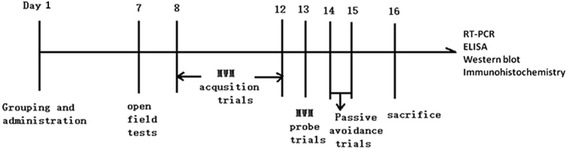
The C57BL/6 mice were injected with P. gingivalis-LPS (5 mg kg) either with or without Toll-like receptor 4 (TLR4) inhibitor (TAK-242, 5 mg kg). After 7 days, behavioral alterations were assessed with the open field test (OFT), Morris water maze (MWM) test, and passive avoidance test (PAT). The activation of astrocytes and microglia in the cerebral cortex and hippocampus of mice was observed by immunohistochemistry. The expression of inflammatory cytokines (TNF-α, IL-1β, IL-6, and IL-8), TLRs (TLR2, TLR3, and TLR4), and CD14 and the activation of the NF-κB signaling pathway (IRAK1, p65, and p-p65) in the cerebral cortex of the mice were evaluated by RT-PCR, ELISA, and western blot.
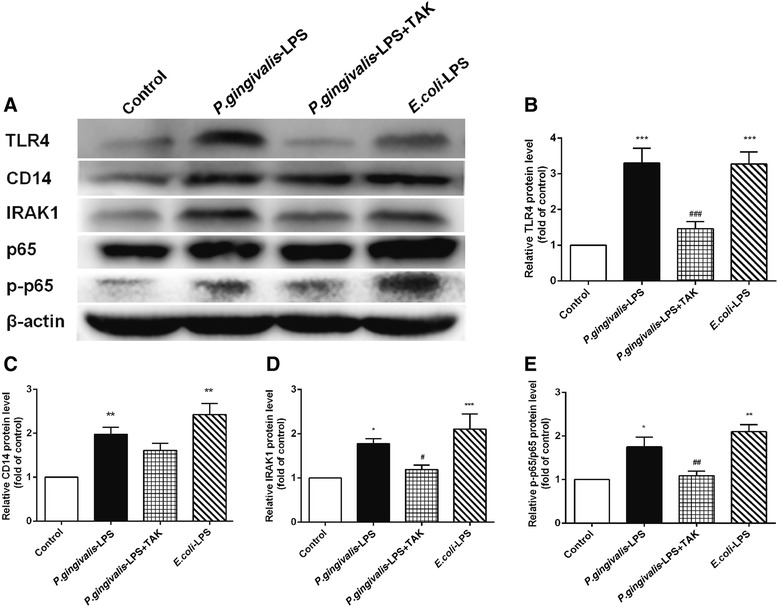
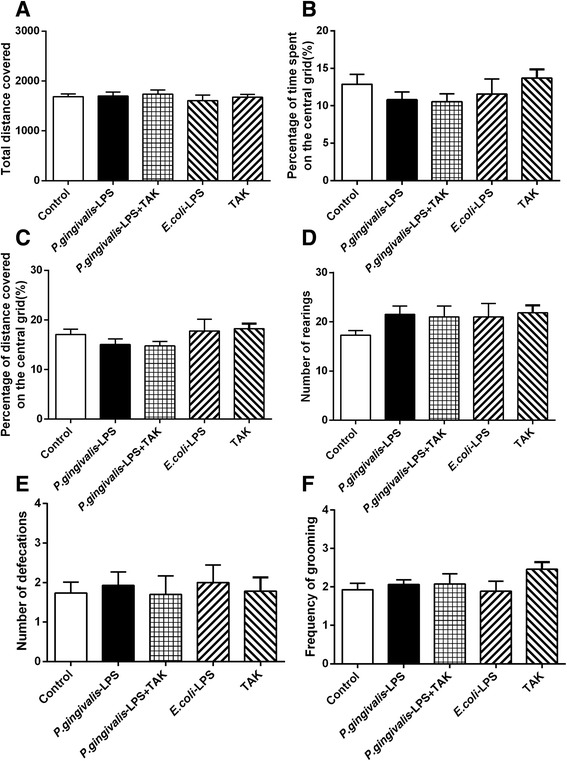
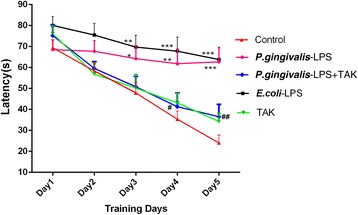
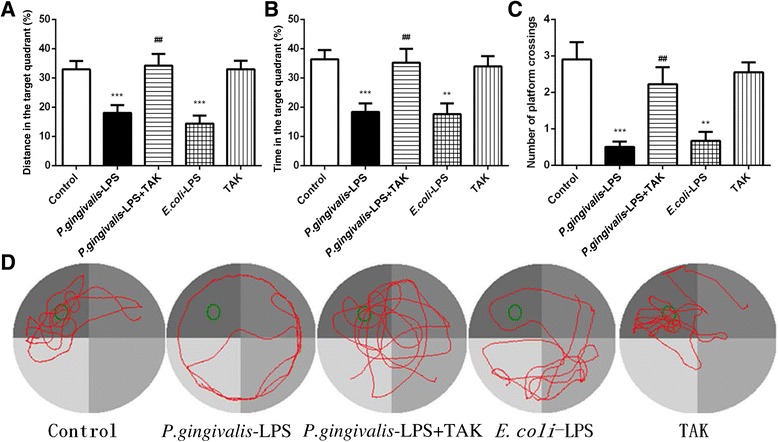
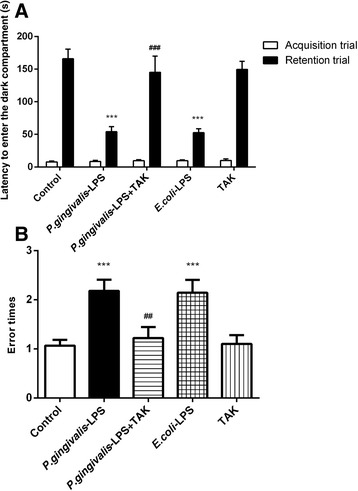
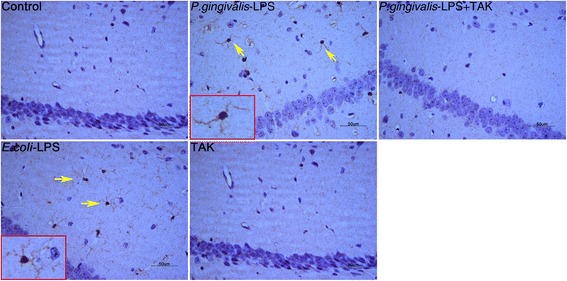
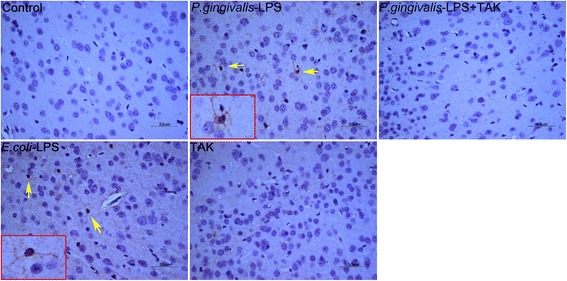
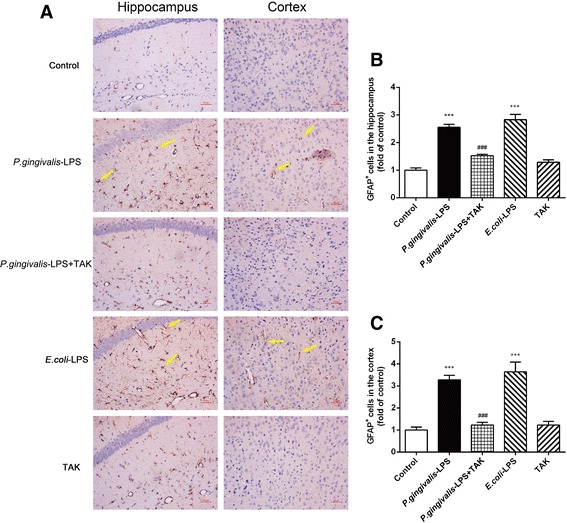
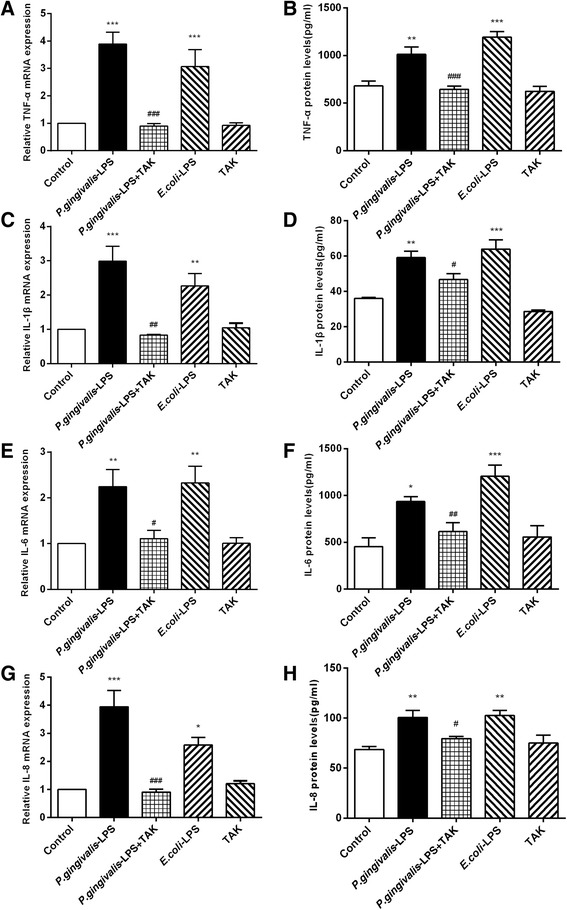
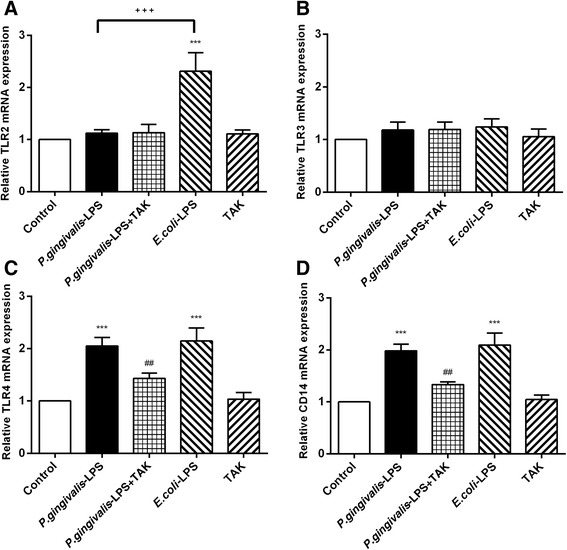
The OFT showed that P. gingivalis-LPS did not affect the initiative and activity of mice. Administration of P. gingivalis-LPS significantly impaired spatial learning and memory during the MWM test and attenuated the ability of passive avoidance learning during the PAT. Both astrocytes and microglia were activated in the cortex and hippocampus. The messenger RNA (mRNA) and protein expression of inflammatory cytokines (TNF-α, IL-1β, IL-6, and IL-8) was upregulated by P. gingivalis-LPS in the cortex. In addition, the TLR4/NF-κB signaling pathway was activated (TLR4, CD14, IRAK1, and p-p65). These effects were effectively alleviated by TAK-242.
Administration of P. gingivalis-LPS can lead to learning and memory impairment in C57BL/6 mice. This impairment is mediated by activation of the TLR4 signaling pathway. Our study suggests that P. gingivalis-LPS-induced neuroinflammation plays an important role in cognitive impairment. It also reveals that endotoxins of periodontal pathogens could represent a risk factor for cognitive disorders.
牙龈卟啉单胞菌脂多糖(P. gingivalis-LPS)是慢性牙周炎(CP)的主要致病因素之一。关于牙龈卟啉单胞菌-LPS 与认知功能的相关性的报道较少。因此,本研究旨在探讨牙龈卟啉单胞菌-LPS 对 C57BL/6 小鼠认知功能的影响及其潜在机制。
将 C57BL/6 小鼠分别用牙龈卟啉单胞菌-LPS(5mg/kg)和/或 Toll 样受体 4(TLR4)抑制剂(TAK-242,5mg/kg)处理。7 天后,通过旷场试验(OFT)、Morris 水迷宫(MWM)试验和被动回避试验(PAT)评估行为改变。通过免疫组织化学观察小鼠大脑皮质和海马中星形胶质细胞和小胶质细胞的激活情况。通过 RT-PCR、ELISA 和 Western blot 评估小鼠大脑皮质中炎症细胞因子(TNF-α、IL-1β、IL-6 和 IL-8)、TLRs(TLR2、TLR3 和 TLR4)、CD14 和 NF-κB 信号通路(IRAK1、p65 和 p-p65)的表达。
旷场试验显示,牙龈卟啉单胞菌-LPS 不影响小鼠的主动性和活动能力。给予牙龈卟啉单胞菌-LPS 显著损害 MWM 试验中的空间学习和记忆,并削弱 PAT 中的被动回避学习能力。皮质和海马中的星形胶质细胞和小胶质细胞均被激活。皮质中牙龈卟啉单胞菌-LPS 上调了炎症细胞因子(TNF-α、IL-1β、IL-6 和 IL-8)的信使 RNA(mRNA)和蛋白表达。此外,TLR4/NF-κB 信号通路被激活(TLR4、CD14、IRAK1 和 p-p65)。TAK-242 可有效缓解这些作用。
给予牙龈卟啉单胞菌-LPS 可导致 C57BL/6 小鼠学习和记忆障碍。这种损伤是由 TLR4 信号通路的激活介导的。我们的研究表明,牙龈卟啉单胞菌-LPS 诱导的神经炎症在认知功能障碍中起重要作用。它还表明牙周病原体的内毒素可能是认知障碍的一个危险因素。