Udall Margarita, Rizzo Maria, Kenny Juliet, Doherty Jim, Dahm SueAnn, Robbins Paul, Faulkner Eric
Pfizer Inc, New York, NY, USA.
Evidera, Metro Building, 6th Floor, 1 Butterwick, London, W6 8DL, UK.
Diagn Pathol. 2018 Feb 9;13(1):12. doi: 10.1186/s13000-018-0689-9.
The programmed death receptor 1 (PD-1) protein is a cell-surface receptor on certain lymphocytes that, with its ligand programmed death ligand 1 (PD-L1), helps to down-regulate immune responses. Many cancer types express PD-L1 and evade immune recognition via the PD-1/PD-L1 interaction. Precision therapies targeting the PD-1/PD-L1 pathway have the potential to improve response and thereby offer a novel treatment avenue to some patients with cancer. However, this new therapeutic approach requires reliable methods for identifying patients whose cancers are particularly likely to respond. Therefore, we conducted a systematic literature review assessing evidence on test validation and scoring algorithms for PD-L1 immunohistochemistry (IHC) tests that might be used to select potentially responsive patients with bladder/urothelial cell, lung, gastric, or ovarian cancers for immunotherapy treatment.
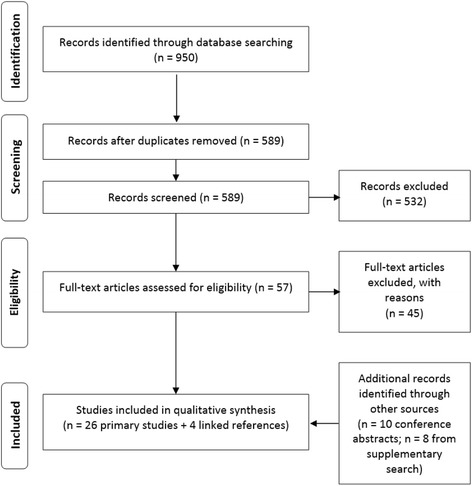
To identify evidence on commercially available PD-L1 IHC assays, we systematically searched MEDLINE and Embase for relevant studies published between January 2010 and September 2016 and appraised abstracts from recent oncology conferences (January 2013 to November 2016). Publications that met the predefined inclusion criteria were extracted and key trends summarized. In total, 26 eligible primary studies were identified, all of which reported on the test validation metrics associated with PD-L1 IHC tests in lung cancer, most using immunohistochemistry testing. There was significant heterogeneity among the available tests for PD-L1. Specifically, no definitive cutoff for PD-L1 positivity was identifiable, with more than one threshold being reported for most antibodies. Studies also differed as to whether they evaluated tumor cells only or tumor cells and tumor-infiltrating immune cells. However, all of the tests developed and validated to support a therapeutic drug in the context of phase 2-3 clinical trials reported more than 90% inter-reader concordance. In contrast, other PD-L1 antibodies identified in the literature reported poorer concordance.
Published validation metric data for PD-L1 tests are mainly focused on immunohistochemistry tests from studies in lung cancer. The variability in test cutoffs and standards for PD-L1 testing suggests that there is presently no standardized approach. This current variability may have implications for the uptake of precision treatments.
程序性死亡受体1(PD-1)蛋白是某些淋巴细胞表面的一种受体,它与其配体程序性死亡配体1(PD-L1)共同作用,有助于下调免疫反应。许多癌症类型表达PD-L1,并通过PD-1/PD-L1相互作用逃避免疫识别。针对PD-1/PD-L1途径的精准疗法有可能改善疗效,从而为一些癌症患者提供新的治疗途径。然而,这种新的治疗方法需要可靠的方法来识别那些癌症特别可能产生反应的患者。因此,我们进行了一项系统的文献综述,评估关于PD-L1免疫组化(IHC)检测的试验验证和评分算法的证据,这些检测可能用于选择膀胱/尿路上皮癌、肺癌、胃癌或卵巢癌中可能对免疫治疗有反应的患者。
为了确定关于市售PD-L1 IHC检测的证据,我们系统检索了MEDLINE和Embase数据库,查找2010年1月至2016年9月期间发表的相关研究,并评估了近期肿瘤学会议(2013年1月至2016年11月)的摘要。提取符合预定义纳入标准的出版物,并总结关键趋势。总共确定了26项符合条件的主要研究,所有研究均报告了与肺癌中PD-L1 IHC检测相关的试验验证指标,大多数采用免疫组化检测。现有的PD-L1检测方法存在显著异质性。具体而言,无法确定PD-L1阳性的明确临界值,大多数抗体报告了不止一个阈值。研究在评估仅肿瘤细胞还是肿瘤细胞和肿瘤浸润免疫细胞方面也存在差异。然而,在2-3期临床试验背景下开发并验证以支持治疗药物的所有检测,其读者间一致性均超过90%。相比之下,文献中鉴定的其他PD-L1抗体的一致性较差。
已发表的PD-L1检测验证指标数据主要集中在肺癌研究中的免疫组化检测。PD-L1检测临界值和标准的变异性表明目前没有标准化方法。当前的这种变异性可能会对精准治疗的应用产生影响。