Kim MinJeong, Gu Gyo Jeong, Koh Yun-Sook, Lee Su-Hyun, Na Yi Rang, Seok Seung Hyeok, Lim Kyung-Min
College of Pharmacology, Ewha Womans University, Seoul 03760, Republic of Korea.
Department of Microbiology and Immunology and Institute of Endemic Disease, Seoul National University College of Medicine, Seoul 03080, Republic of Korea.
Biomol Ther (Seoul). 2018 Nov 1;26(6):599-607. doi: 10.4062/biomolther.2017.225.
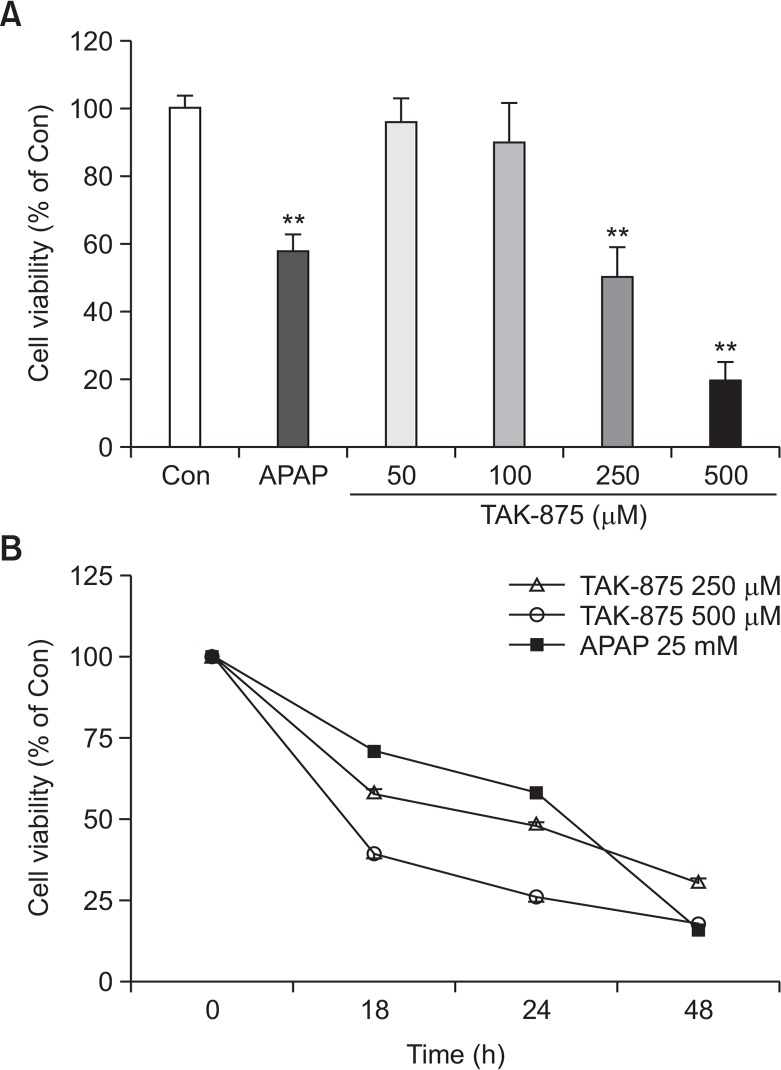
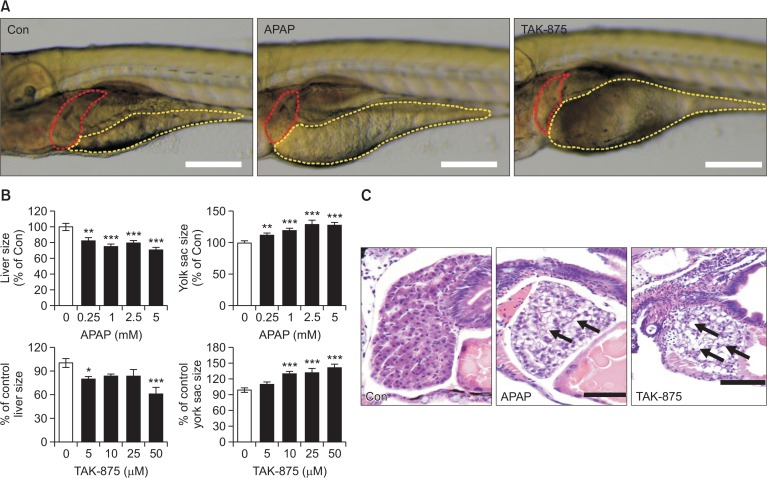
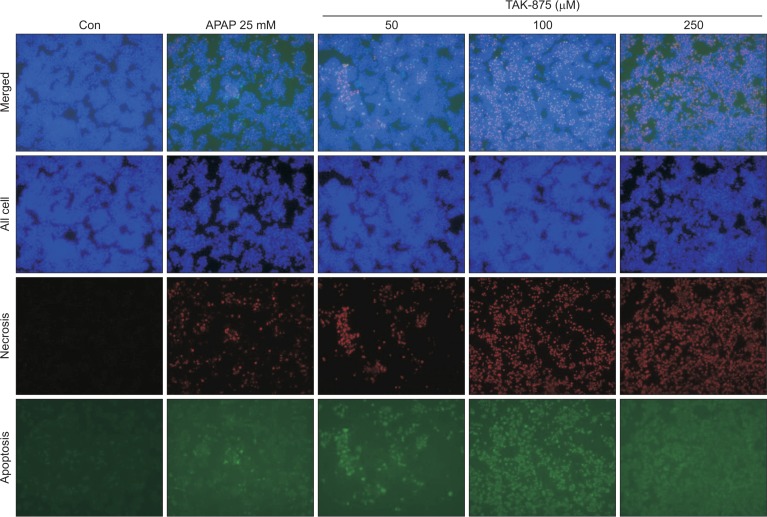
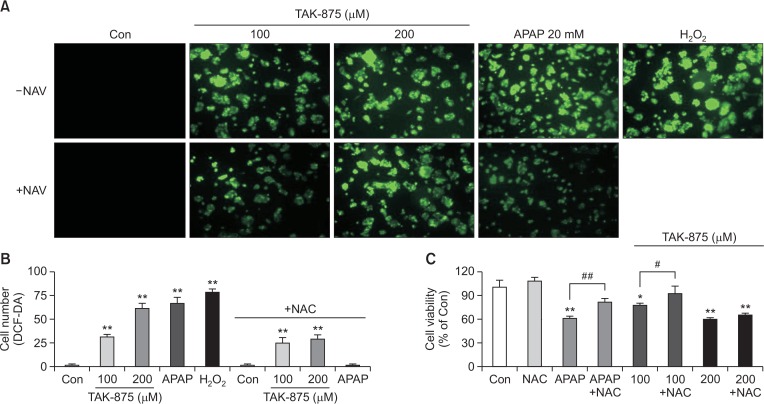
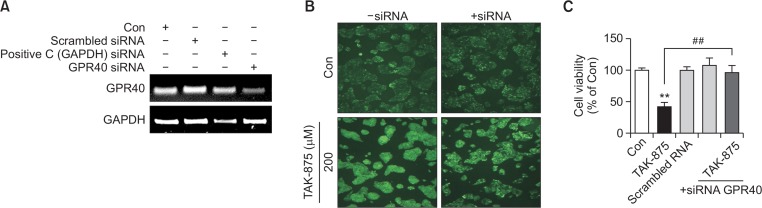
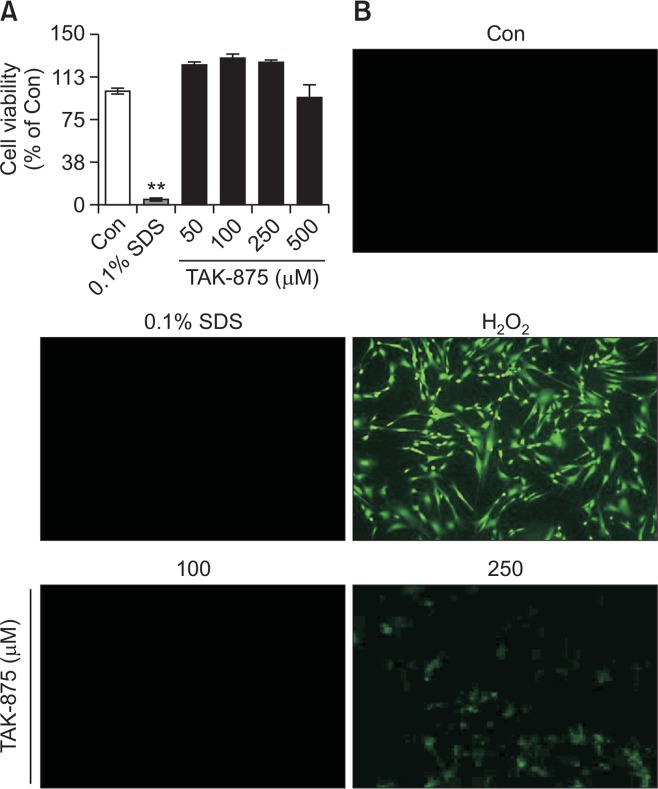
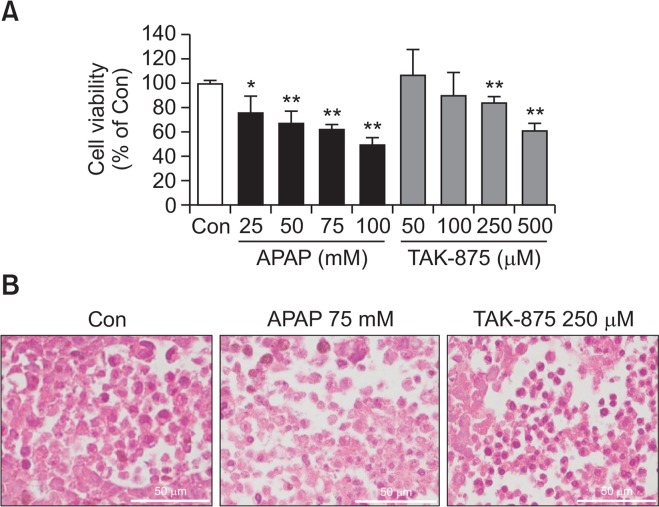
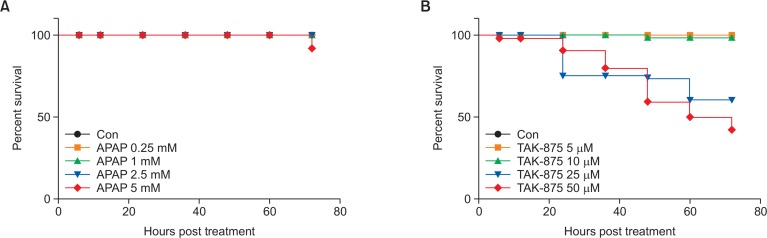
Fasiglifam (TAK-875) a G-protein coupled receptor 40 (GPR40) agonist, significantly improves hyperglycemia without hypoglycemia and weight gain, the major side effects of conventional anti-diabetics. Unfortunately, during multi-center Phase 3 clinical trials, unexpected liver toxicity resulted in premature termination of its development. Here, we investigated whether TAK-875 directly inflicts toxicity on hepatocytes and explored its underlying mechanism of toxicity. TAK-875 decreased viability of 2D and 3D cultures of HepG2, a human hepatocarcinoma cell line, in concentration- (>50 µM) and time-dependent manners, both of which corresponded with ROS generation. An antioxidant, N-acetylcysteine, attenuated TAK-875-mediated hepatotoxicity, which confirmed the role of ROS generation. Of note, knockdown of GPR40 using siRNA abolished the hepatotoxicity of TAK-875 and attenuated ROS generation. In contrast, TAK-875 induced no cytotoxicity in fibroblasts up to 500 µM. Supporting the hepatotoxic potential of TAK-875, exposure to TAK-875 resulted in increased mortality of zebrafish larvae at 25 µM. Histopathological examination of zebrafish exposed to TAK-875 revealed severe hepatotoxicity as manifested by degenerated hypertrophic hepatocytes with cytoplasmic vacuolation and acentric nuclei, confirming that TAK-875 may induce direct hepatotoxicity and that ROS generation may be involved in a GPR40-dependent manner.
法西格列肽(TAK - 875)是一种G蛋白偶联受体40(GPR40)激动剂,可显著改善高血糖,且不会引发低血糖和体重增加这两种传统抗糖尿病药物的主要副作用。遗憾的是,在多中心3期临床试验期间,意外的肝脏毒性导致其研发提前终止。在此,我们研究了TAK - 875是否直接对肝细胞造成毒性,并探讨了其潜在的毒性机制。TAK - 875以浓度依赖性(>50 µM)和时间依赖性方式降低了人肝癌细胞系HepG2的二维和三维培养物的活力,这两者均与活性氧生成相关。抗氧化剂N - 乙酰半胱氨酸减轻了TAK - 875介导的肝毒性,这证实了活性氧生成的作用。值得注意的是,使用小干扰RNA敲低GPR40消除了TAK - 875的肝毒性并减弱了活性氧生成。相比之下,高达500 µM的TAK - 875对成纤维细胞未诱导细胞毒性。支持TAK - 875的肝毒性潜力的是,暴露于TAK - 875导致斑马鱼幼体在25 µM时死亡率增加。对暴露于TAK - 875的斑马鱼进行组织病理学检查发现严重肝毒性,表现为肝细胞肥大、细胞质空泡化和偏心核变性,证实TAK - 875可能诱导直接肝毒性,且活性氧生成可能以GPR40依赖性方式参与其中。