Touchstone Diabetes Center, Department of Internal Medicine, University of Texas Southwestern Medical Center, Dallas, TX, United States.
Front Endocrinol (Lausanne). 2021 Aug 23;12:715877. doi: 10.3389/fendo.2021.715877. eCollection 2021.
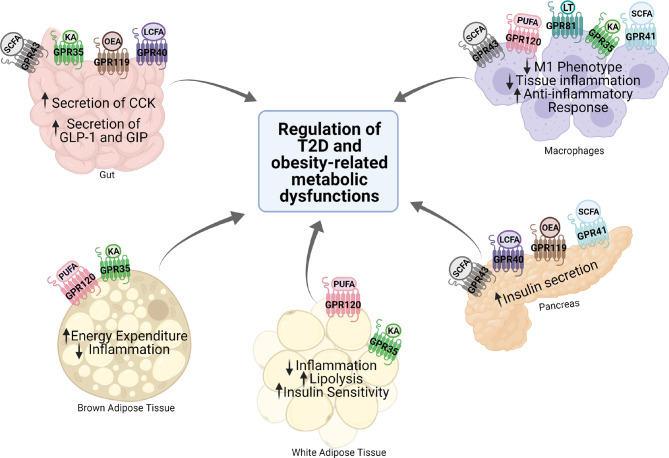
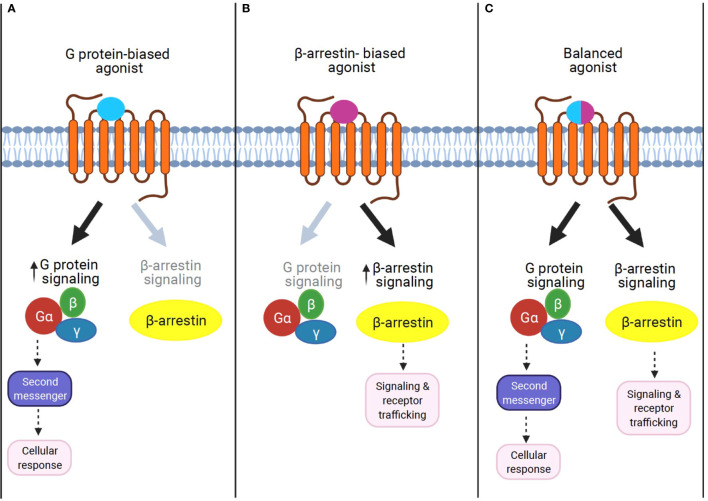
Seven transmembrane receptors (7TMRs), often termed G protein-coupled receptors (GPCRs), are the most common target of therapeutic drugs used today. Many studies suggest that distinct members of the GPCR superfamily represent potential targets for the treatment of various metabolic disorders including obesity and type 2 diabetes (T2D). GPCRs typically activate different classes of heterotrimeric G proteins, which can be subgrouped into four major functional types: G, G, G, and G, in response to agonist binding. Accumulating evidence suggests that GPCRs can also initiate β-arrestin-dependent, G protein-independent signaling. Thus, the physiological outcome of activating a certain GPCR in a particular tissue may also be modulated by β-arrestin-dependent, but G protein-independent signaling pathways. In this review, we will focus on the role of G protein- and β-arrestin-dependent signaling pathways in the development of obesity and T2D-related metabolic disorders.
七次跨膜受体(7TMRs),通常被称为 G 蛋白偶联受体(GPCRs),是当今使用的治疗药物最常见的靶点。许多研究表明,GPCR 超家族的不同成员代表了治疗各种代谢紊乱的潜在靶点,包括肥胖症和 2 型糖尿病(T2D)。GPCR 通常响应激动剂结合激活不同类型的异三聚体 G 蛋白,这些 G 蛋白可以分为四大主要功能类型:G、G、G 和 G。越来越多的证据表明,GPCR 还可以启动β-arrestin 依赖性、G 蛋白非依赖性信号转导。因此,在特定组织中激活特定 GPCR 的生理后果也可能受到β-arrestin 依赖性但 G 蛋白非依赖性信号通路的调节。在这篇综述中,我们将重点讨论 G 蛋白和β-arrestin 依赖性信号通路在肥胖和 T2D 相关代谢紊乱发展中的作用。