Department of General Surgery, The First Affiliated Hospital of Xian Jiaotong University, Xi'an, Shaanxi, China (mainland).
Department of General Surgery, The First Affiliated Hospital of Xi'an Jiaotong University, Xi'an, Shaanxi, China (mainland).
Med Sci Monit. 2018 Feb 9;24:827-838. doi: 10.12659/MSM.908550.
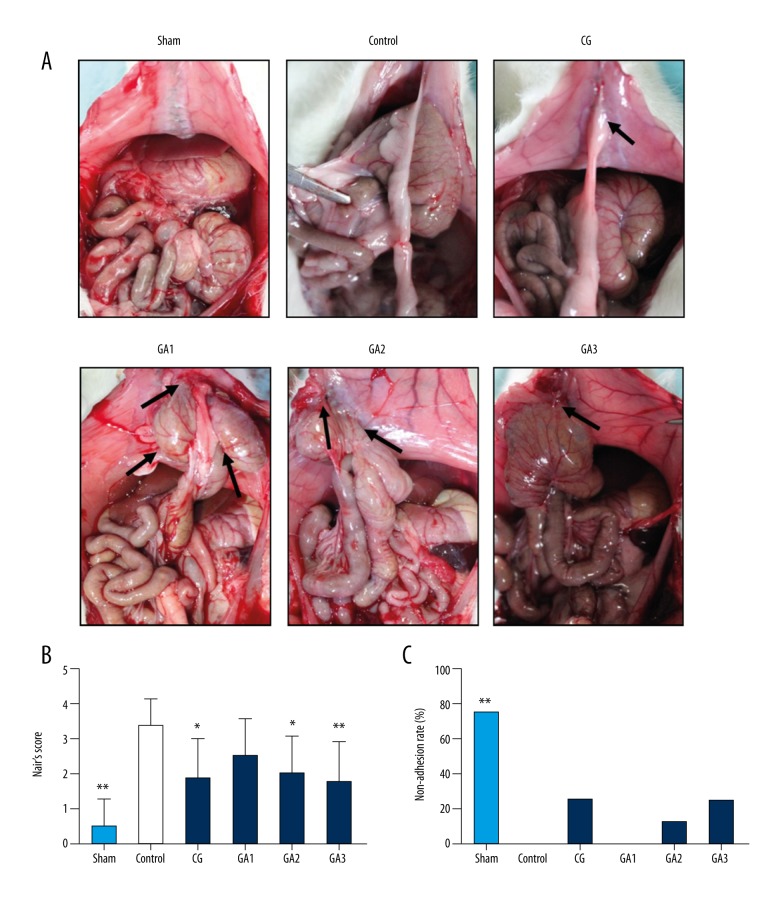
Intra-abdominal adhesion is one of the most common complications after abdominal surgery. The efficacy of current treatments for intra-abdominal adhesion is unsatisfactory. In this study, we investigated the effect of gallic acid on the prevention and treatment of intra-abdominal adhesions after abdominal surgery using an intra-abdominal adhesion rat model.
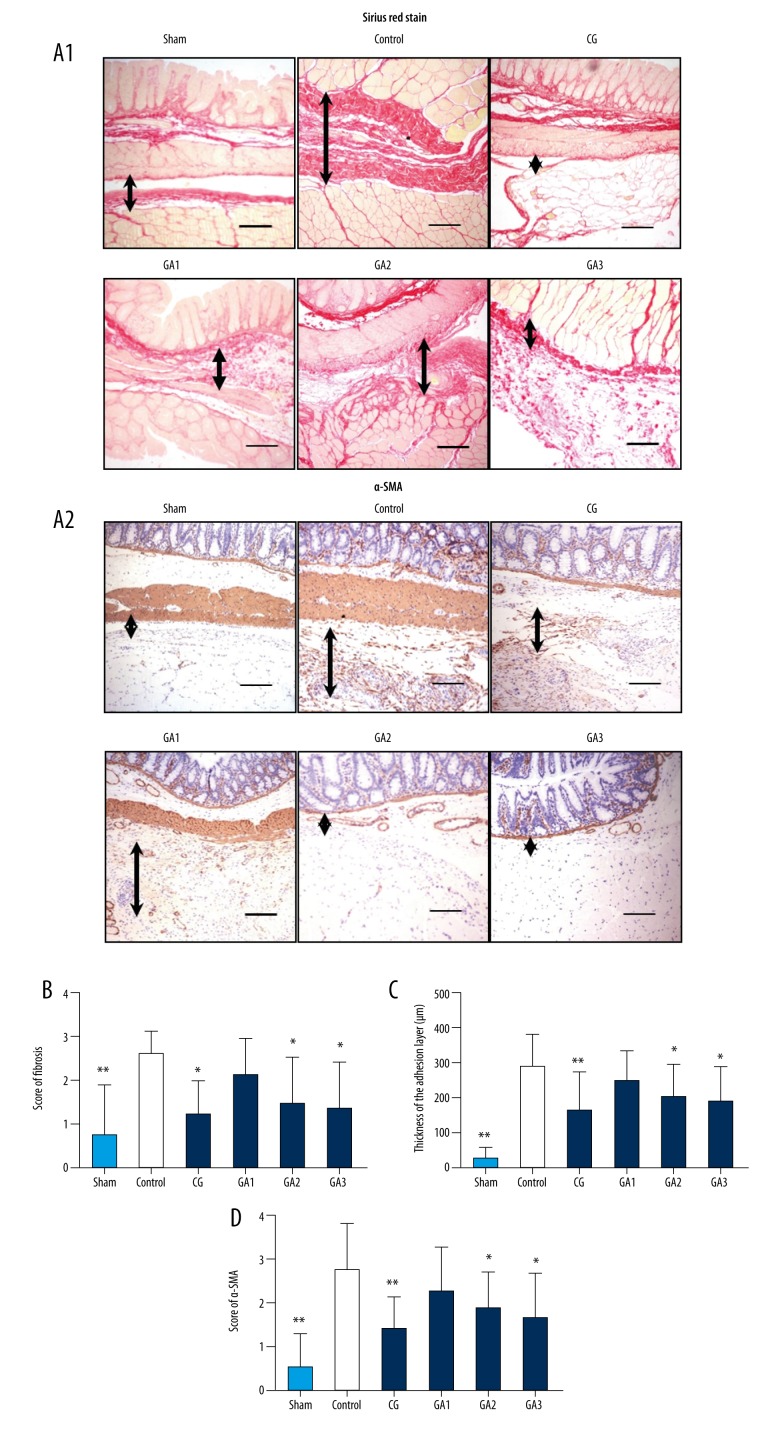
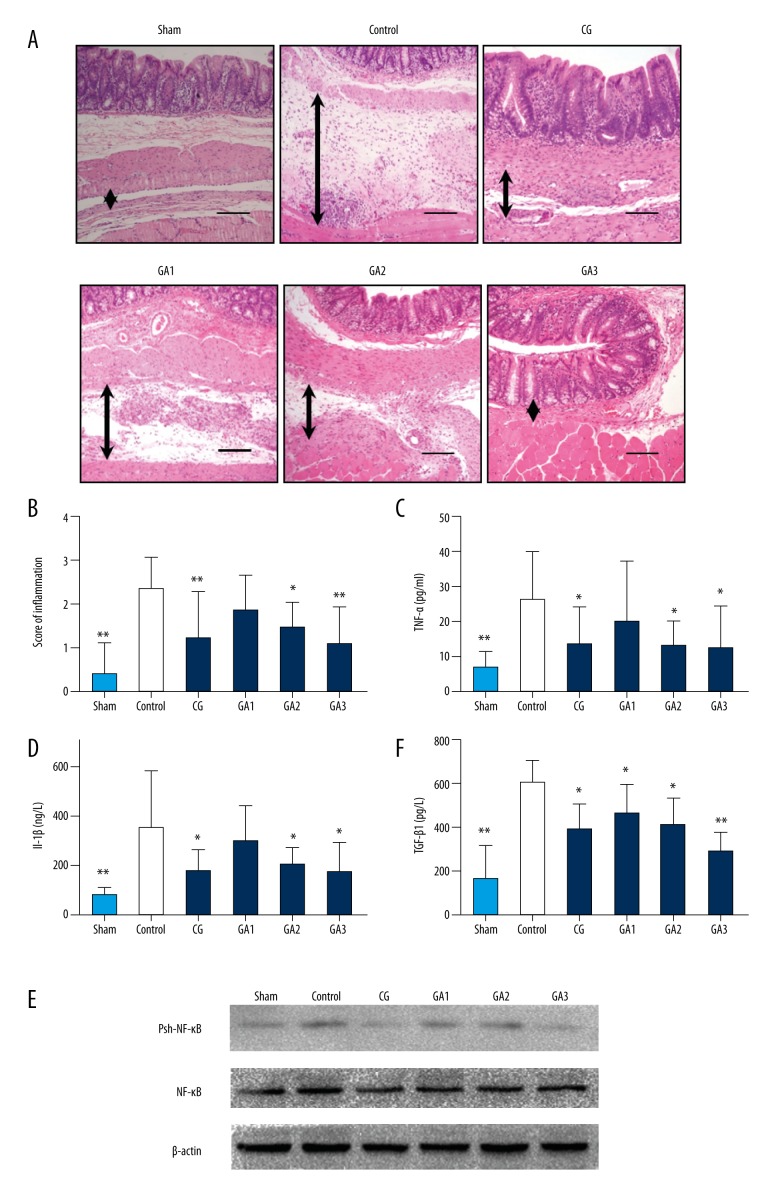
MATERIAL/METHODS: The experimental rats were randomly divided into the sham operation group, the control group, the chitosan group, and 3 gallic acid groups of different concentrations. All rats except those in the sham operation group received cecal abrasion to induce adhesion. From the first postoperative day, the rats in the gallic acid groups were administered different concentrations of gallic acid in a 2-ml gavage daily. All rats were sacrificed on postoperative day 7, and the degree of intra-abdominal adhesion was evaluated by the naked eye. The amount of collagen deposited between the injured peritoneal tissues was assessed by Sirius red staining. Serum levels of interleukin-6 (IL-6), tumor necrosis factor (TNF-α), and transforming growth factor-β (TGF-β) were measured by ELISA. Western blot was used to detect the level of NF-κB phosphorylation in the injured peritoneal or adhesion tissues of the rats.
Compared with the control group, the scores of intra-abdominal adhesions in the rats treated with larger doses of gallic acid were significantly decreased, and the degree of inflammation and fibrosis was also significantly decreased. Gallic acid significantly reduced IL-6, TNF-α, and TGF-β1 serum levels. NF-κB phosphorylation in the higher gallic acid groups was significantly reduced.
Gallic acid inhibits the formation of postoperative intra-abdominal adhesions in rats by inhibiting the inflammatory reaction and fibrogenesis. Gallic acid is a promising drug for preventing intra-abdominal adhesions.
腹腔粘连是腹部手术后最常见的并发症之一。目前治疗腹腔粘连的疗效并不令人满意。在这项研究中,我们使用腹腔粘连大鼠模型研究了没食子酸预防和治疗腹部手术后腹腔粘连的效果。
材料/方法:实验大鼠随机分为假手术组、对照组、壳聚糖组和 3 个不同浓度的没食子酸组。除假手术组外,所有大鼠均接受盲肠磨损以诱导粘连。从术后第 1 天开始,没食子酸组大鼠每天给予不同浓度的没食子酸灌胃 2ml。所有大鼠均于术后第 7 天处死,通过肉眼评估腹腔内粘连程度。通过天狼猩红染色评估损伤腹膜组织之间沉积的胶原量。通过 ELISA 测量血清中白细胞介素 6(IL-6)、肿瘤坏死因子(TNF-α)和转化生长因子-β(TGF-β)的水平。Western blot 用于检测大鼠损伤腹膜或粘连组织中 NF-κB 磷酸化水平。
与对照组相比,大剂量没食子酸处理的大鼠腹腔粘连评分明显降低,炎症和纤维化程度也明显降低。没食子酸显著降低了 IL-6、TNF-α 和 TGF-β1 的血清水平。较高浓度没食子酸组 NF-κB 磷酸化明显降低。
没食子酸通过抑制炎症反应和纤维生成抑制大鼠术后腹腔粘连的形成。没食子酸是一种有前途的预防腹腔粘连的药物。