D'Ignazio Laura, Batie Michael, Rocha Sonia
Centre for Gene Regulation and Expression, School of Life Sciences, University of Dundee, Dundee DD15EH, UK.
Biomedicines. 2017 May 9;5(2):21. doi: 10.3390/biomedicines5020021.
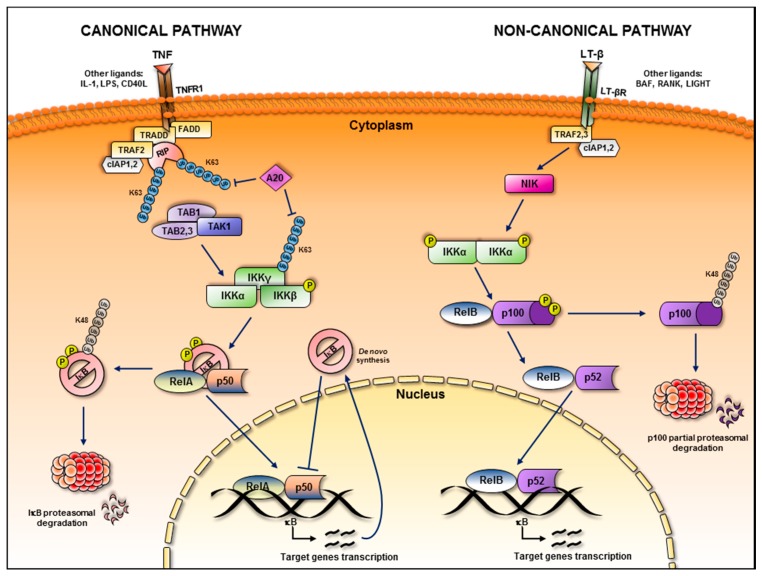
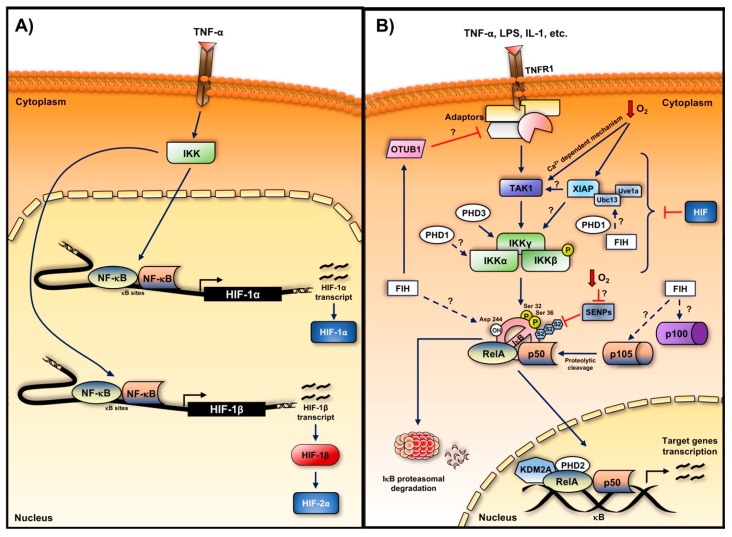
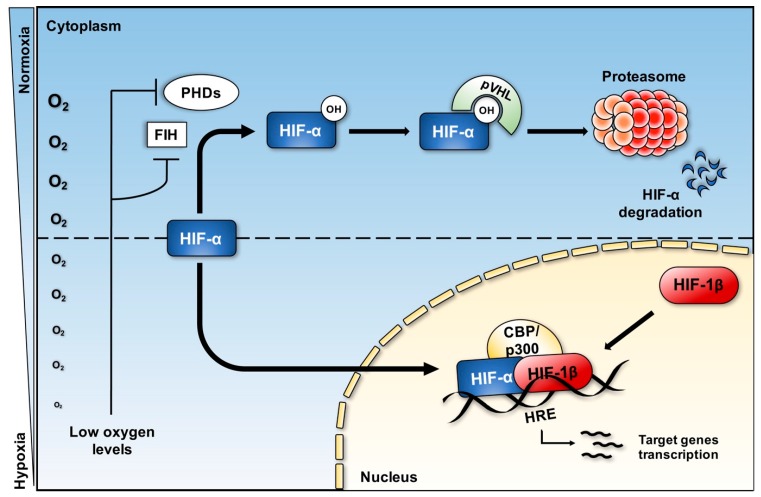
Cancer is often characterised by the presence of hypoxia and inflammation. Paramount to the mechanisms controlling cellular responses under such stress stimuli, are the transcription factor families of Hypoxia Inducible Factor (HIF) and Nuclear Factor of κ-light-chain-enhancer of activated B cells (NF-κB). Although, a detailed understating of how these transcription factors respond to their cognate stimulus is well established, it is now appreciated that HIF and NF-κB undergo extensive crosstalk, in particular in pathological situations such as cancer. Here, we focus on the current knowledge on how HIF is activated by inflammation and how NF-κB is modulated by hypoxia. We summarise the evidence for the possible mechanism behind this activation and how HIF and NF-κB function impacts cancer, focusing on colorectal, breast and lung cancer. We discuss possible new points of therapeutic intervention aiming to harness the current understanding of the HIF-NF-κB crosstalk.
癌症通常以缺氧和炎症为特征。在这种应激刺激下,控制细胞反应的机制中,至关重要的是缺氧诱导因子(HIF)和活化B细胞κ轻链增强子核因子(NF-κB)这两个转录因子家族。尽管对这些转录因子如何响应其同源刺激已有详细了解,但现在人们认识到HIF和NF-κB会发生广泛的相互作用,尤其是在癌症等病理情况下。在这里,我们聚焦于目前关于炎症如何激活HIF以及缺氧如何调节NF-κB的知识。我们总结了这种激活背后可能机制的证据,以及HIF和NF-κB功能如何影响癌症,重点关注结直肠癌、乳腺癌和肺癌。我们讨论了旨在利用当前对HIF-NF-κB相互作用的理解进行治疗干预的可能新靶点。