Stocks Susan J, Donnelly Ailsa, Esmail Aneez, Beresford Joanne, Gamble Carolyn, Luty Sarah, Deacon Richard, Danczak Avril, Mann Nicola, Townsend David, Ashley James, Bowie Paul, Campbell Stephen M
NIHR Greater Manchester Primary Care Patient Safety Translational Research Centre, Centre for Primary Care, Division of Population Health, Health Services Research and Primary Care, University of Manchester, Manchester, UK.
Research User Group (RUG) of the NIHR Greater Manchester Primary Care Patient Safety Translational Research Centre, Centre for Primary Care,Division of Population Health, Health Services Research and Primary Care, University of Manchester, Manchester, UK.
BMJ Open. 2018 Feb 3;8(2):e017786. doi: 10.1136/bmjopen-2017-017786.
To design and pilot a survey to be used at the population level to estimate the frequency of patient-perceived potentially harmful preventable problems occurring in UK primary care. To explore the nature of the problems, patient-suggested strategies for prevention and opinions of clinicians and the public regarding the potential for harm.
A survey was codesigned by three members of the public and one researcher and piloted through public and patient involvement and engagement networks.
Self-selected sample of the UK population.
977 members of the public accessed the online survey during October and November 2015.
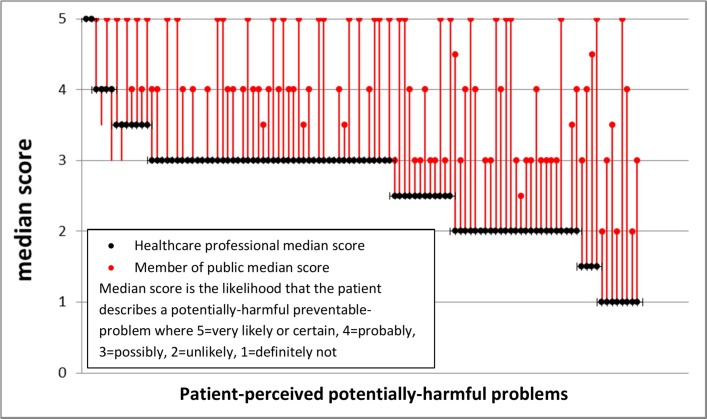
Respondent feedback about the ease of completion of the survey, quality of responses in terms of review by clinicians and members of the public, preliminary estimates of the frequency and nature of patient-perceived potentially harmful problems occurring in the last 12 months.
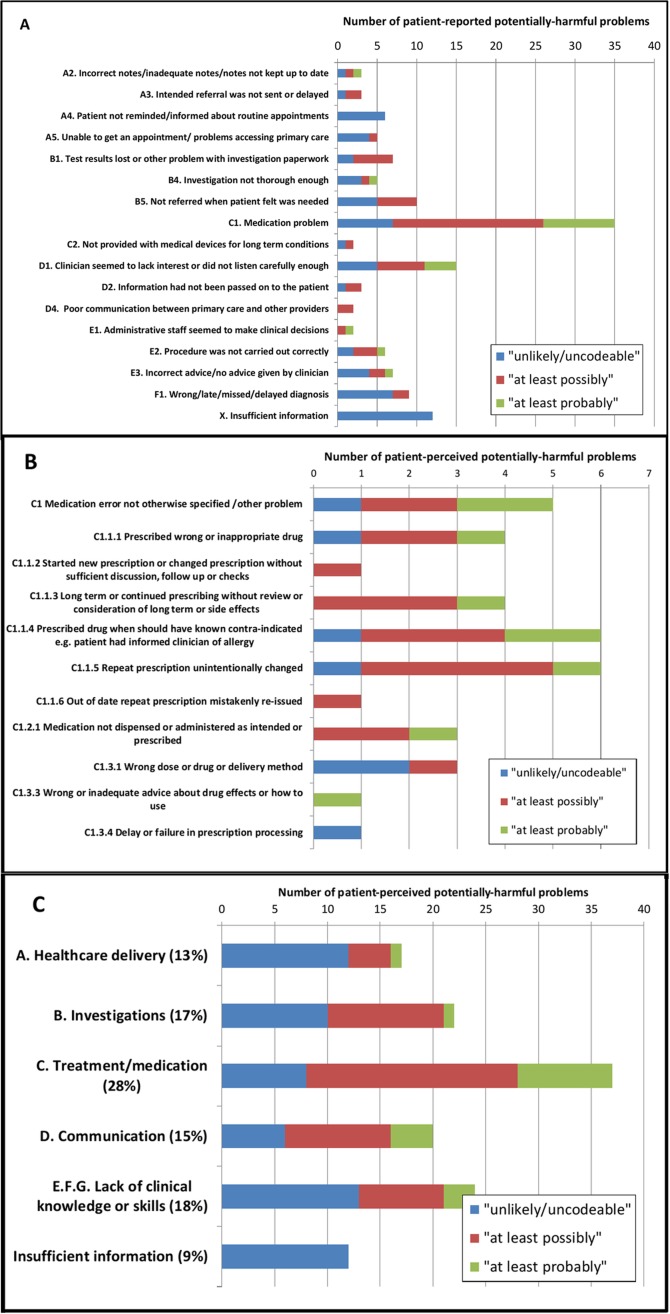
638 (65%) members of the public completed the survey and few respondents reported any difficulty in understanding or completing the survey. 132 (21%) respondents reported experiencing a potentially harmful preventable problem during the past 12 months and 108 (82%) of these respondents provided a description that was adequate for at least one clinician to form an opinion about the potentially harmful problem. Respondents were older than the UK generally, more likely to work or volunteer in the healthcare sector and tended to use primary care more frequently but their confidence and trust in their own general practitioner (GP) was similar to that of the UK population as measured by the annual English GP patient survey.
The survey was acceptable to patients and mostly provided data of sufficient quality for review by clinicians and members of the public. It is now ready to use at a population level to estimate the frequency and nature of potentially harmful preventable problems in primary care from a patient's perspective.
设计并试行一项用于人群层面的调查,以估算英国初级医疗中患者察觉到的潜在有害可预防问题的发生频率。探究这些问题的性质、患者提出的预防策略,以及临床医生和公众对潜在危害可能性的看法。
由三名公众成员和一名研究人员共同设计该调查,并通过公众和患者参与及互动网络进行试行。
英国人群的自我选择样本。
977名公众成员在2015年10月和11月期间参与了在线调查。
受访者对调查完成难易程度的反馈、临床医生和公众审核后的回答质量、对过去12个月中患者察觉到的潜在有害问题的频率和性质的初步估算。
638名(65%)公众成员完成了调查,很少有受访者表示在理解或完成调查方面有任何困难。132名(21%)受访者报告在过去12个月中经历了潜在有害的可预防问题,其中108名(82%)受访者提供的描述足以让至少一名临床医生对潜在有害问题形成看法。受访者的年龄普遍比英国总体人群大,更有可能在医疗保健领域工作或做志愿者,并且更频繁地使用初级医疗,但根据年度英国全科医生患者调查衡量,他们对自己的全科医生(GP)的信心和信任与英国人群相似。
该调查为患者所接受,并且大多提供了质量足以供临床医生和公众审核的数据。现在它已准备好在人群层面使用,以从患者角度估算初级医疗中潜在有害可预防问题的频率和性质。