Wu Junhua, Li Pengfei, Dong Chenling, Jiang Heting, Gao Xiang, Qin Meng, Wang Wei, Cao Yi
Collaborative Innovation Center of Advanced Microstructures, National Laboratory of Solid State Microstructure, Department of Physics, Nanjing University, Nanjing, 210093, China.
Jiangsu Key Laboratory of Molecular Medicine, Medical School, Nanjing University, Nanjing, Jiangsu, 210093, China.
Nat Commun. 2018 Feb 12;9(1):620. doi: 10.1038/s41467-018-02917-6.
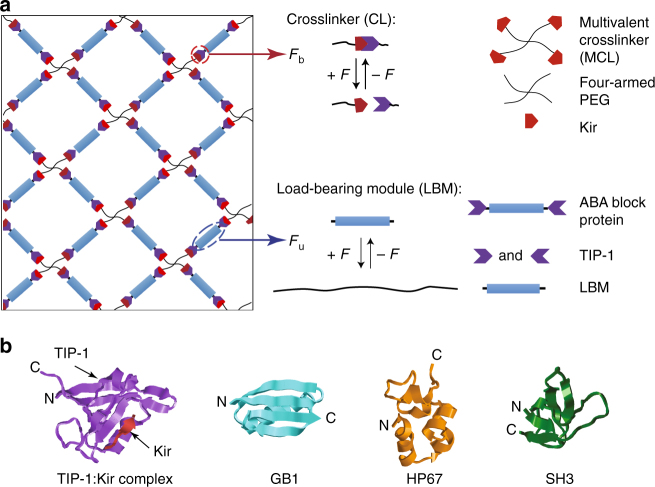
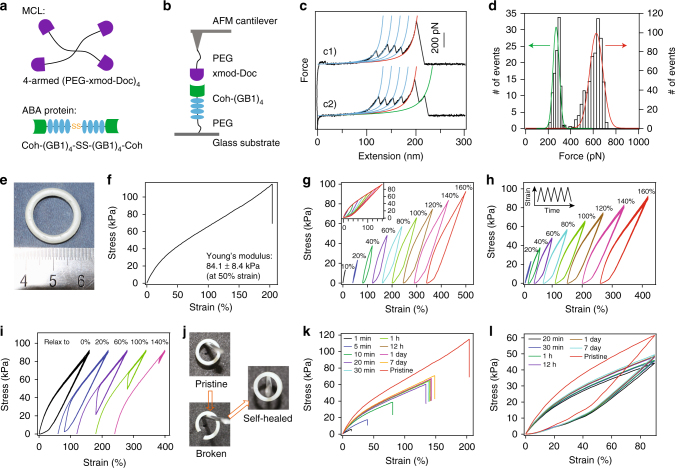
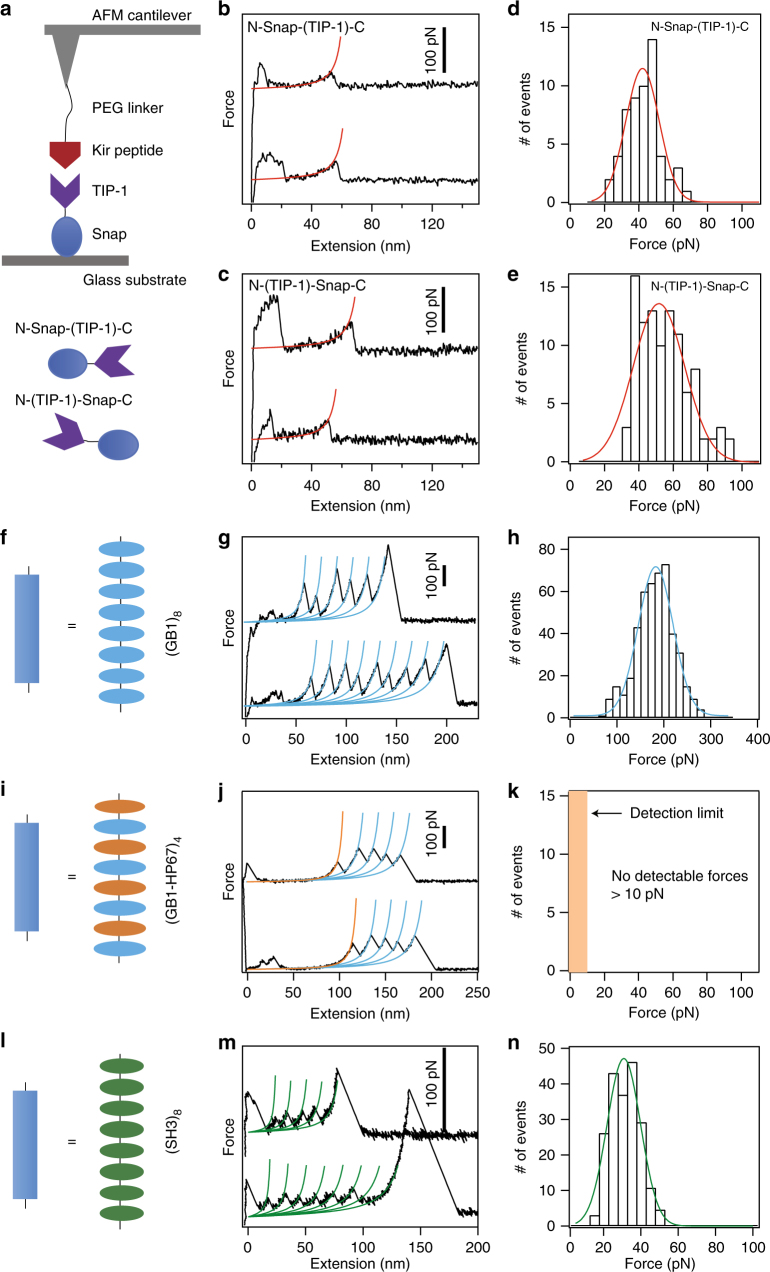
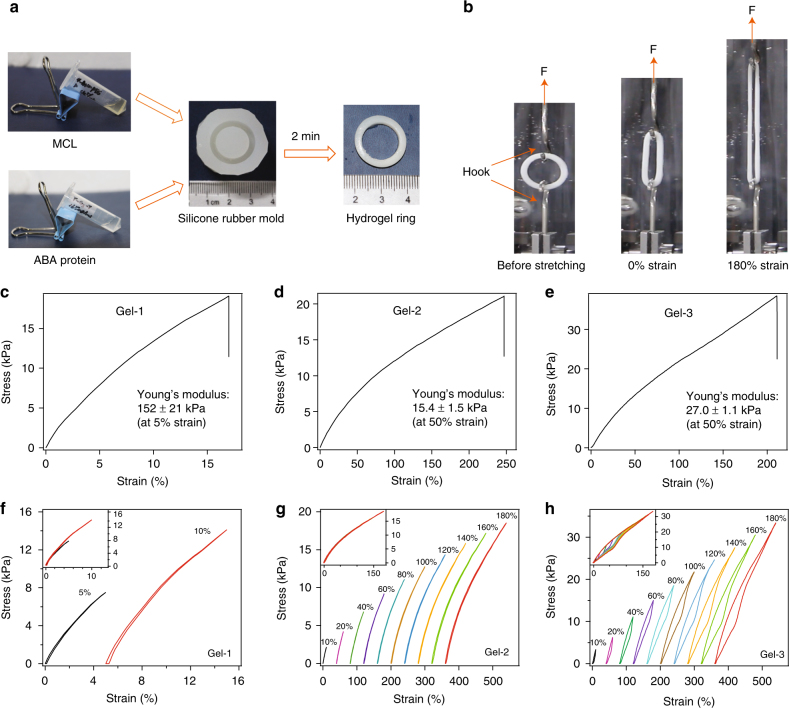
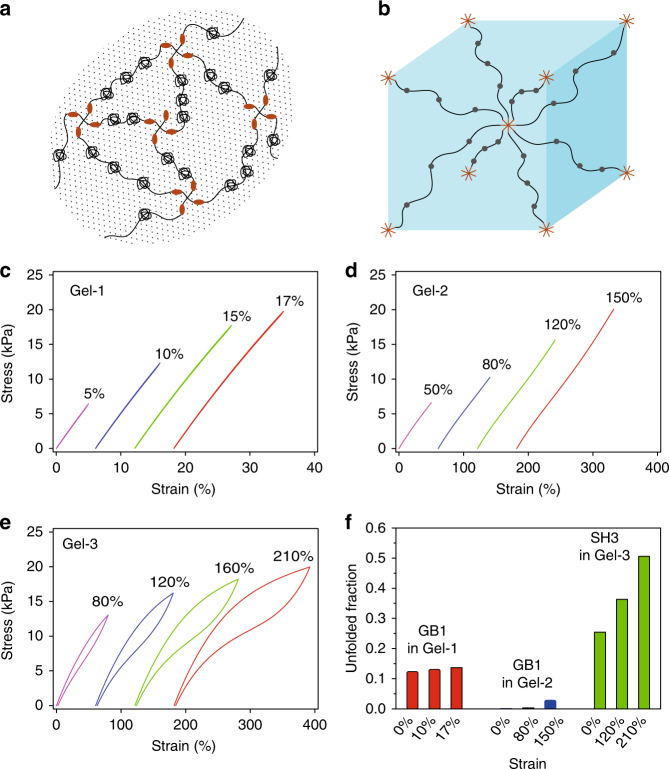
Designing synthetic protein hydrogels with tailored mechanical properties similar to naturally occurring tissues is an eternal pursuit in tissue engineering and stem cell and cancer research. However, it remains challenging to correlate the mechanical properties of protein hydrogels with the nanomechanics of individual building blocks. Here we use single-molecule force spectroscopy, protein engineering and theoretical modeling to prove that the mechanical properties of protein hydrogels are predictable based on the mechanical hierarchy of the cross-linkers and the load-bearing modules at the molecular level. These findings provide a framework for rationally designing protein hydrogels with independently tunable elasticity, extensibility, toughness and self-healing. Using this principle, we demonstrate the engineering of self-healable muscle-mimicking hydrogels that can significantly dissipate energy through protein unfolding. We expect that this principle can be generalized for the construction of protein hydrogels with customized mechanical properties for biomedical applications.
设计具有与天然组织相似的定制机械性能的合成蛋白质水凝胶,是组织工程、干细胞和癌症研究中永恒的追求。然而,将蛋白质水凝胶的机械性能与单个构建模块的纳米力学联系起来仍然具有挑战性。在这里,我们使用单分子力谱、蛋白质工程和理论建模来证明,基于交联剂和分子水平上的承重模块的机械层次结构,蛋白质水凝胶的机械性能是可预测的。这些发现为合理设计具有独立可调弹性、延展性、韧性和自愈性的蛋白质水凝胶提供了一个框架。利用这一原理,我们展示了可自愈的肌肉模拟水凝胶的工程设计,这种水凝胶可以通过蛋白质解折叠显著地耗散能量。我们期望这一原理能够推广到构建具有定制机械性能的蛋白质水凝胶,用于生物医学应用。