Jing Enxuan, Sundararajan Pragalath, Majumdar Ishita Deb, Hazarika Suwagmani, Fowler Samantha, Szeto Angela, Gesta Stephane, Mendez Armando J, Vishnudas Vivek K, Sarangarajan Rangaprasad, Narain Niven R
BERG, LLC, 500 Old Connecticut Path, Bldg B (3rd Floor), Framingham, MA 01701 USA.
2Diabetes Research Institute, University of Miami Miller School of Medicine, University of Miami, Coral Gables, FL USA.
Nutr Metab (Lond). 2018 Feb 2;15:11. doi: 10.1186/s12986-018-0242-6. eCollection 2018.
Inhibition of Hsp90 has been shown to improve glucose tolerance and insulin sensitivity in mouse models of diabetes. In the present report, the specific isoform Hsp90ab1, was identified as playing a major role in regulating insulin signaling and glucose metabolism.
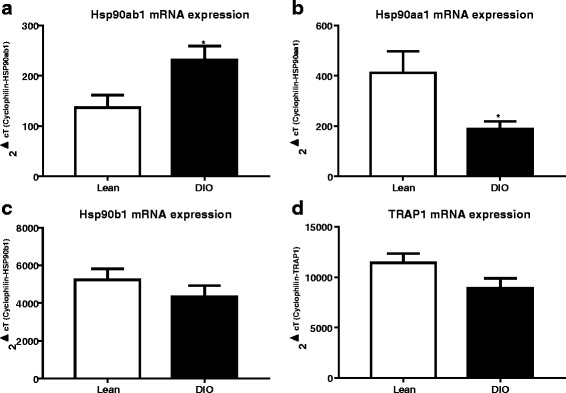
In a diet-induced obese (DIO) mouse model of diabetes, expression of various Hsp90 isoforms in skeletal tissue was examined. Subsequent experiments characterized the role of Hsp90ab1 isoform in glucose metabolism and insulin signaling in primary human skeletal muscle myoblasts (HSMM) and a DIO mouse model.
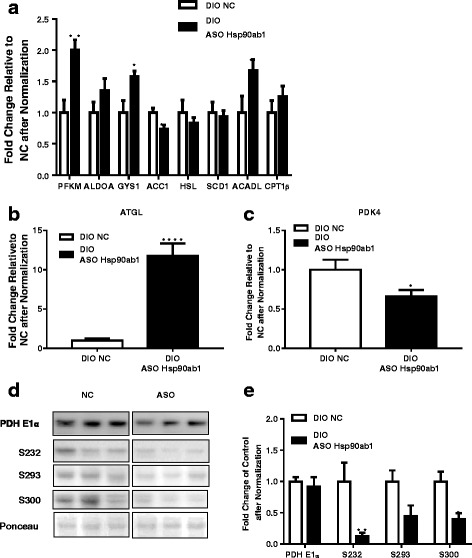
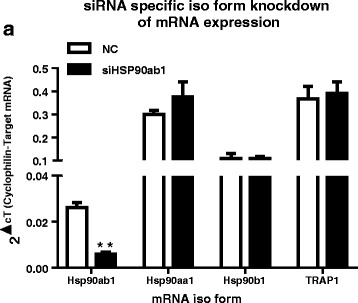
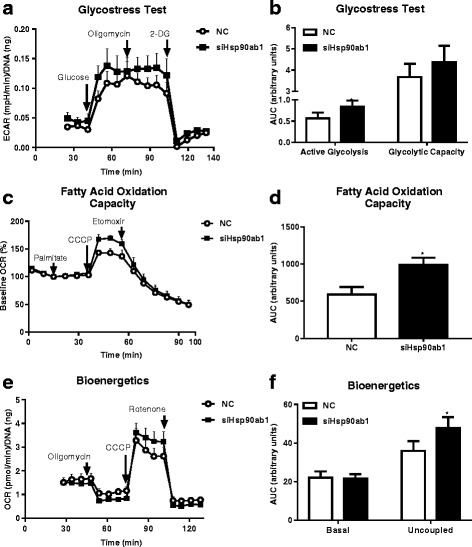
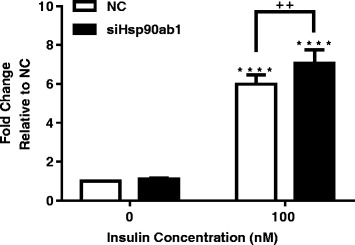
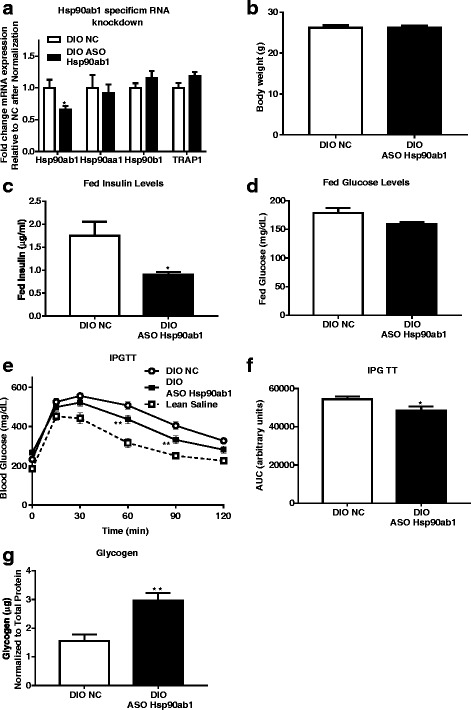
In DIO mice mRNA was upregulated in skeletal muscle compared to lean mice and knockdown using anti-sense oligonucleotide (ASO) resulted in reduced expression in skeletal muscle that was associated with improved glucose tolerance, reduced fed glucose and fed insulin levels compared to DIO mice that were treated with a negative control oligonucleotide. In addition, knockdown of HSP90ab1 in DIO mice was associated with reduced pyruvate dehydrogenase kinase-4 mRNA and phosphorylation of the muscle pyruvate dehydrogenase complex (at serine 232, 293 and 300), but increased phosphofructokinase 1, glycogen synthase 1 and long-chain specific acyl-CoA dehydrogenase mRNA. In HSMM, siRNA knockdown of Hsp90ab1 induced an increase in substrate metabolism, mitochondrial respiration capacity, and insulin sensitivity, providing further evidence for the role of Hsp90ab1 in metabolism.
The data support a novel role for Hsp90ab1 in arbitrating skeletal muscle plasticity via modulation of substrate utilization including glucose and fatty acids in normal and disease conditions. Hsp90ab1 represents a novel target for potential treatment of metabolic disease including diabetes.
在糖尿病小鼠模型中,已证明抑制热休克蛋白90(Hsp90)可改善葡萄糖耐量和胰岛素敏感性。在本报告中,特定亚型Hsp90ab1被确定在调节胰岛素信号传导和葡萄糖代谢中起主要作用。
在饮食诱导的肥胖(DIO)糖尿病小鼠模型中,检测了骨骼肌组织中各种Hsp90亚型的表达。随后的实验确定了Hsp90ab1亚型在原代人骨骼肌成肌细胞(HSMM)和DIO小鼠模型的葡萄糖代谢和胰岛素信号传导中的作用。
与瘦小鼠相比,DIO小鼠骨骼肌中的mRNA上调,使用反义寡核苷酸(ASO)敲低导致骨骼肌中表达降低,与用阴性对照寡核苷酸处理的DIO小鼠相比,葡萄糖耐量改善,进食后血糖和胰岛素水平降低。此外,DIO小鼠中HSP90ab1的敲低与丙酮酸脱氢酶激酶4 mRNA减少以及肌肉丙酮酸脱氢酶复合物的磷酸化(丝氨酸232、293和300处)减少有关,但磷酸果糖激酶1、糖原合酶1和长链特异性酰基辅酶A脱氢酶mRNA增加。在HSMM中,Hsp90ab1的siRNA敲低诱导底物代谢、线粒体呼吸能力和胰岛素敏感性增加,为Hsp90ab1在代谢中的作用提供了进一步证据。
数据支持Hsp90ab1在正常和疾病状态下通过调节包括葡萄糖和脂肪酸在内的底物利用来调节骨骼肌可塑性方面的新作用。Hsp90ab1代表了包括糖尿病在内的代谢疾病潜在治疗的新靶点。