Wang Changmei, Li Fang, Guo Jingjing, Li Congcong, Xu Dashuai, Wang Bin
Department of Geriatrics, Jinan Central Hospital, Shandong University, Jinan, Shandong 250013, P.R. China.
Exp Ther Med. 2018 Feb;15(2):1515-1519. doi: 10.3892/etm.2017.5584. Epub 2017 Nov 30.
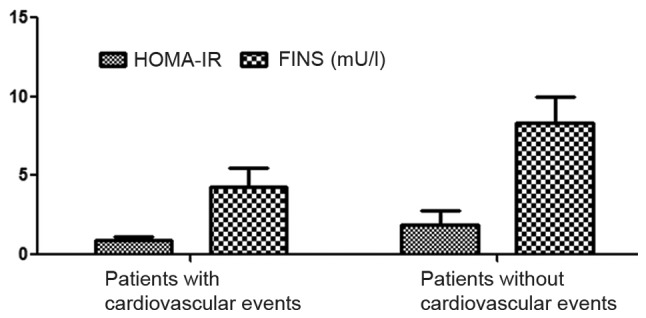
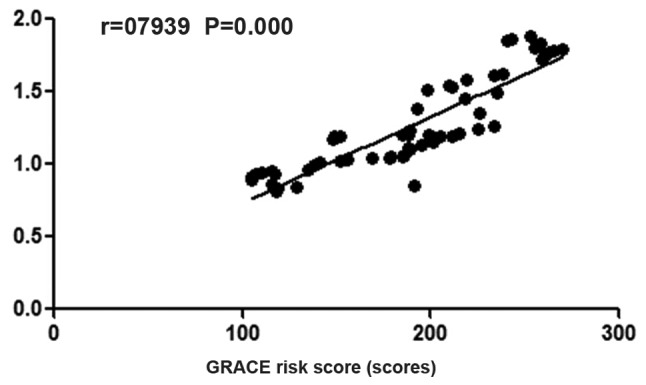
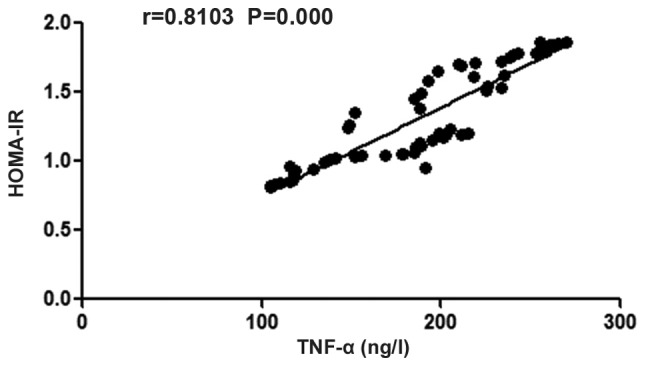
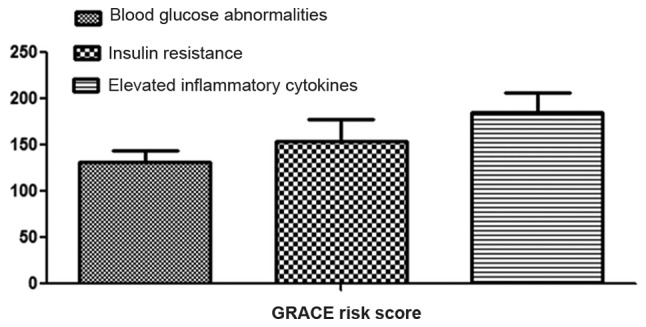
This study was designed to investigate the relation of insulin resistance, blood glucose and inflammatory cytokines with cardiovascular events in diabetic patients complicated with coronary heart disease (CHD). A total of 120 patients with diabetes mellitus type 2 (T2DM) complicated with CHD admitted to Jinan Central Hospital from January 2015 to March 2016 were enrolled in this study. There were 60 cases complicated with cardiovascular events and 60 had no history of cardiovascular events; there were 40 cases with abnormal blood glucose, 40 with insulin resistance and 40 with elevated inflammatory cytokines. Changes in the levels of blood glucose, fasting serum insulin and inflammatory cytokines as well as changes in the homeostasis model assessment of insulin resistance indexes (HOMA-IR) were recorded and compared among groups of patients. Besides, changes in the Global Registry of Acute Coronary Events (GRACE) risk score and the incidence rate of cardiovascular events were also detected and multivariate logistic regression analysis was conducted so as to identify relevant risk factors. Our results showed the fasting blood glucose and the 2 h postprandial blood glucose levels in the non-cardiovascular event group were lower than those in the cardiovascular event group (P<0.05). However, levels of fasting serum insulin and HOMA-IR in the non-cardiovascular event group were significantly higher than those in the cardiovascular event group (P<0.05). Additionally, levels of tumor necrosis factor-α (TNF-α), interleukin-6 and C-reactive protein in the non-cardiovascular event group were significantly lower than those in the cardiovascular event group (P<0.05). Moreover, GRACE risk scores in patients with elevated inflammatory cytokines were higher than those in patients with insulin resistance and those in patients with blood glucose abnormalities (P<0.05). The incidence rate of cardiovascular events in patients with blood glucose abnormalities was lower than that in patients with insulin resistance and that in patients with elevated inflammatory cytokines. There was a positive correlation between TNF-α and HOMA-IR (P<0.05), and between HOMA-IR and the GRACE risk score (P<0.05). Blood glucose abnormalities, insulin resistance and inflammatory cytokines were all independent risk factors for cardiovascular events. Based on our findings, stronger inflammatory responses in patients with T2DM complicated with CHD lead to higher incidence rates of cardiovascular events. Besides that, elevated blood glucose and insulin resistance levels are also independent risk factors for cardiovascular events.
本研究旨在探讨胰岛素抵抗、血糖及炎性细胞因子与糖尿病合并冠心病(CHD)患者心血管事件的关系。选取2015年1月至2016年3月在济南中心医院收治的120例2型糖尿病(T2DM)合并CHD患者纳入本研究。其中60例发生心血管事件,60例无心血管事件病史;血糖异常40例,胰岛素抵抗40例,炎性细胞因子升高40例。记录并比较各组患者血糖、空腹血清胰岛素及炎性细胞因子水平的变化以及胰岛素抵抗指数稳态模型评估(HOMA-IR)的变化。此外,还检测了急性冠状动脉事件全球注册(GRACE)风险评分的变化及心血管事件的发生率,并进行多因素logistic回归分析以确定相关危险因素。结果显示,非心血管事件组的空腹血糖及餐后2小时血糖水平低于心血管事件组(P<0.05)。然而,非心血管事件组的空腹血清胰岛素水平及HOMA-IR显著高于心血管事件组(P<0.05)。此外,非心血管事件组的肿瘤坏死因子-α(TNF-α)、白细胞介素-6及C反应蛋白水平显著低于心血管事件组(P<0.05)。而且,炎性细胞因子升高患者的GRACE风险评分高于胰岛素抵抗患者及血糖异常患者(P<0.05)。血糖异常患者的心血管事件发生率低于胰岛素抵抗患者及炎性细胞因子升高患者。TNF-α与HOMA-IR之间呈正相关(P<0.05),HOMA-IR与GRACE风险评分之间呈正相关(P<0.05)。血糖异常、胰岛素抵抗及炎性细胞因子均为心血管事件的独立危险因素。根据我们的研究结果,T2DM合并CHD患者更强的炎症反应导致心血管事件的发生率更高。除此之外,血糖升高及胰岛素抵抗水平也是心血管事件的独立危险因素。