Bieling Maren, Tischer Sabine, Kalinke Ulrich, Blasczyk Rainer, Buus Søren, Maecker-Kolhoff Britta, Eiz-Vesper Britta
Institute for Transfusion Medicine, Hannover Medical School (MHH), Hanover, Germany.
Integrated Research and Treatment Center (IFB-Tx), MHH, Hanover, Germany.
Oncotarget. 2017 Dec 21;9(4):4737-4757. doi: 10.18632/oncotarget.23531. eCollection 2018 Jan 12.
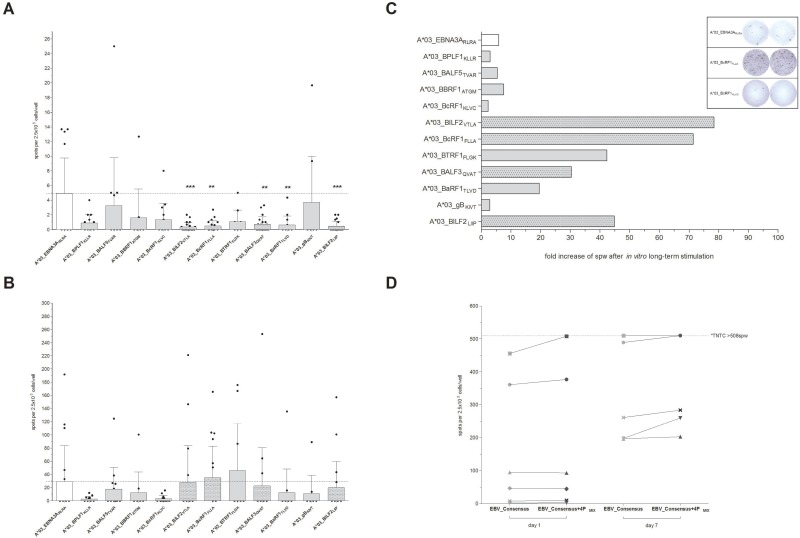
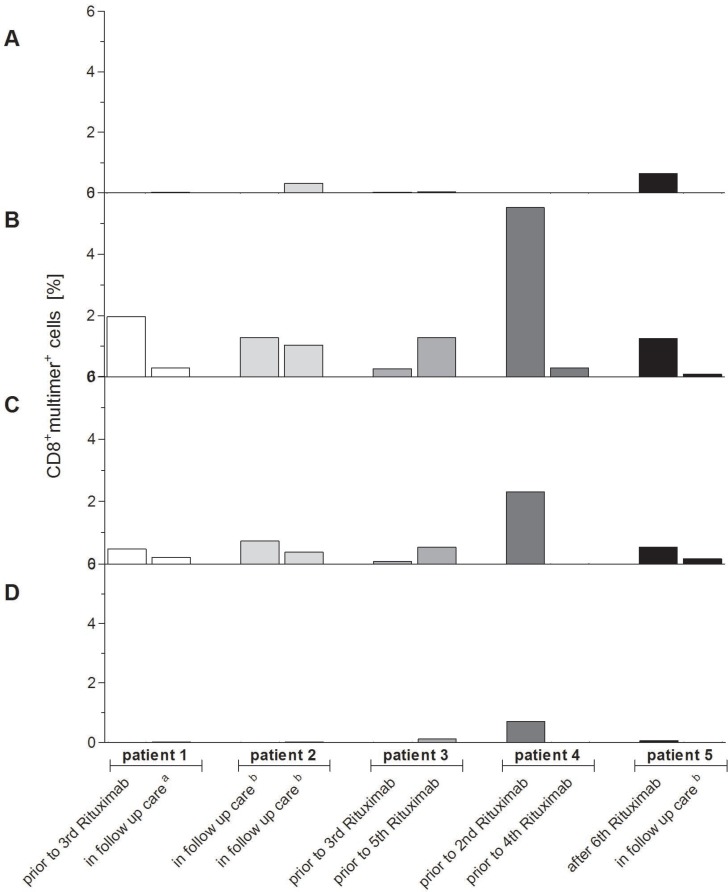
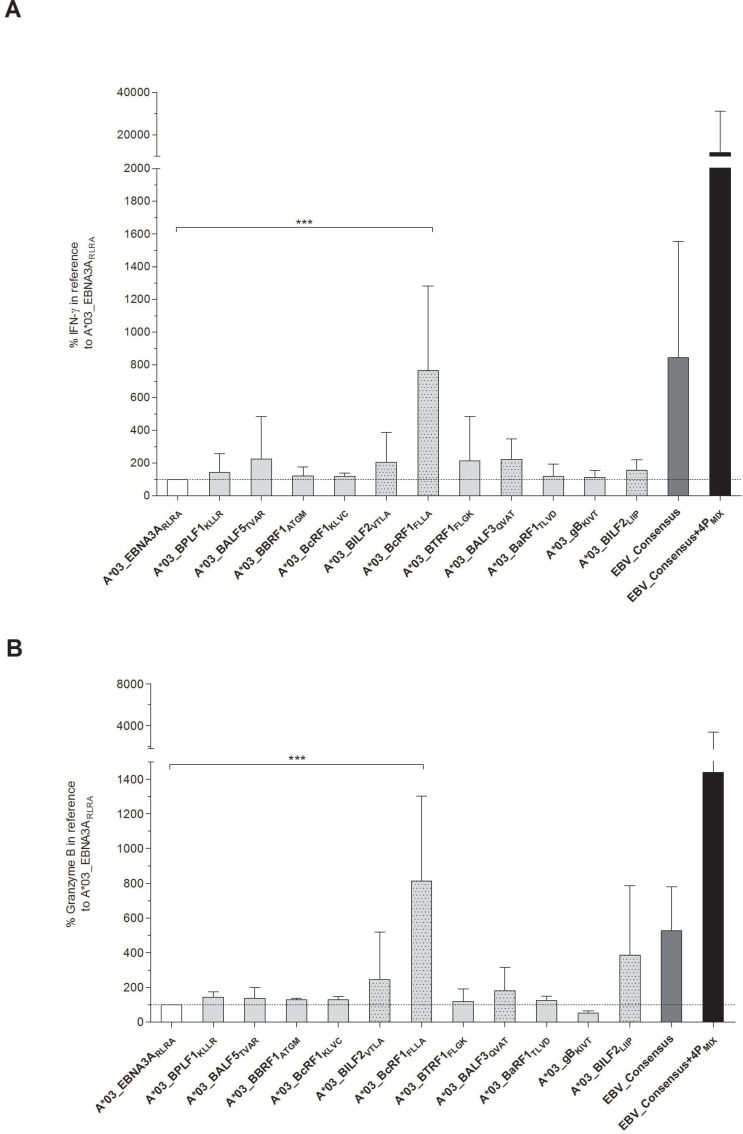
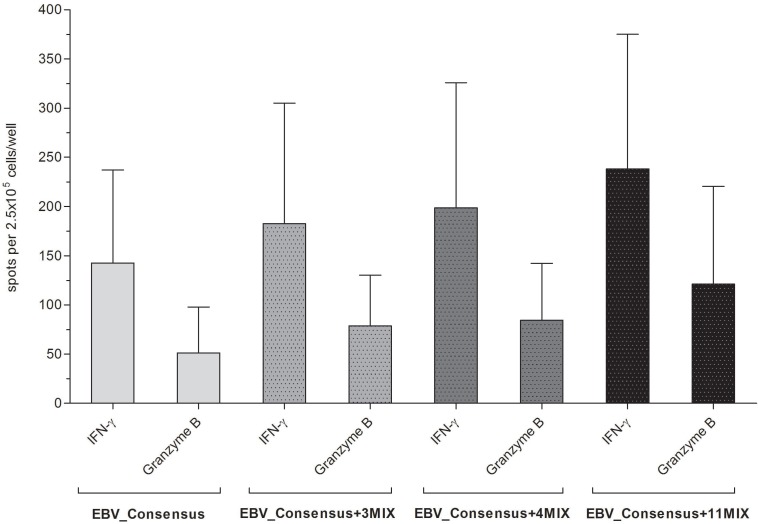
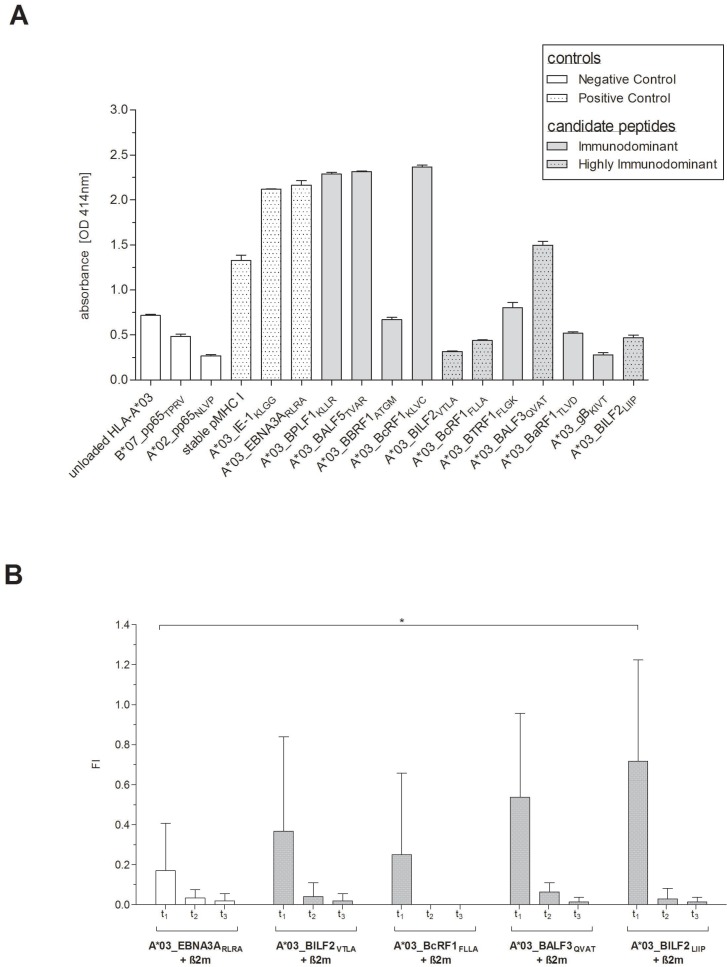
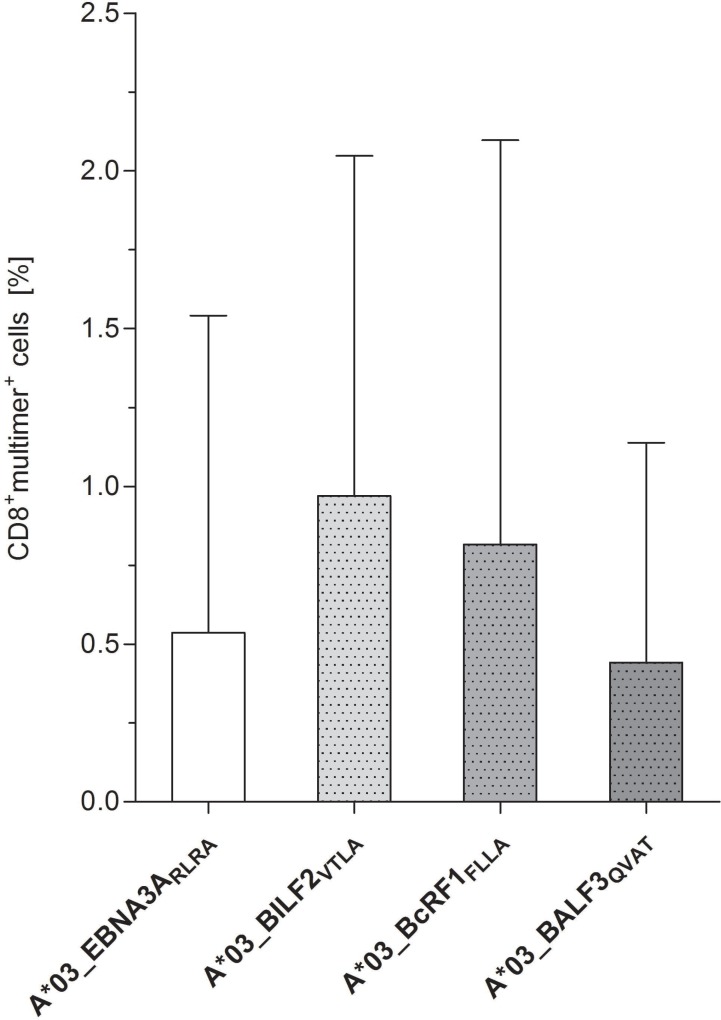
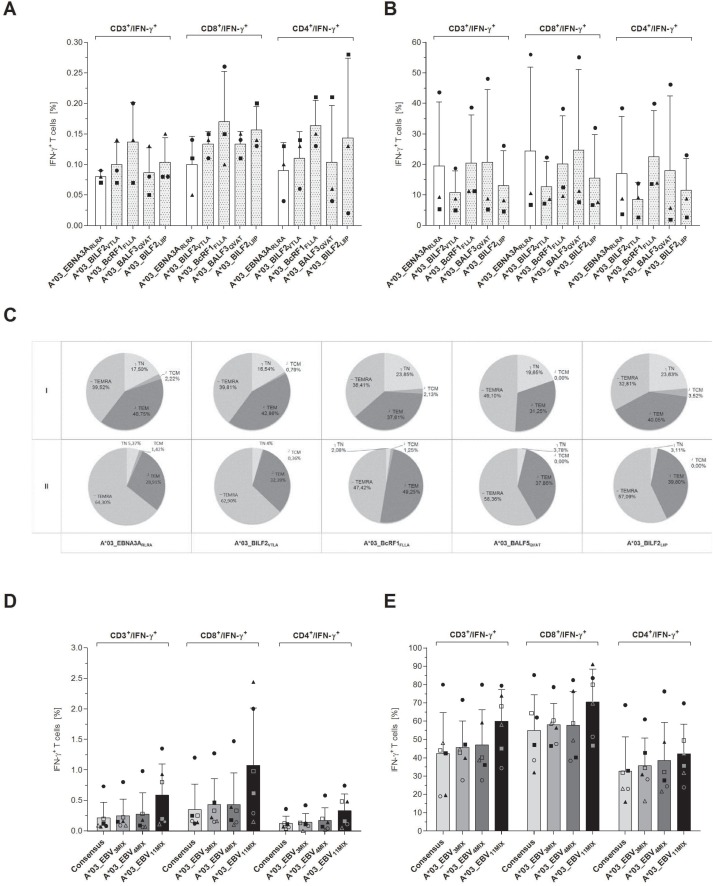
Morbidity and mortality of immunocompromised patients are increased by primary infection with or reactivation of Epstein-Barr virus (EBV), possibly triggering EBV post-transplant lymphoproliferative disease (PTLD). Adoptive transfer of EBV-specific cytotoxic T cells (EBV-CTLs) promises a non-toxic immunotherapy to effectively prevent or treat these complications. To improve immunotherapy and immunomonitoring this study aimed at identifying and evaluating naturally processed and presented HLA-A03:01-restricted EBV-CTL epitopes as immunodominant targets. More than 15000 peptides were sequenced from EBV-immortalized B cells transduced with soluble HLA-A03:01, sorted using different epitope prediction tools and eleven candidates were preselected. T2 and Flex-T peptide-binding and dissociation assays confirmed the stability of peptide-MHC complexes. Their immunogenicity and clinical relevance were evaluated by assessing the frequencies and functionality of EBV-CTLs in healthy donors ( > 10) and EBV PTLD-patients ( = 5) by multimer staining, Eli- and FluoroSpot assays. All eleven peptides elicited EBV-CTL responses in the donors. Their clinical applicability was determined by small-scale T-cell enrichment using Cytokine Secretion Assay and immunophenotyping. Mixtures of these peptides when added to the EBV Consensus pool revealed enhanced stimulation and enrichment efficacy. These EBV-specific epitopes broadening the repertoire of known targets will improve manufacturing of clinically applicable EBV-CTLs and monitoring of EBV-specific T-cell responses in patients.
免疫功能低下患者因初次感染或爱泼斯坦-巴尔病毒(EBV)再激活而导致发病率和死亡率增加,这可能引发EBV移植后淋巴细胞增殖性疾病(PTLD)。EBV特异性细胞毒性T细胞(EBV-CTL)的过继性转移有望成为一种无毒免疫疗法,以有效预防或治疗这些并发症。为了改善免疫疗法和免疫监测,本研究旨在鉴定和评估自然加工和呈递的HLA-A03:01限制性EBV-CTL表位作为免疫优势靶点。从用可溶性HLA-A03:01转导的EBV永生化B细胞中对15000多种肽进行了测序,使用不同的表位预测工具进行分选,并预选了11个候选物。T2和Flex-T肽结合和解离试验证实了肽-MHC复合物的稳定性。通过多聚体染色、Eli和荧光斑点试验评估健康供体(>10例)和EBV PTLD患者(=5例)中EBV-CTL的频率和功能,以评估它们的免疫原性和临床相关性。所有11种肽在供体中均引发了EBV-CTL反应。通过细胞因子分泌试验和免疫表型分析进行小规模T细胞富集,确定了它们的临床适用性。当将这些肽的混合物添加到EBV共识库中时,显示出增强的刺激和富集效果。这些拓宽已知靶点库的EBV特异性表位将改善临床适用的EBV-CTL的制备以及患者中EBV特异性T细胞反应的监测。