Shaik Shavali, Kennis Bridget, Maegawa Shinji, Schadler Keri, Yanwen Yang, Callegari Keri, Lulla Rishi R, Goldman Stewart, Nazarian Javad, Rajaram Veena, Fangusaro Jason, Gopalakrishnan Vidya
Department of Pediatrics, University of Texas, MD Anderson Cancer Center, Houston, Texas, USA.
Department of Pediatrics, Northwestern Feinberg School of Medicine, Northwestern University, Chicago, Illinois, USA.
Oncotarget. 2017 Dec 28;9(4):5233-5250. doi: 10.18632/oncotarget.23750. eCollection 2018 Jan 12.
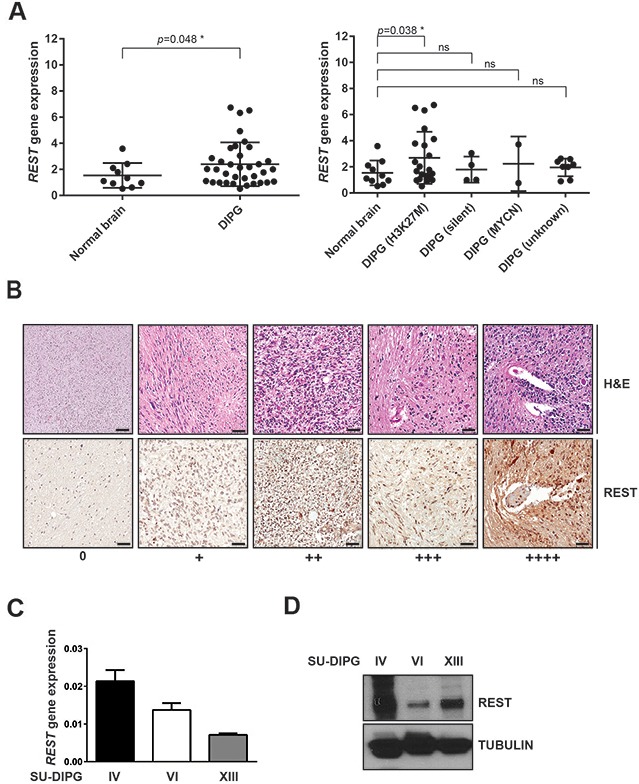
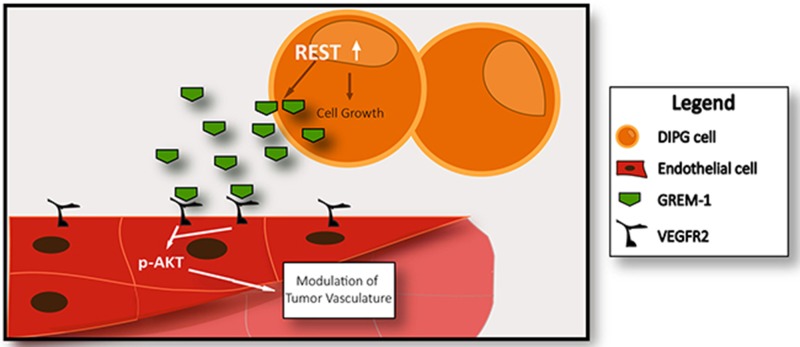
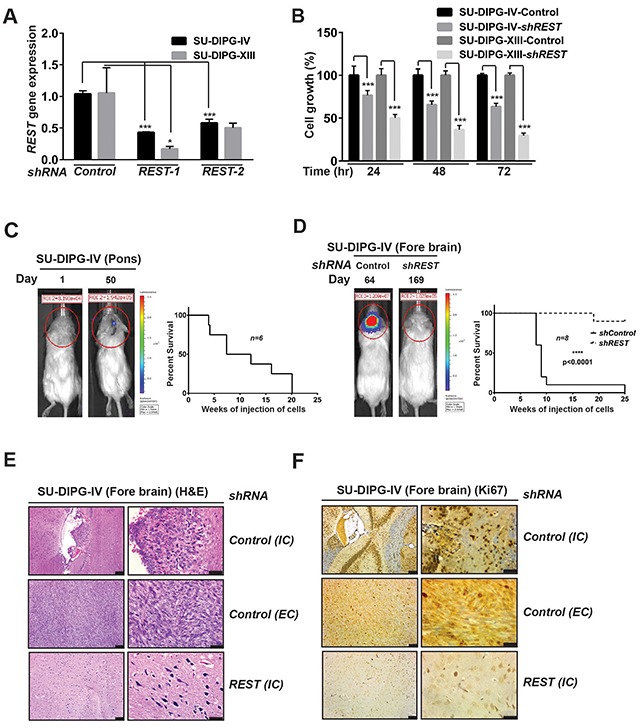
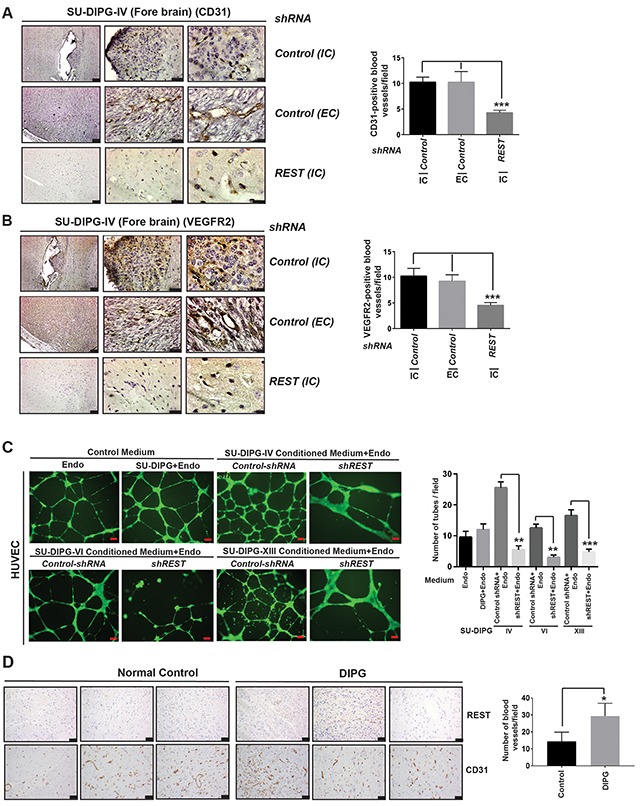
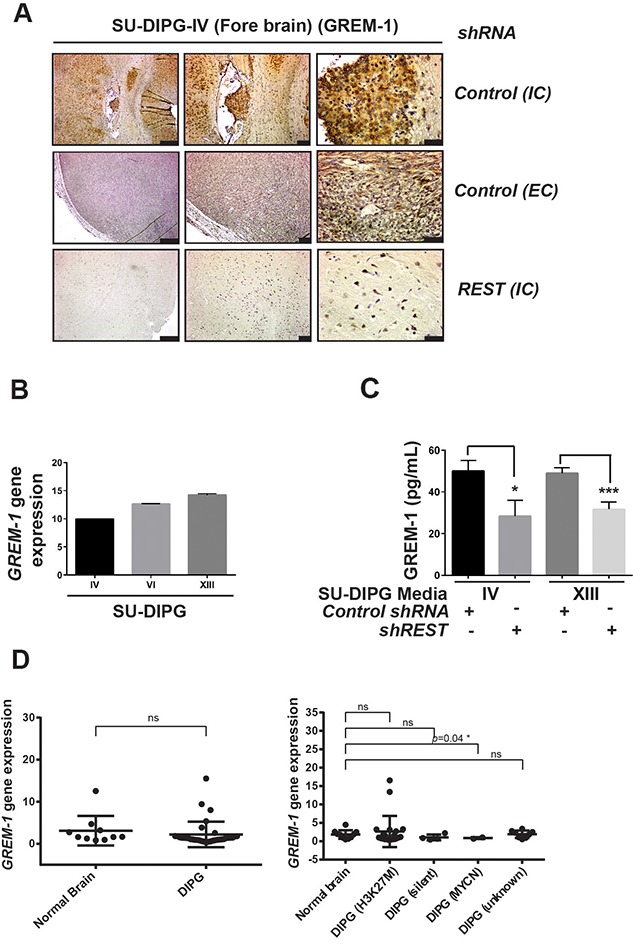
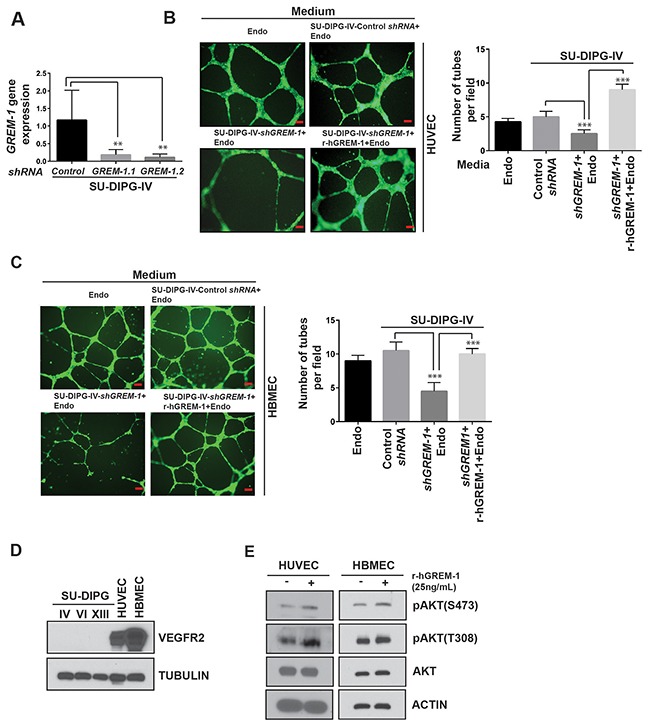
Diffuse intrinsic pontine glioma (DIPG) is a highly aggressive glial tumor that occurs in children. The extremely poor median and 5-year survival in children afflicted with DIPG highlights the need for novel biology-driven therapeutics. Here, we have implicated the chromatin remodeler and regulator of brain development called Silencing Transcription Factor (REST), in DIPG pathology. We show that REST protein is aberrantly elevated in at least 21% of DIPG tumors compared to normal controls. Its knockdown in DIPG cell lines diminished cell growth and decreased their tumorigenicity in mouse intracranial models. DIPGs are vascularized tumors and interestingly, REST loss in DIPG cells also caused a substantial decline in tumor vasculature as measured by a decrease in CD31 and VEGFR2 staining. These observations were validated , where a significant decline in tube formation by human umbilical vein endothelial cells (HUVEC) was seen following REST-loss in DIPG cells. Mechanistically, REST controlled the secretion of a pro-angiogenic molecule and ligand for VEGFR2 called Gremlin-1 (GREM-1), and was associated with enhanced AKT activation. Importantly, the decline in tube formation caused by REST loss could be rescued by addition of recombinant GREM-1, which also caused AKT activation in HUVECs and human brain microvascular endothelial cells (HBMECs). In summary, our study is the first to demonstrate autocrine and paracrine functions for REST in DIPG development. It also provides the foundation for future investigations on anti-angiogenic therapies targeting GREM-1 in combination with drugs that target REST-associated chromatin remodeling activities.
弥漫性脑桥内在型胶质瘤(DIPG)是一种发生于儿童的高度侵袭性胶质肿瘤。DIPG患儿极差的中位生存期和5年生存率凸显了对新型生物学驱动疗法的需求。在此,我们发现一种名为沉默转录因子(REST)的染色质重塑因子及脑发育调节因子与DIPG病理相关。我们发现,与正常对照相比,至少21%的DIPG肿瘤中REST蛋白异常升高。在DIPG细胞系中敲低该蛋白可减少细胞生长,并降低其在小鼠颅内模型中的致瘤性。DIPG是血管化肿瘤,有趣的是,通过检测CD31和VEGFR2染色发现,DIPG细胞中REST缺失也导致肿瘤血管显著减少。这些观察结果得到了验证,在DIPG细胞中REST缺失后,人脐静脉内皮细胞(HUVEC)的管腔形成显著减少。从机制上讲,REST控制促血管生成分子及VEGFR2配体Gremlin-1(GREM-1)的分泌,并与增强的AKT激活相关。重要的是,添加重组GREM-1可挽救因REST缺失导致的管腔形成减少,GREM-1还可在HUVEC和人脑微血管内皮细胞(HBMEC)中激活AKT。总之,我们的研究首次证明了REST在DIPG发生发展中的自分泌和旁分泌功能。它也为未来针对GREM-1的抗血管生成疗法与靶向REST相关染色质重塑活性的药物联合研究奠定了基础。