Janssens Sylvie, Schotsaert Michael, Karnik Rahul, Balasubramaniam Vinod, Dejosez Marion, Meissner Alexander, García-Sastre Adolfo, Zwaka Thomas P
Huffington Center for Cell-Based Research in Parkinson's Disease, Black Family Stem Cell Institute, Department of Cell, Developmental and Regenerative Biology, Icahn School of Medicine at Mount Sinai, New York, New York, USA.
Department of Microbiology, Global Health and Emerging Pathogens Institute, and Department of Medicine, Division of Infectious Diseases, Icahn School of Medicine at Mount Sinai, New York, New York, USA.
mSystems. 2018 Feb 6;3(1). doi: 10.1128/mSystems.00219-17. eCollection 2018 Jan-Feb.
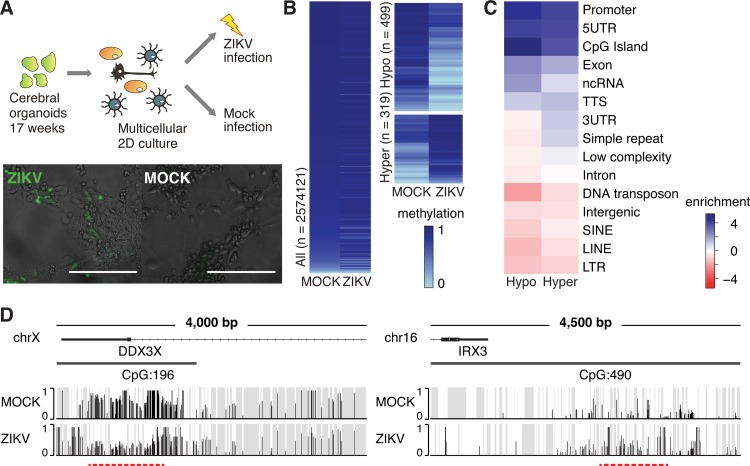
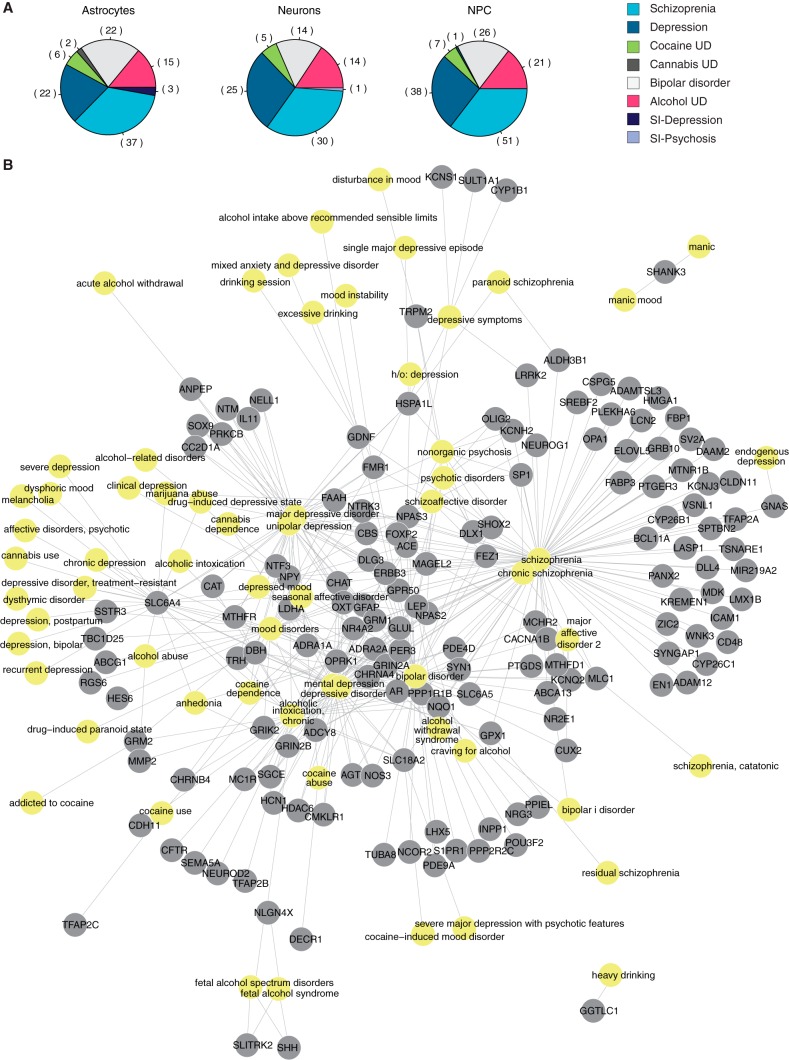
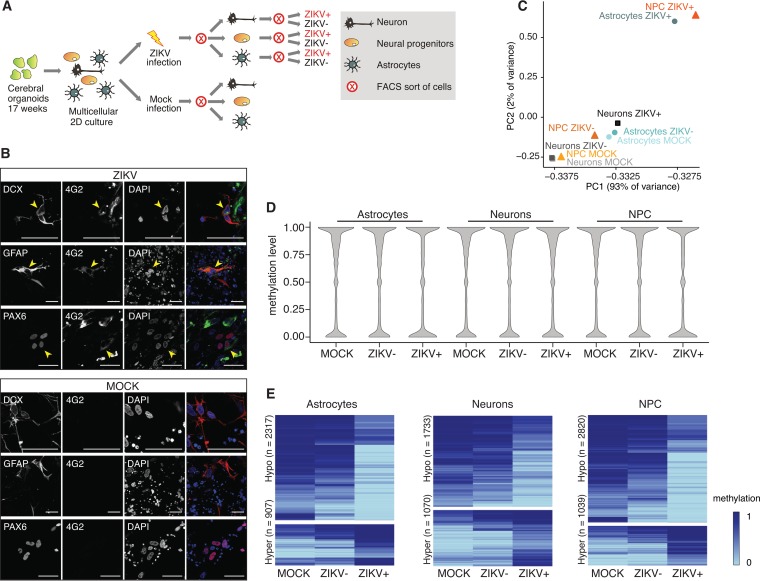
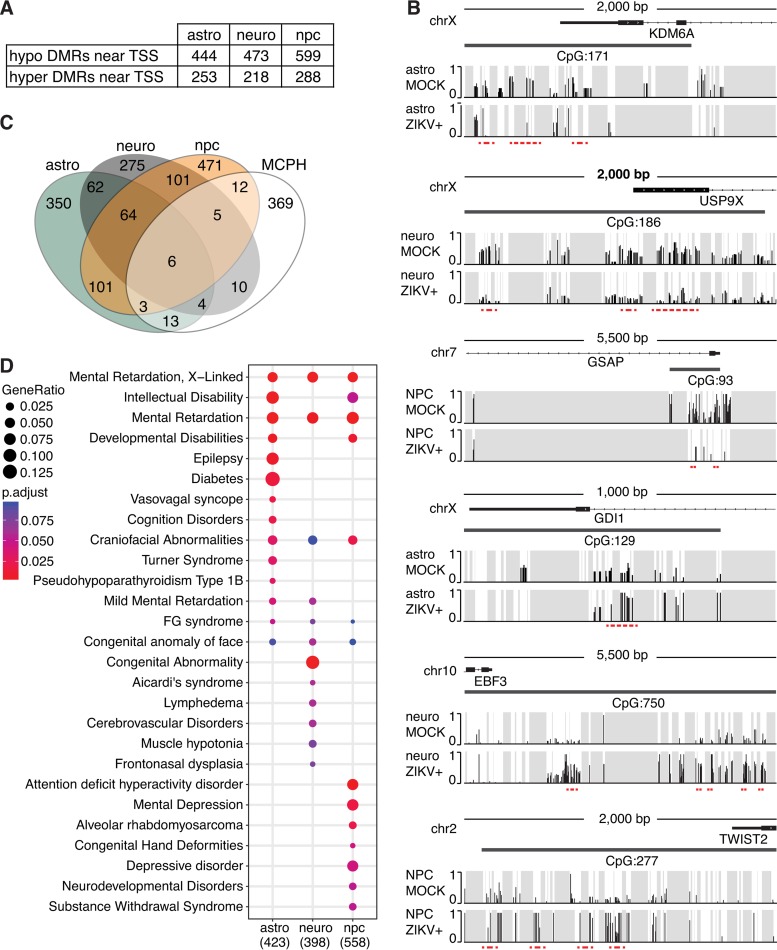
Zika virus (ZIKV) infection during early pregnancy can cause microcephaly and associated defects at birth, but whether it can induce neurologic sequelae that appear later in life remains unclear. Using a model of the developing brain based on embryonic stem cell-derived brain organoids, we studied the impact of ZIKV infection on the DNA methylation pattern across the entire genome in selected neural cell types. The virus unexpectedly alters the DNA methylome of neural progenitors, astrocytes, and differentiated neurons at genes that have been implicated in the pathogenesis of a number of brain disorders, most prominently mental retardation and schizophrenia. Our results suggest that ZIKV infection during fetal development could lead to a spectrum of delayed-onset neuropsychiatric complications. Scientific research on human neural stem cells and cerebral organoids has confirmed the congenital neurotropic and neurodestructive nature of the Zika virus. However, the extent to which prenatal ZIKV infection is associated with more subtle brain alterations, such as epigenetic changes, remains ill defined. Here, we address the question of whether ZIKV infection induces DNA methylation changes with the potential to cause brain disorders later in life.
孕期早期感染寨卡病毒(ZIKV)可导致出生时小头畸形及相关缺陷,但该病毒是否会诱发日后出现的神经后遗症仍不明确。我们利用基于胚胎干细胞来源的脑类器官构建的发育中大脑模型,研究了ZIKV感染对特定神经细胞类型全基因组DNA甲基化模式的影响。该病毒意外地改变了神经祖细胞、星形胶质细胞和分化神经元的DNA甲基化组,这些基因与多种脑部疾病的发病机制有关,最显著的是智力迟钝和精神分裂症。我们的结果表明,胎儿发育期间感染ZIKV可能导致一系列迟发性神经精神并发症。对人类神经干细胞和脑类器官的科学研究证实了寨卡病毒的先天性嗜神经性和神经破坏性。然而,产前ZIKV感染与更细微的脑部改变(如表观遗传变化)的关联程度仍不明确。在此,我们探讨ZIKV感染是否会诱导DNA甲基化变化,进而有可能在日后引发脑部疾病。