From the Institute of Molecular Medicine, University of Texas HSC at Houston (I.S.D., S.M.C., Y.Z., S.C.K., P.A.D.); and Department of Pediatrics (S.E.W., M.C.B.) and Department of Pathology and Immunology (M.J.H.), Baylor College of Medicine, Houston, TX.
Hypertension. 2018 Apr;71(4):700-708. doi: 10.1161/HYPERTENSIONAHA.117.10593. Epub 2018 Feb 5.
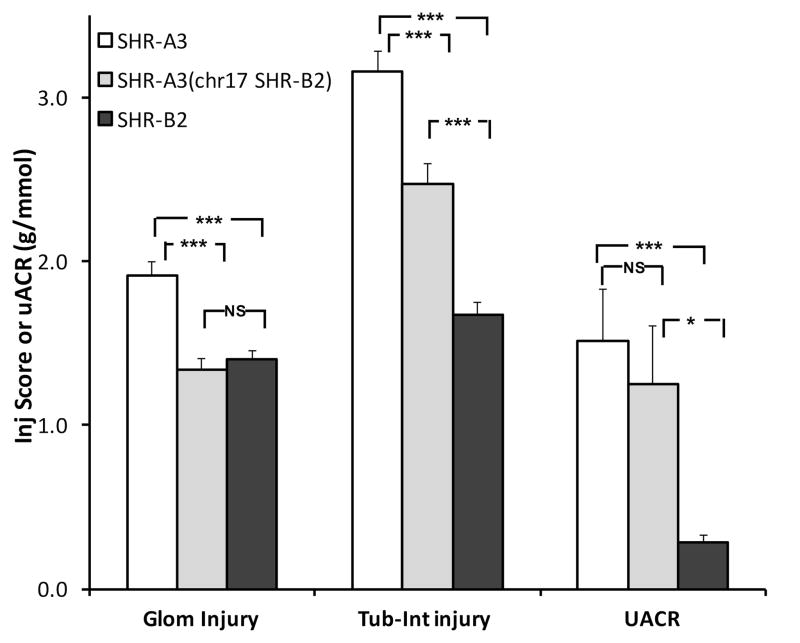
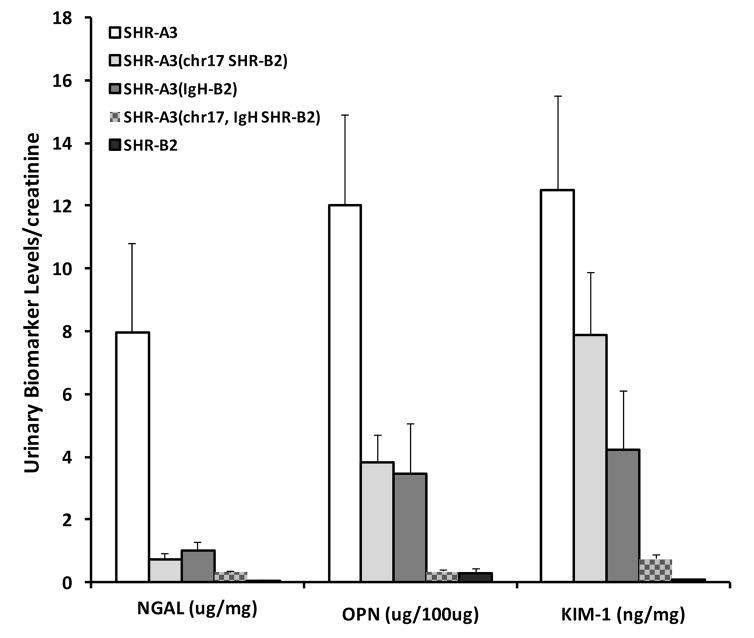
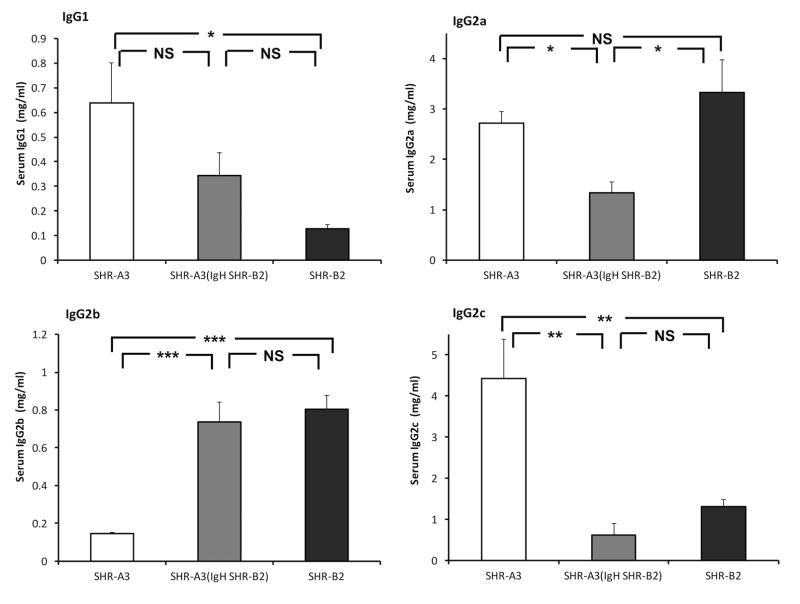
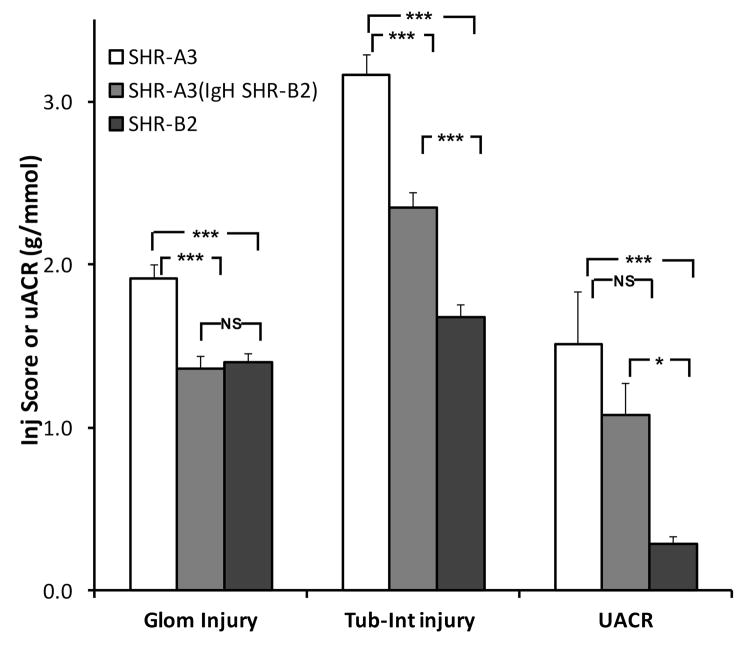
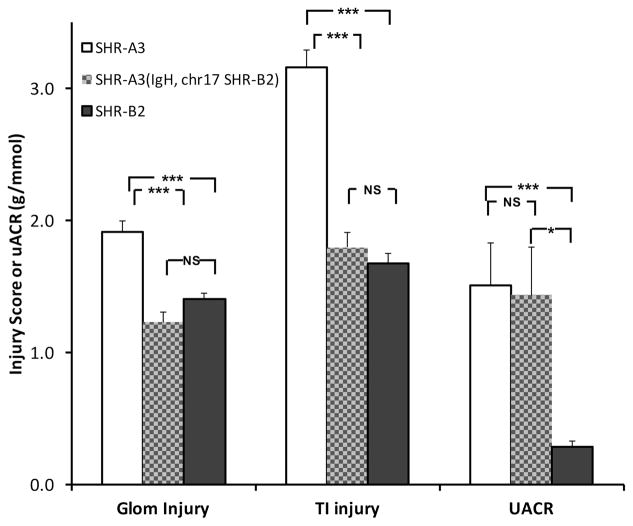
High blood pressure exerts its deleterious effects on health largely through acceleration of end-organ diseases. Among these, progressive loss of renal function is particularly important, not only for the direct consequences of kidney damage but also because loss of renal function is associated with amplification of other adverse cardiovascular outcomes. Genetic susceptibility to hypertension and associated end-organ disease is non-Mendelian in both humans and in a rodent model, the spontaneously hypertensive rat (SHR). Here, we report that hypertensive end-organ disease in the inbred SHR-A3 line is attributable to genetic variation in the immunoglobulin heavy chain on chromosome 6. This variation coexists with variation in a 10 Mb block on chromosome 17 that contains genetic variation in 2 genes involved in immunoglobulin Fc receptor signaling. Substitution of these genomic regions into the SHR-A3 genome from the closely related, but injury-resistant, SHR-B2 line normalizes both biomarker and histological measures of renal injury. Our findings indicate that genetic variation leads to a contribution by immune mechanisms hypertensive end-organ injury and that, in this rat model, disease is influenced by differences in germ line antibody repertoire.
高血压主要通过加速终末器官疾病对健康产生有害影响。在这些疾病中,肾功能的逐渐丧失尤为重要,这不仅是因为肾脏损伤的直接后果,还因为肾功能丧失与其他不良心血管结局的放大有关。人类和自发性高血压大鼠(SHR)等啮齿动物模型中,高血压的终末器官疾病的遗传易感性是非孟德尔遗传的。在这里,我们报告称,近交系 SHR-A3 品系的高血压终末器官疾病归因于染色体 6 上免疫球蛋白重链的遗传变异。这种变异与染色体 17 上 10 Mb 块的变异共存,该变异包含参与免疫球蛋白 Fc 受体信号传导的 2 个基因的遗传变异。将这些基因组区域从密切相关但不易受伤的 SHR-B2 系替换到 SHR-A3 基因组中,可使生物标志物和肾脏损伤的组织学测量均恢复正常。我们的研究结果表明,遗传变异导致免疫机制导致高血压终末器官损伤,并且在该大鼠模型中,疾病受种系抗体库差异的影响。