Center for Drug Evaluation and Research, U.S. Food and Drug Administration, Silver Spring, Maryland, USA
Center for Drug Evaluation and Research, U.S. Food and Drug Administration, Silver Spring, Maryland, USA.
Oncologist. 2018 Jun;23(6):734-739. doi: 10.1634/theoncologist.2017-0440. Epub 2018 Feb 7.
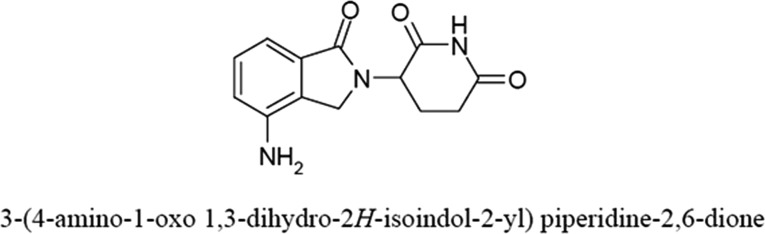
On February 22, 2017, the U.S. Food and Drug Administration (FDA) granted approval for the use of lenalidomide as maintenance therapy after autologous hematopoietic stem cell transplantation (auto-HSCT) for patients with multiple myeloma. The approval was based on evidence from two randomized, blinded trials of maintenance lenalidomide versus placebo in patients with myeloma who had undergone auto-HSCT along with a third trial of lenalidomide versus no therapy. Each of the trials demonstrated superior progression-free survival for the patients treated with lenalidomide. The effect on overall survival was mixed, with one trial showing longer overall survival and another showing no effect. Subgroup analysis suggested better results for patients with International Staging System stage I or II disease compared with stage III disease. Safety evaluation did not reveal any new safety concerns. More second primary malignancies were observed in the lenalidomide arm compared with the placebo arm. The FDA concluded that lenalidomide maintenance showed a favorable benefit-to-risk ratio when used as maintenance therapy after auto-HSCT.
Prior to this approval, there were no U.S. Food and Drug Administration-approved maintenance therapies for patients with multiple myeloma (MM) who have undergone autologous hematopoietic stem cell transplantation (auto-HSCT). Maintenance therapy with lenalidomide after auto-HSCT in patients with MM demonstrated an approximately 15- to 18-month advantage in progression-free survival compared with placebo at the time of the primary analysis. Patients treated with lenalidomide also appeared to have a survival advantage compared with patients treated with placebo. Because of the high rate of relapse of MM in patients following auto-HSCT and because MM is a serious and often fatal disease, these results appear to be clinically meaningful.
2017 年 2 月 22 日,美国食品药品监督管理局(FDA)批准来那度胺用于自体造血干细胞移植(auto-HSCT)后的多发性骨髓瘤(MM)维持治疗。批准的依据是来那度胺与安慰剂用于自体造血干细胞移植后 MM 患者维持治疗的两项随机、双盲试验和一项来那度胺与无治疗的试验。每个试验均表明,接受来那度胺治疗的患者无进展生存期(PFS)更优。但对总生存期(OS)的影响不一,一项试验表明 OS 更长,另一项试验表明无影响。亚组分析提示,国际分期系统(ISS)分期为Ⅰ或Ⅱ期的患者较分期为Ⅲ期的患者结果更好。安全性评估未发现新的安全性问题。与安慰剂组相比,来那度胺组观察到更多的第二原发恶性肿瘤。FDA 得出结论,来那度胺维持治疗在自体造血干细胞移植后作为维持治疗,其获益风险比有利。
在本次批准之前,美国 FDA 尚未批准用于接受自体造血干细胞移植(auto-HSCT)的多发性骨髓瘤(MM)患者的维持治疗。在原发性分析时,与安慰剂相比,MM 患者自体造血干细胞移植后接受来那度胺维持治疗,PFS 延长约 15-18 个月。与安慰剂治疗的患者相比,接受来那度胺治疗的患者似乎也有生存优势。由于 MM 患者在 auto-HSCT 后复发率较高,而且 MM 是一种严重且常致命的疾病,因此这些结果似乎具有临床意义。