Department of Hematology, The First Affiliated Hospital of Wenzhou Medical University, Nanbaixiang, Ouhai District, Wenzhou, Zhejiang Province, 325000, China.
Laboratory of Internal Medicine, The First Affiliated Hospital of Wenzhou Medical University, Shangcai Village, Nanbaixiang, Ouhai District, Wenzhou, Zhejiang Province, 325000, China.
BMC Cancer. 2018 Feb 13;18(1):182. doi: 10.1186/s12885-018-4097-z.
Acute myeloid leukemia (AML) is a heterogeneous group of hematopoietic malignancies due to sophisticated genetic mutations and epigenetic dysregulation. MicroRNAs (miRNAs), a class of small non-coding RNAs, are important regulators of gene expression in all biological processes, including leukemogenesis. Recently, miR-375 has been reported to be a suppressive miRNA in multiple types of cancers, but its underlying anti-leukemia activity in AML is largely unknown.
Quantitative reverse transcriptase PCR (qRT-PCR) was used to measure the expression of miR-375 and HOXB3 in leukemic cells and normal controls. Targets of miR-375 were confirmed by western blot and luciferase assay. Phenotypic effects of miR-375 overexpression and HOXB3 knockdown were assessed using viability (trypan blue exclusion assay), colony formation/replating, as well as tumor xenograft assays in vivo.
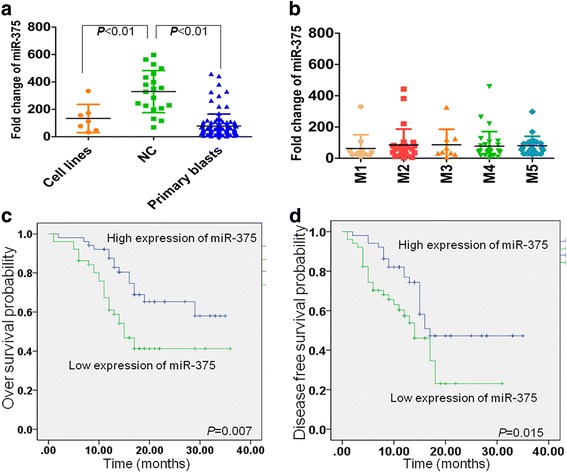
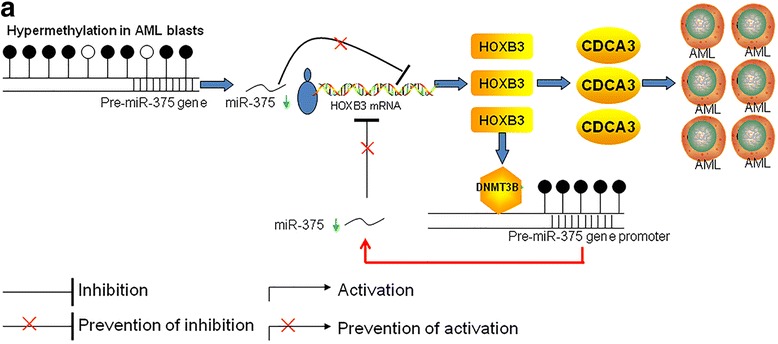
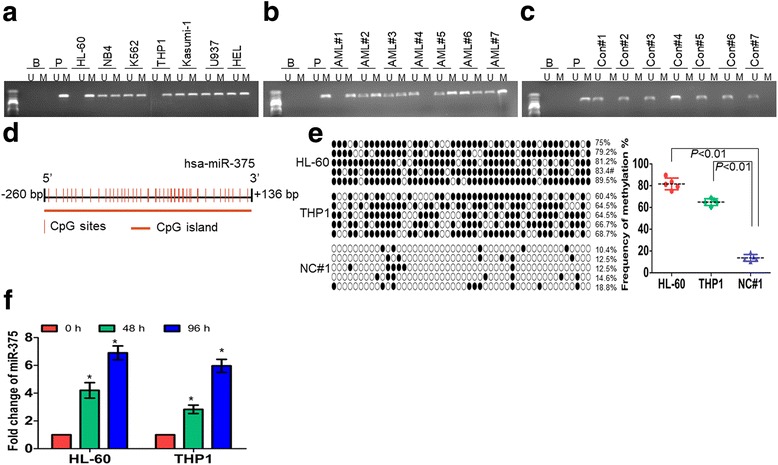
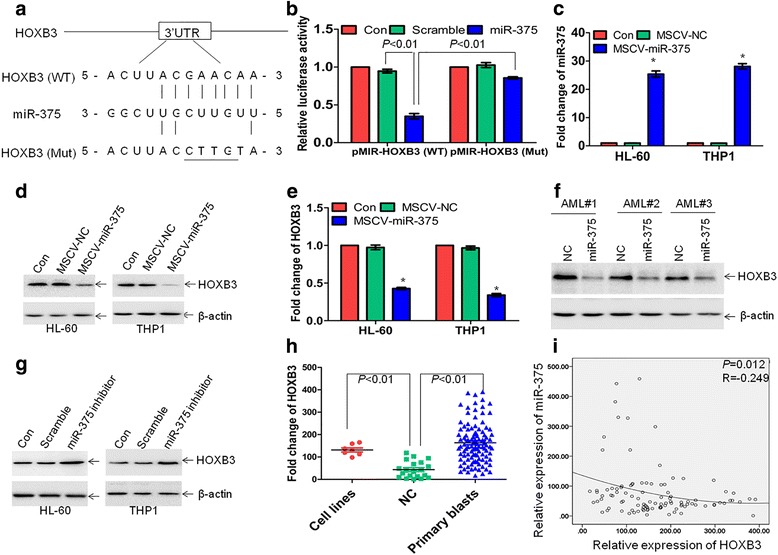
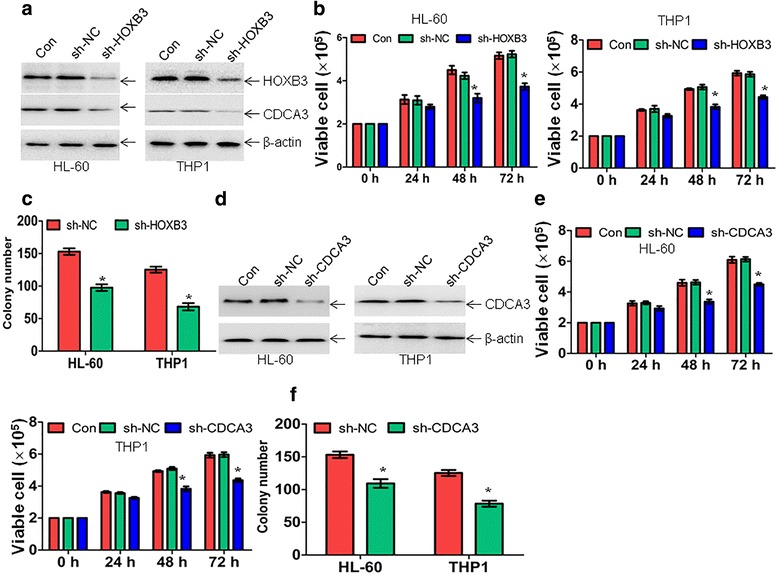
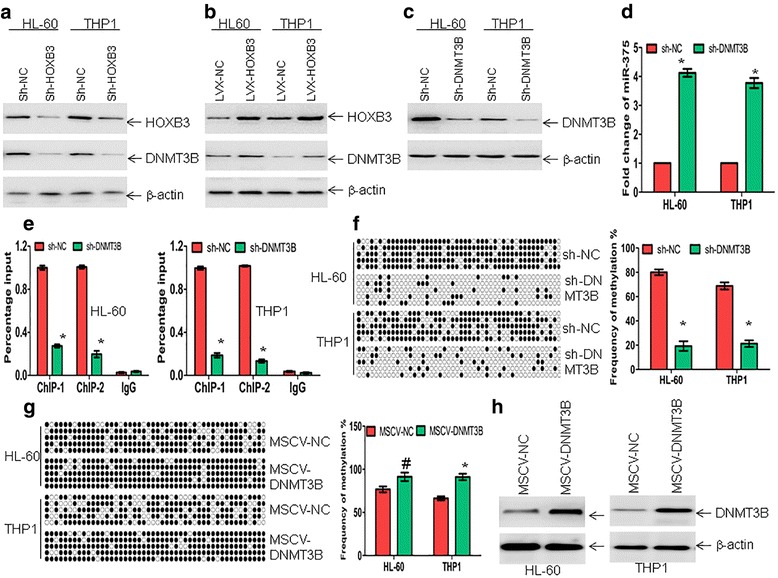
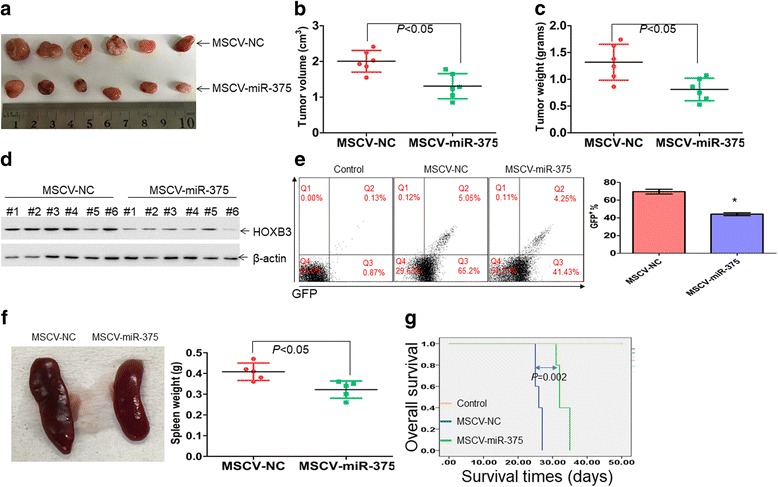
The expression of miR-375 was substantially decreased in leukemic cell lines and primary AML blasts compared with normal controls, because DNA hypermethylation of precursor-miR-375 (pre-miR-375) promoter was discovered in leukemic cells but not in normal controls. Lower expression of miR-375 predicted poor outcome in AML patients. Furthermore, forced expression of miR-375 not only decreased proliferation and colony formation in leukemic cells but also reduced xenograft tumor size and prolonged the survival time in a leukemia xenograft mouse model. Mechanistically, overexpression of miR-375 reduced HOXB3 expression and repressed the activity of a luciferase reporter through binding 3'-untranslated regions (3'-UTR) of HOXB3 mRNA. Overexpression of HOXB3 partially blocked miR-375-induced arrest of proliferation and reduction of colony number, suggesting that HOXB3 plays an important role in miR-375-induced anti-leukemia activity. Knockdown of HOXB3 by short hairpin RNAs reduced the expression of cell division cycle associated 3 (CDCA3), which decreased cell proliferation. Furthermore, HOXB3 induced DNA methyltransferase 3B (DNMT3B) expression to bind in the pre-miR-375 promoter and enhanced DNA hypermethylation of pre-miR-375, leading to the lower expression of miR-375.
Collectively, we have identified a miR-375-HOXB3-CDCA3/DNMT3B regulatory circuitry which contributes to leukemogenesis and suggests a therapeutic strategy of restoring miR-375 expression in AML.
急性髓系白血病(AML)是一组由于复杂的遗传突变和表观遗传失调而导致的造血恶性肿瘤。微小 RNA(miRNA)是一类小的非编码 RNA,是包括白血病发生在内的所有生物过程中基因表达的重要调节剂。最近,miR-375 已被报道在多种类型的癌症中是一种抑制性 miRNA,但它在 AML 中的潜在抗白血病活性在很大程度上尚不清楚。
使用定量逆转录 PCR(qRT-PCR)测量白血病细胞和正常对照中 miR-375 和 HOXB3 的表达。通过 Western blot 和荧光素酶测定证实 miR-375 的靶标。通过在体内使用细胞活力(台盼蓝排除试验)、集落形成/重植以及肿瘤异种移植试验评估 miR-375 过表达和 HOXB3 敲低的表型效应。
与正常对照相比,白血病细胞系和原发性 AML 原始细胞中 miR-375 的表达明显降低,因为在白血病细胞中发现了前体 miR-375(pre-miR-375)启动子的 DNA 高甲基化,但在正常对照中没有发现。miR-375 的低表达预示着 AML 患者的预后不良。此外,miR-375 的强制表达不仅降低了白血病细胞的增殖和集落形成,而且还减少了异种移植肿瘤的大小并延长了白血病异种移植小鼠模型的存活时间。在机制上,miR-375 的过表达降低了 HOXB3 的表达,并通过结合 HOXB3 mRNA 的 3'-非翻译区(3'-UTR)抑制了荧光素酶报告基因的活性。HOXB3 的过表达部分阻断了 miR-375 诱导的增殖停滞和集落数减少,表明 HOXB3 在 miR-375 诱导的抗白血病活性中发挥重要作用。短发夹 RNA 敲低 HOXB3 降低了细胞分裂周期相关蛋白 3(CDCA3)的表达,从而降低了细胞增殖。此外,HOXB3 诱导 DNA 甲基转移酶 3B(DNMT3B)表达,结合 pre-miR-375 启动子,并增强 pre-miR-375 的 DNA 高甲基化,导致 miR-375 的表达降低。
总的来说,我们已经确定了 miR-375-HOXB3-CDCA3/DNMT3B 调节回路,它有助于白血病的发生,并提示了在 AML 中恢复 miR-375 表达的治疗策略。