Deng Xiaorong, Xiao Qun, Liu Feng, Zheng Cihua
Department of Gastrointestinal Surgery, The Second Affiliated Hospital of Nanchang University, Nanchang, Jiangxi, China.
Department of Hepatobiliary Surgery, The First Affiliated Hospital of Hunan College of Traditional Chinese Medicine, Zhuzhou, Hunan, China.
PeerJ. 2018 Jan 2;6:e4204. doi: 10.7717/peerj.4204. eCollection 2018.
The prognosis of gastric cancer is difficult to determine, although clinical indicators provide valuable evidence.
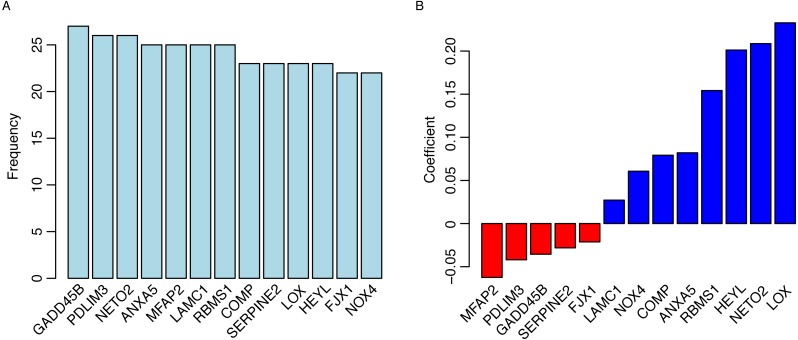
In this study, using screened biomarkers of gastric cancer in combination with random forest variable hunting and multivariable Cox regression, a risk score model was developed to predict the survival of gastric cancer. Survival difference between high/low-risk groups were compared. The relationship between risk score and other clinicopathological indicators was evaluated. Gene set enrichment analysis (GSEA) was used to identify pathways associated with risk scores.
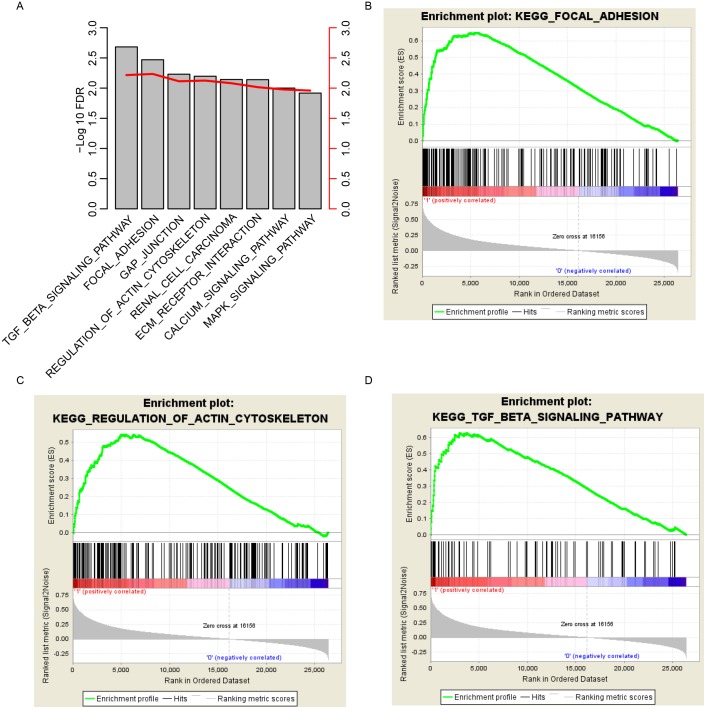
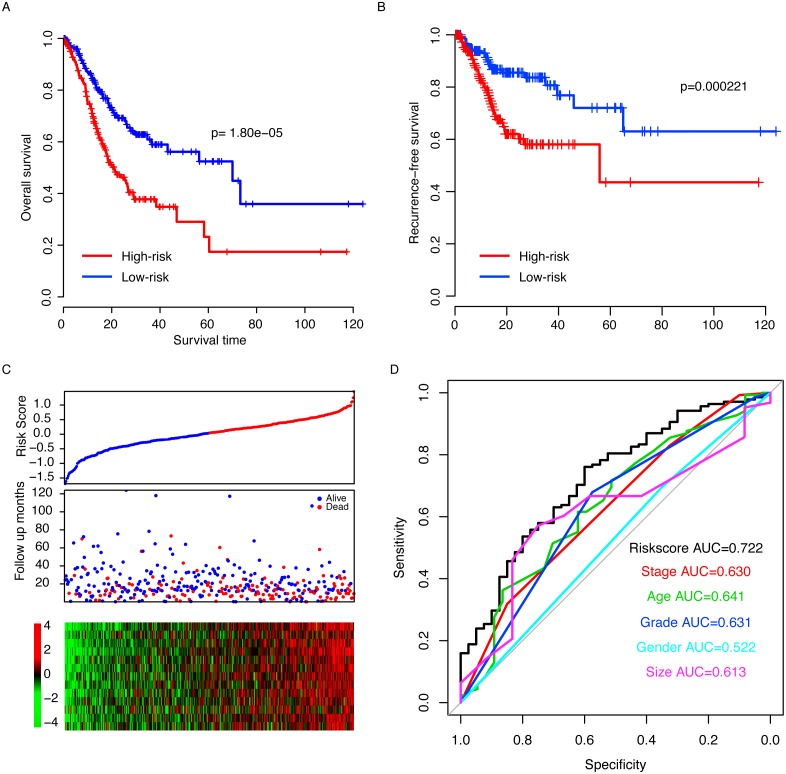
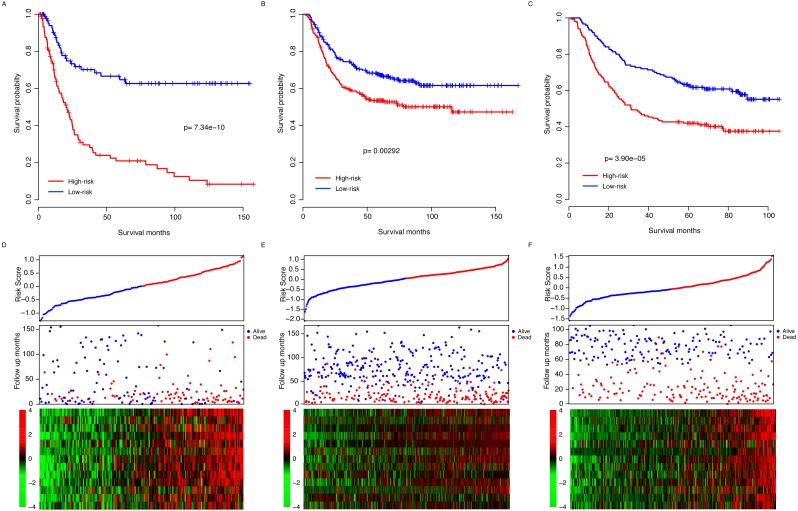
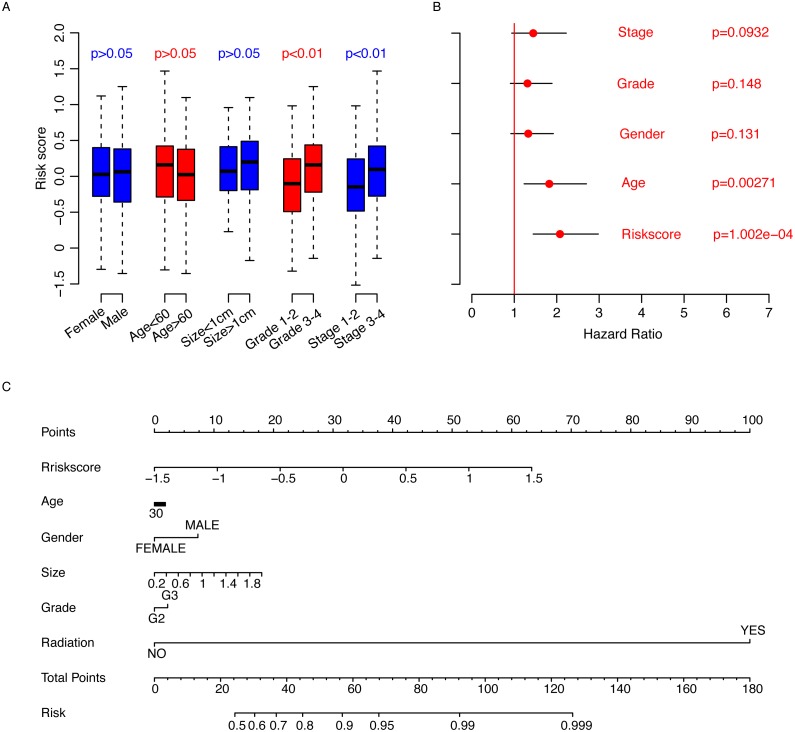
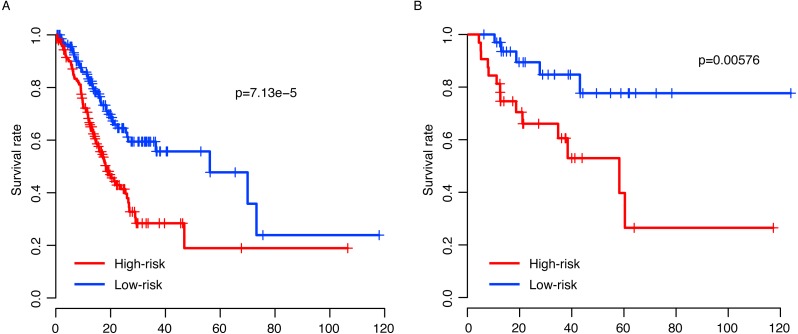
The patients with high risk scores (median overall survival: 20.2 months, 95% CI [16.9-26.0] months) tend to exhibit early events compared with those with low risk scores (median survival: 70.0 months, 95% CI [46.9-101] months, = 1.80e-5). Further validation was implemented in another three independent datasets (GSE15459, GSE26253, GSE62254). Correlation analyses between clinical observations and risk scores were performed, and the results indicated that the risk score was not significantly associated with gender, age and primary tumor size but was significantly associated with grade and tumor stage. In addition, the risk score was also not influenced by radiation therapy. Cox multivariate regression and three-year survival nomogram suggest that the risk score is an important indicator of gastric cancer prognosis. GSEA was used to identified KEGG pathways significantly associated with risk score, and signaling pathways involved in focal adhesion and the TGF-beta signaling pathway were identified.
The risk score model successfully predicted the survival of 1,294 gastric cancer samples from four independent datasets and is among the most important indicators in clinical clinicopathological information for the prognosis of gastric cancer. To our knowledge, it is the first report to predict the survival of gastric cancer using optimized expression panel.
尽管临床指标提供了有价值的证据,但胃癌的预后仍难以确定。
在本研究中,结合筛选出的胃癌生物标志物,运用随机森林变量筛选和多变量Cox回归,开发了一个风险评分模型来预测胃癌患者的生存情况。比较了高/低风险组之间的生存差异。评估了风险评分与其他临床病理指标之间的关系。采用基因集富集分析(GSEA)来识别与风险评分相关的通路。
高风险评分的患者(中位总生存期:20.2个月,95%可信区间[16.9 - 26.0]个月)与低风险评分的患者(中位生存期:70.0个月,95%可信区间[46.9 - 101]个月,P = 1.80e - 5)相比,往往更早出现不良事件。在另外三个独立数据集(GSE15459、GSE26253、GSE62254)中进行了进一步验证。对临床观察结果与风险评分进行了相关性分析,结果表明风险评分与性别、年龄和原发肿瘤大小无显著相关性,但与分级和肿瘤分期显著相关。此外,风险评分也不受放疗影响。Cox多变量回归和三年生存列线图表明,风险评分是胃癌预后的重要指标。GSEA用于识别与风险评分显著相关的KEGG通路,确定了与粘着斑和TGF-β信号通路相关的信号通路。
风险评分模型成功预测了来自四个独立数据集的1294例胃癌样本的生存情况,是胃癌预后临床病理信息中最重要的指标之一。据我们所知,这是首次使用优化表达谱预测胃癌生存情况的报告。