Gabrio Andrea, Mason Alexina J, Baio Gianluca
Department of Statistical Science, University College London, 1-19 Torrington Place, London, WC1E 7HB, UK.
Department of Health Services Research and Policy, London School of Hygiene and Tropical Medicine, 15-17 Tavistock Place, London, WC1H 9SH, UK.
Pharmacoecon Open. 2017 Jun;1(2):79-97. doi: 10.1007/s41669-017-0015-6.
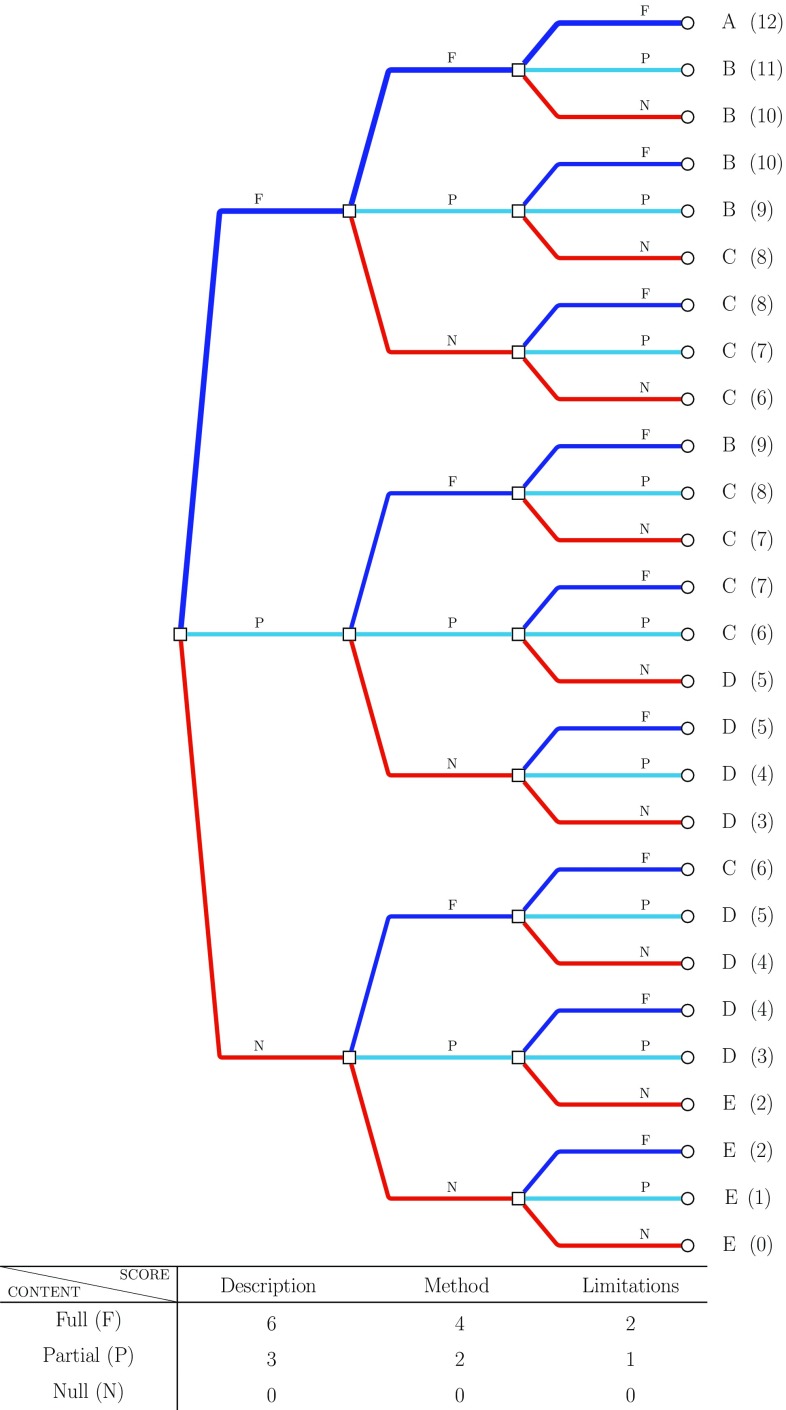
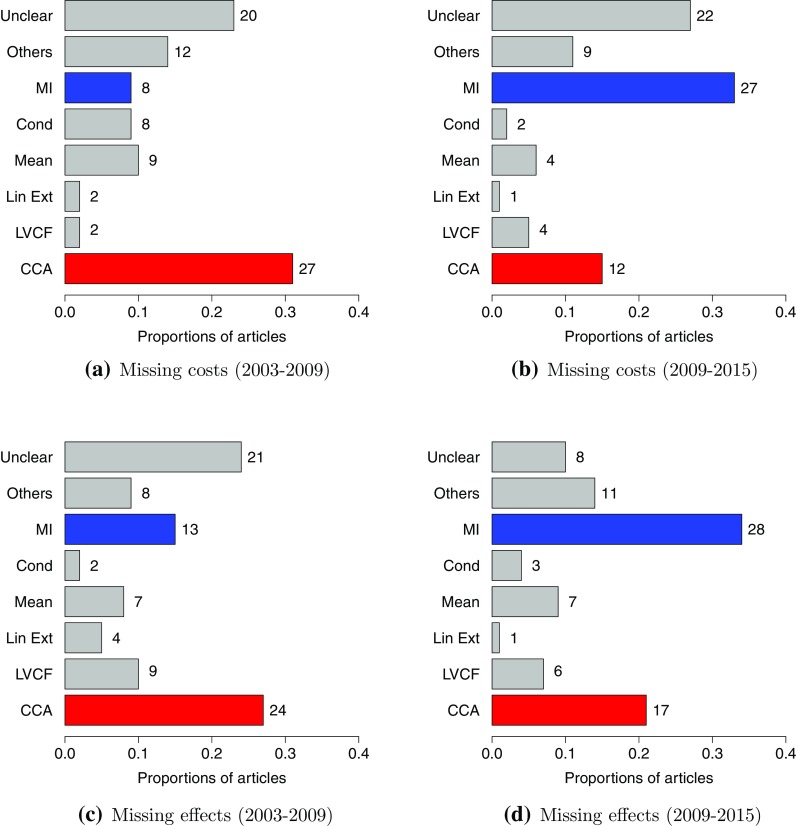
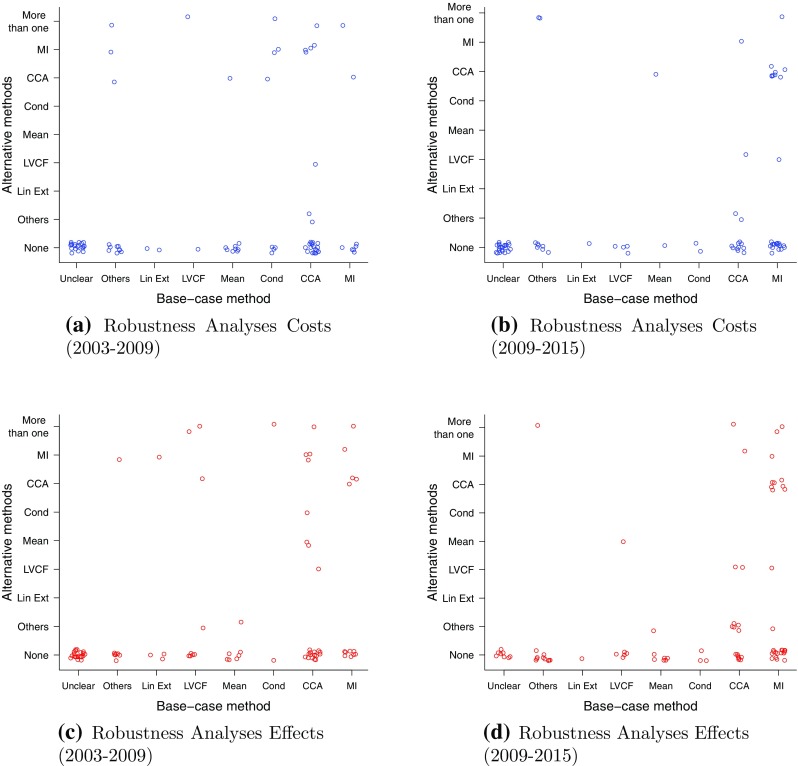
Cost-effectiveness analyses (CEAs) alongside randomised controlled trials (RCTs) are increasingly designed to collect resource use and preference-based health status data for the purpose of healthcare technology assessment. However, because of the way these measures are collected, they are prone to missing data, which can ultimately affect the decision of whether an intervention is good value for money. We examine how missing cost and effect outcome data are handled in RCT-based CEAs, complementing a previous review (covering 2003-2009, 88 articles) with a new systematic review (2009-2015, 81 articles) focussing on two different perspectives. First, we provide guidelines on how the information about missingness and related methods should be presented to improve the reporting and handling of missing data. We propose to address this issue by means of a quality evaluation scheme, providing a structured approach that can be used to guide the collection of information, elicitation of the assumptions, choice of methods and considerations of possible limitations of the given missingness problem. Second, we review the description of the missing data, the statistical methods used to deal with them and the quality of the judgement underpinning the choice of these methods. Our review shows that missing data in within-RCT CEAs are still often inadequately handled and the overall level of information provided to support the chosen methods is rarely satisfactory.
成本效益分析(CEA)与随机对照试验(RCT)一起,越来越多地被设计用于收集资源使用情况和基于偏好的健康状况数据,以进行医疗技术评估。然而,由于这些测量数据的收集方式,它们容易出现数据缺失的情况,这最终可能会影响关于某项干预措施是否物有所值的决策。我们研究了在基于RCT的CEA中如何处理缺失的成本和效果结果数据,通过一项新的系统评价(涵盖2009 - 2015年,81篇文章)从两个不同角度对之前的一项综述(涵盖2003 - 2009年,88篇文章)进行补充。首先,我们提供有关如何呈现缺失性信息及相关方法的指南,以改进缺失数据的报告和处理。我们建议通过质量评估方案来解决这个问题,提供一种结构化方法,可用于指导信息收集、假设引出、方法选择以及对给定缺失性问题可能局限性的考量。其次,我们回顾了对缺失数据的描述、用于处理这些数据的统计方法以及支撑这些方法选择的判断质量。我们的综述表明,RCT内CEA中的缺失数据仍然常常处理不当,为支持所选方法提供的信息总体水平很少令人满意。