Department of Neurobiology, Harvard Medical School, Boston, MA, USA.
Department of Neurology & Neurosurgery, Montreal Neurological Institute, McGill University, Montreal, QC, Canada.
Cell Rep. 2018 Feb 13;22(7):1666-1680. doi: 10.1016/j.celrep.2018.01.068.
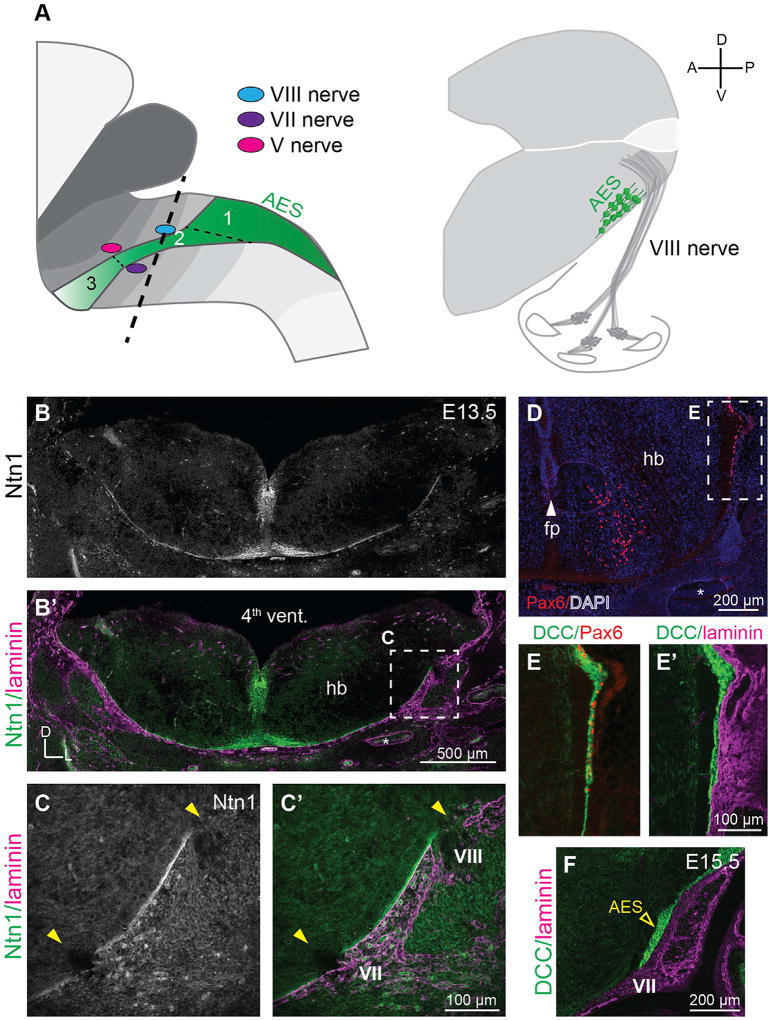
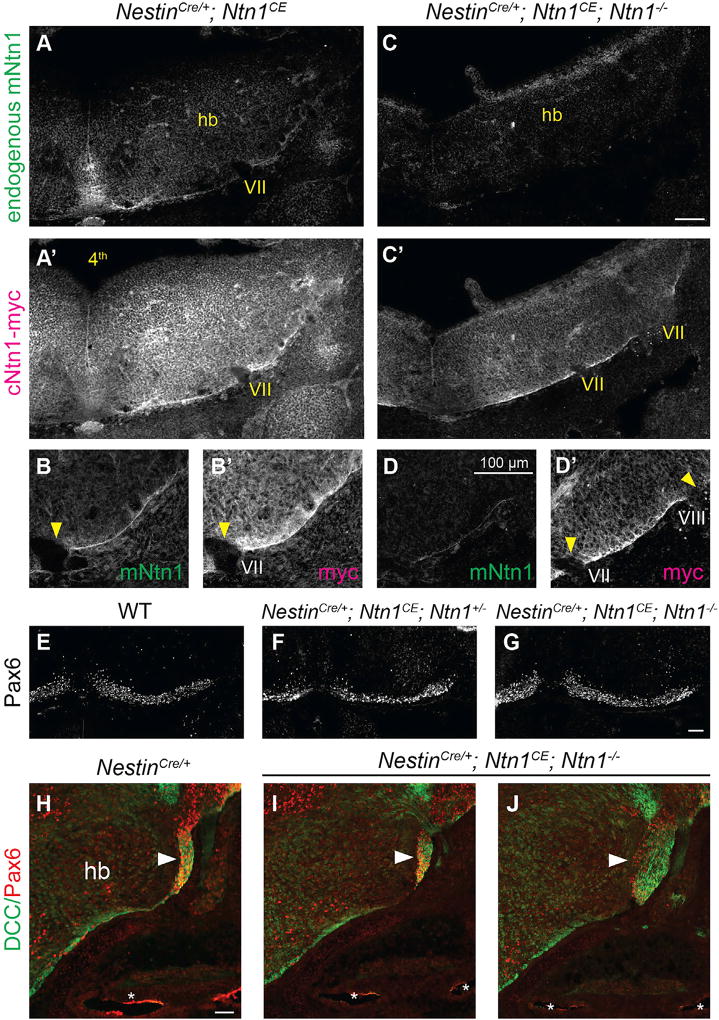
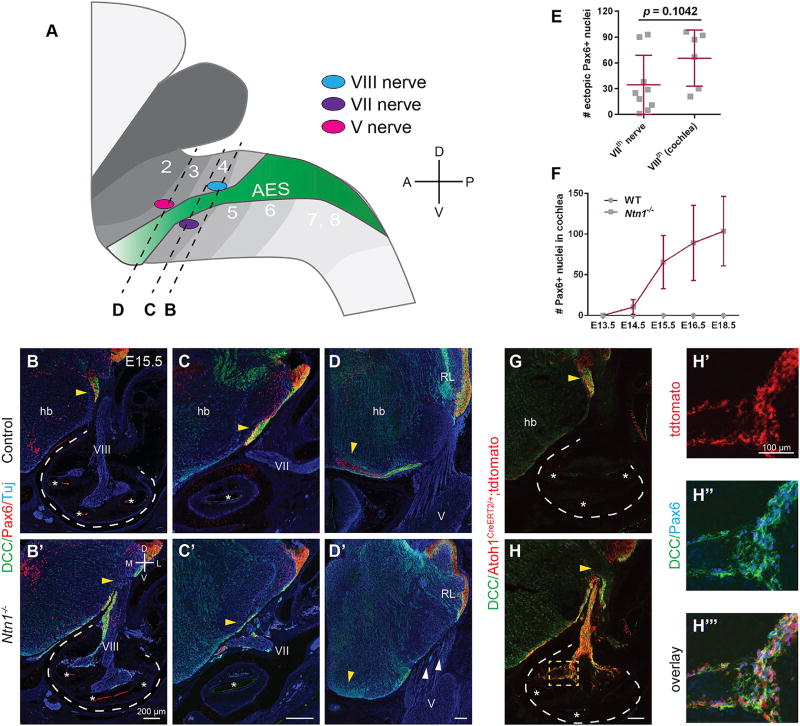
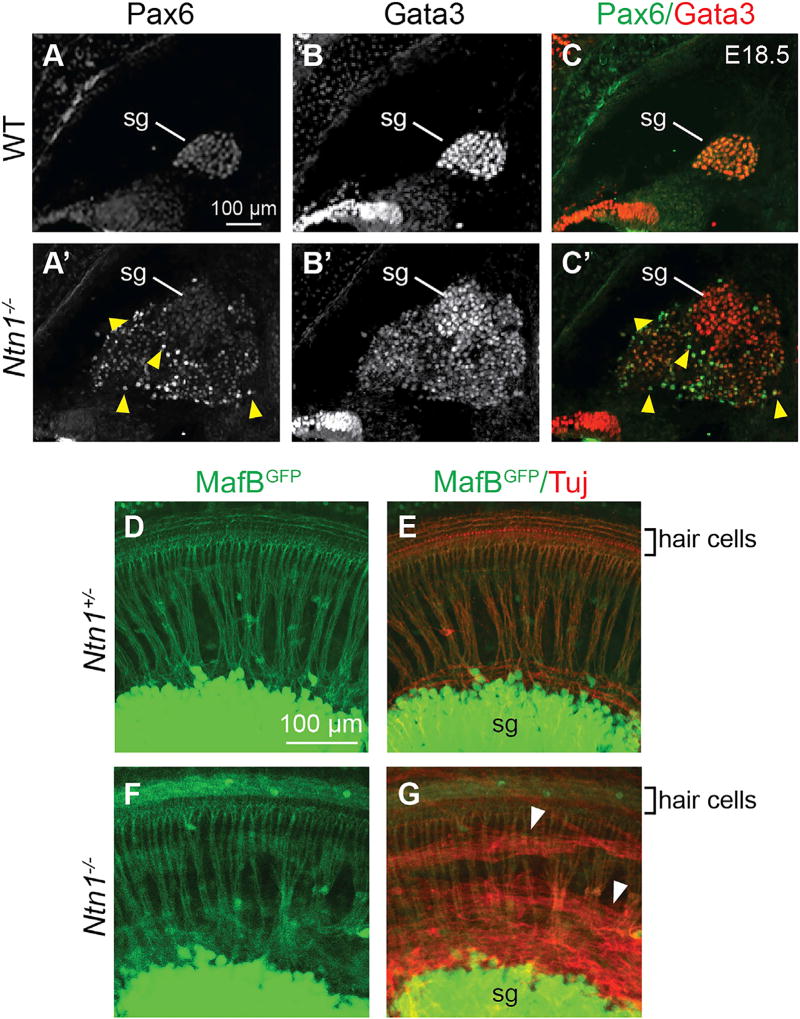
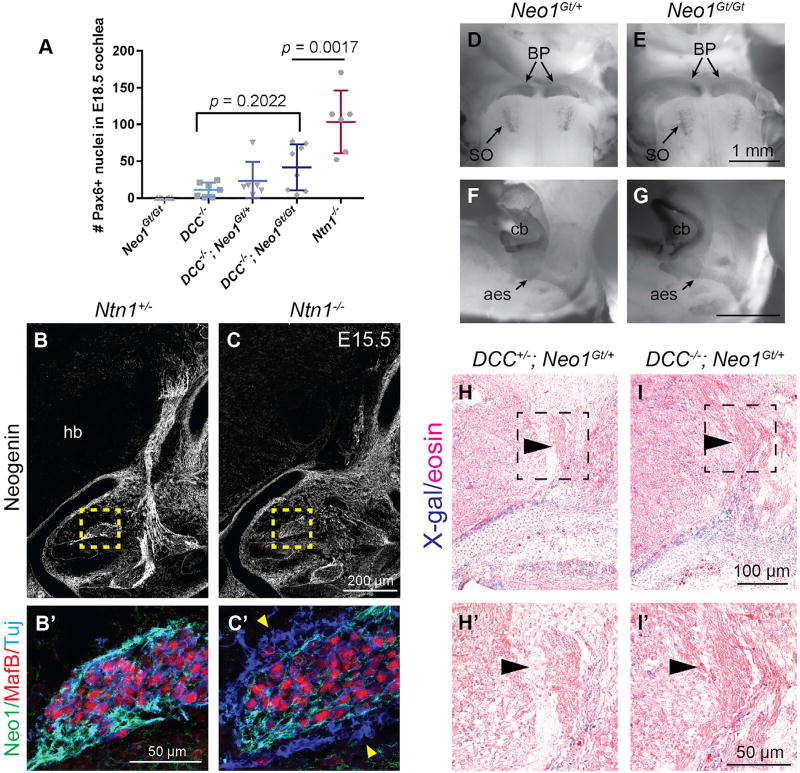
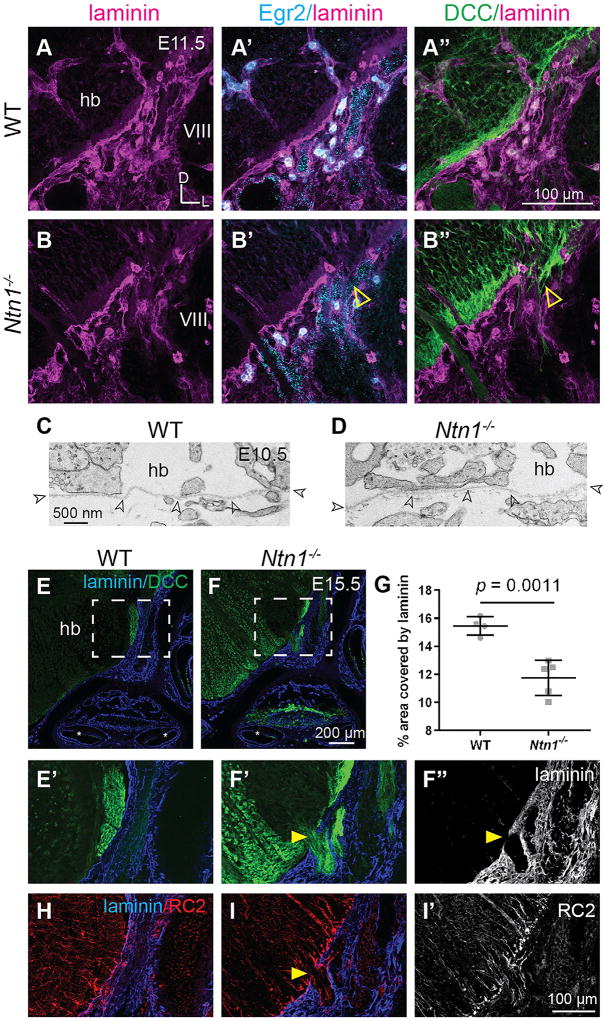
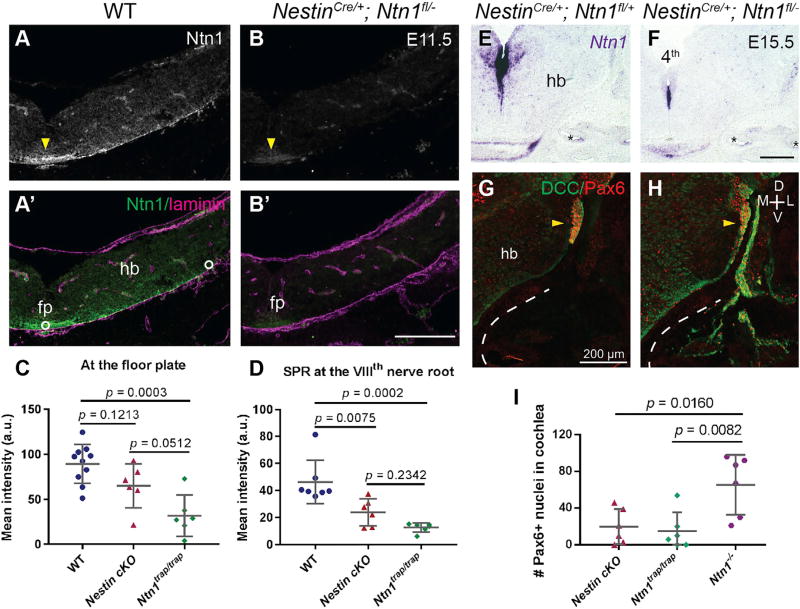
During brainstem development, newborn neurons originating from the rhombic lip embark on exceptionally long migrations to generate nuclei important for audition, movement, and respiration. Along the way, this highly motile population passes several cranial nerves yet remains confined to the CNS. We found that Ntn1 accumulates beneath the pial surface separating the CNS from the PNS, with gaps at nerve entry sites. In mice null for Ntn1 or its receptor DCC, hindbrain neurons enter cranial nerves and migrate into the periphery. CNS neurons also escape when Ntn1 is selectively lost from the sub-pial region (SPR), and conversely, expression of Ntn1 throughout the mutant hindbrain can prevent their departure. These findings identify a permissive role for Ntn1 in maintaining the CNS-PNS boundary. We propose that Ntn1 confines rhombic lip-derived neurons by providing a preferred substrate for tangentially migrating neurons in the SPR, preventing their entry into nerve roots.
在脑干发育过程中,源自菱形唇的新生神经元进行了异常长的迁移,以产生对听觉、运动和呼吸至关重要的核。在此过程中,这个高度活跃的群体经过了几个颅神经,但仍局限于中枢神经系统。我们发现,Ntn1 在将中枢神经系统与周围神经系统分开的软脑膜表面下积累,在神经进入部位有间隙。在 Ntn1 或其受体 DCC 缺失的小鼠中,后脑神经元进入颅神经并迁移到外周。当 Ntn1 从软脑膜下区(SPR)选择性缺失时,中枢神经系统神经元也会逃逸,反之,在整个突变后脑表达 Ntn1 可以防止它们离开。这些发现确定了 Ntn1 在维持中枢神经系统-周围神经系统边界中的许可作用。我们提出,Ntn1 通过为 SPR 中沿切向迁移的神经元提供首选基质来限制菱形唇衍生的神经元,防止它们进入神经根。