Yiadom Maame Yaa A B, Domenico Henry, Byrne Daniel, Hasselblad Michele Marie, Gatto Cheryl L, Kripalani Sunil, Choma Neesha, Tucker Sarah, Wang Li, Bhatia Monisha C, Morrison Johnston, Harrell Frank E, Hartert Tina, Bernard Gordon
Department of Emergency Medicine, Vanderbilt University Medical Center, Nashville, Tennessee, USA.
Department of Quality, Safety and Risk Prevention, Vanderbilt University Medical Center, Nashville, Tennessee, USA.
BMJ Open. 2018 Feb 14;8(2):e019600. doi: 10.1136/bmjopen-2017-019600.
Hospital readmissions within 30 days are a healthcare quality problem associated with increased costs and poor health outcomes. Identifying interventions to improve patients' successful transition from inpatient to outpatient care is a continued challenge.
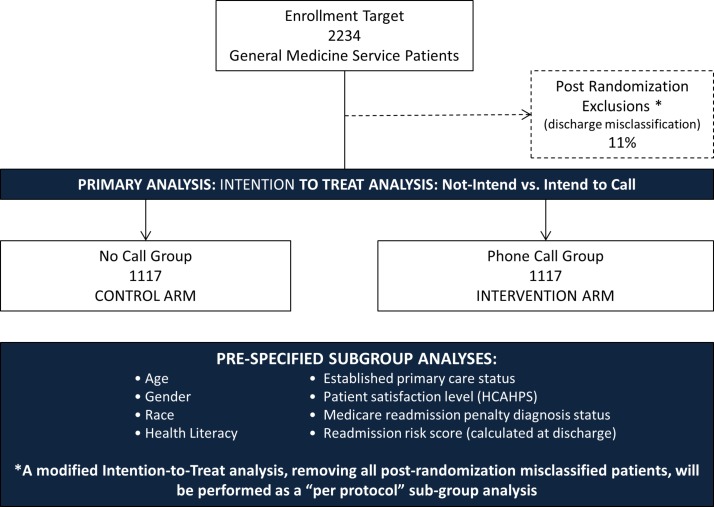
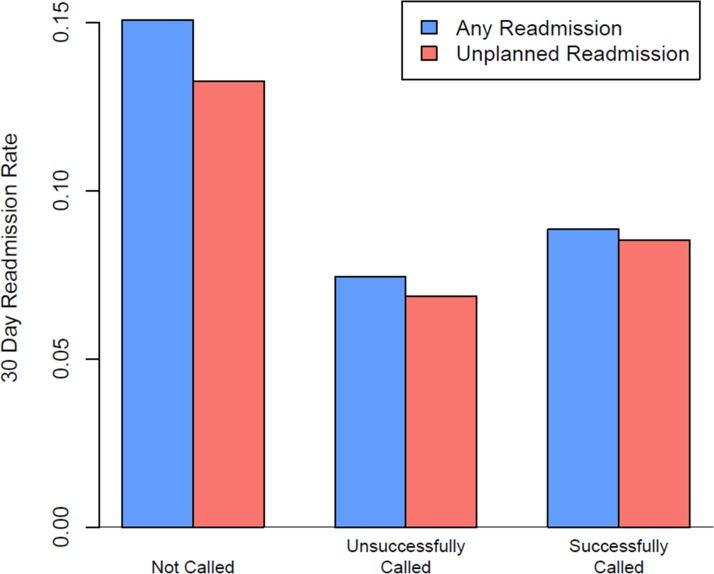
This is a single-centre pragmatic randomised and controlled clinical trial examining the effectiveness of a discharge follow-up phone call to reduce 30-day inpatient readmissions. Our primary endpoint is inpatient readmission within 30 days of hospital discharge censored for death analysed with an intention-to-treat approach. Secondary endpoints included observation status readmission within 30 days, time to readmission, all-cause emergency department revisits within 30 days, patient satisfaction (measured as mean Hospital Consumer Assessment of Healthcare Providers and Systems scores) and 30-day mortality. Exploratory endpoints include the need for assistance with discharge plan implementation among those randomised to the intervention arm and reached by the study nurse, and the number of call attempts to achieve successful intervention delivery. Consistent with the Learning Healthcare System model for clinical research, timeliness is a critical quality for studies to most effectively inform hospital clinical practice. We are challenged to apply pragmatic design elements in order to maintain a high-quality practicable study providing timely results. This type of prospective pragmatic trial empowers the advancement of hospital-wide evidence-based practice directly affecting patients.
Study results will inform the structure, objective and function of future iterations of the hospital's discharge follow-up phone call programme and be submitted for publication in the literature.
NCT03050918; Pre-results.
30天内的医院再入院是一个与成本增加和健康结果不佳相关的医疗质量问题。确定改善患者从住院治疗成功过渡到门诊治疗的干预措施仍然是一项挑战。
这是一项单中心实用随机对照临床试验,旨在检验出院后随访电话在减少30天内住院再入院方面的有效性。我们的主要终点是出院后30天内的住院再入院情况(对死亡进行截尾),采用意向性分析方法进行分析。次要终点包括30天内观察状态再入院、再入院时间、30天内全因急诊科复诊、患者满意度(以医疗服务提供者和系统医院消费者评估平均得分衡量)以及30天死亡率。探索性终点包括随机分配到干预组且研究护士联系到的患者中实施出院计划所需的协助,以及成功实施干预所需的呼叫尝试次数。与临床研究的学习型医疗系统模型一致,及时性是研究最有效地为医院临床实践提供信息的关键质量。我们面临着应用实用设计元素的挑战,以维持一项高质量且可行的研究并及时得出结果。这种前瞻性实用试验有助于推动直接影响患者的全院范围循证实践的发展。
研究结果将为医院出院后随访电话项目未来迭代的结构、目标和功能提供信息,并提交发表在文献中。
NCT03050918;预结果。