Li Xin, Zhang Zihe, Liu Jinghao, Wang Dan, Wei Sen, Chen Jun
Department of Lung Cancer Surgery, Tianjin Key Laboratory of Lung Cancer Metastasis and Tumor Microenvironment, Tianjin Lung Cancer Institute, Tianjin Medical University General Hospital, Tianjin, People's Republic of China.
Onco Targets Ther. 2018 Feb 9;11:751-756. doi: 10.2147/OTT.S150124. eCollection 2018.
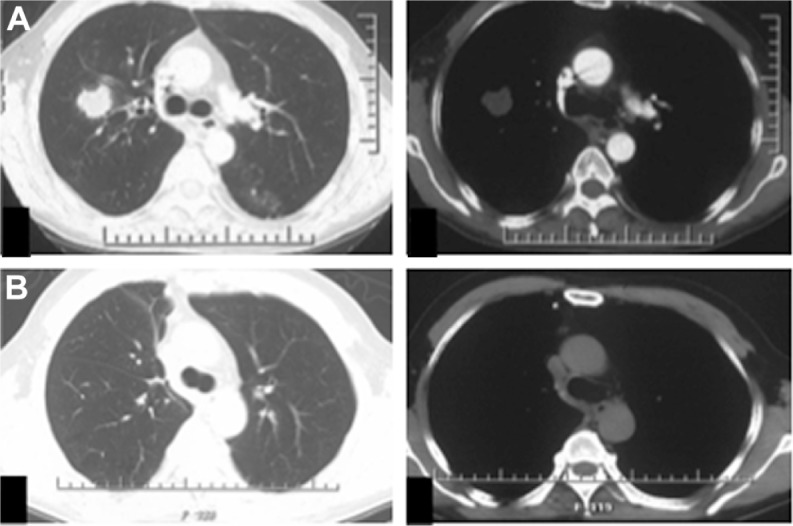
Giant-cell carcinoma of the lung (GCCL) is a rare histological form of poorly differentiated non-small-cell lung cancer, which is classified as a subtype of pulmonary sarcomatoid carcinomas. In this case report, we describe the case of a 50-year-old Chinese male who presented with a pulmonary nodule in the right upper lobe of his lung. After thoracoscopic lobectomy, a histopathologic diagnosis of GCCL was made. He did well postoperatively, showing no local recurrence or distal disease in a 7-year follow-up period. Furthermore, for this case, we also analyzed 295 tumor-related driver genes with high-throughput sequencing technology. We found that treatment using MEK inhibitor, CDK 4/6 inhibitor, and TP53 inhibitor may provide a new therapeutic direction for GCCL. Therefore, complete tumor excision is the best choice of treatment strategy at the early stage of GCCL and gene target therapy may be a new therapeutic option for this disease.
肺巨细胞癌(GCCL)是一种罕见的低分化非小细胞肺癌组织学类型,被归类为肺肉瘤样癌的一种亚型。在本病例报告中,我们描述了一名50岁中国男性患者,其右肺上叶出现一个肺结节。经胸腔镜肺叶切除术后,病理组织学诊断为GCCL。术后他恢复良好,在7年的随访期内未出现局部复发或远处疾病。此外,针对该病例,我们还采用高通量测序技术分析了295个肿瘤相关驱动基因。我们发现,使用MEK抑制剂、CDK 4/6抑制剂和TP53抑制剂进行治疗可能为GCCL提供新的治疗方向。因此,完整切除肿瘤是GCCL早期治疗策略的最佳选择,基因靶向治疗可能是该病的一种新的治疗选择。