Zeng Zeyu, Lin Xixi, Zheng Rongying, Zhang Hui, Zhang Weixi
Department of Pediatric Allergy and Immunology, The Second Affiliated Hospital and Yuying Children's Hospital of Wenzhou Medical University, Wenzhou, China.
Department of Pharmacy, The Second Affiliated Hospital and Yuying Children's Hospital of Wenzhou Medical University, Wenzhou, China.
Front Pharmacol. 2018 Jan 31;9:49. doi: 10.3389/fphar.2018.00049. eCollection 2018.
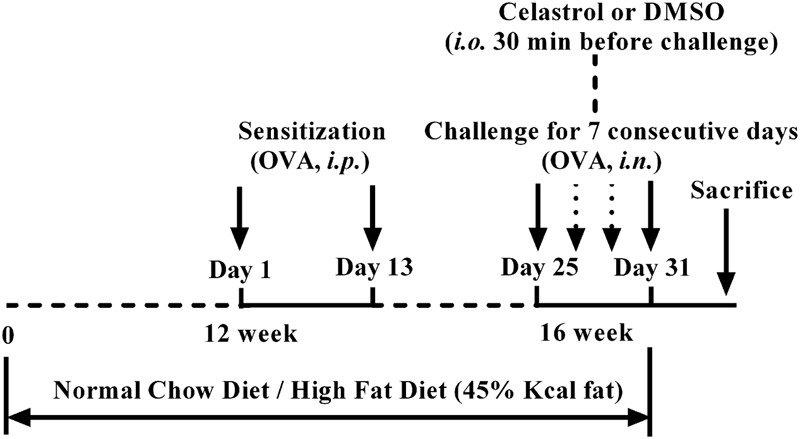
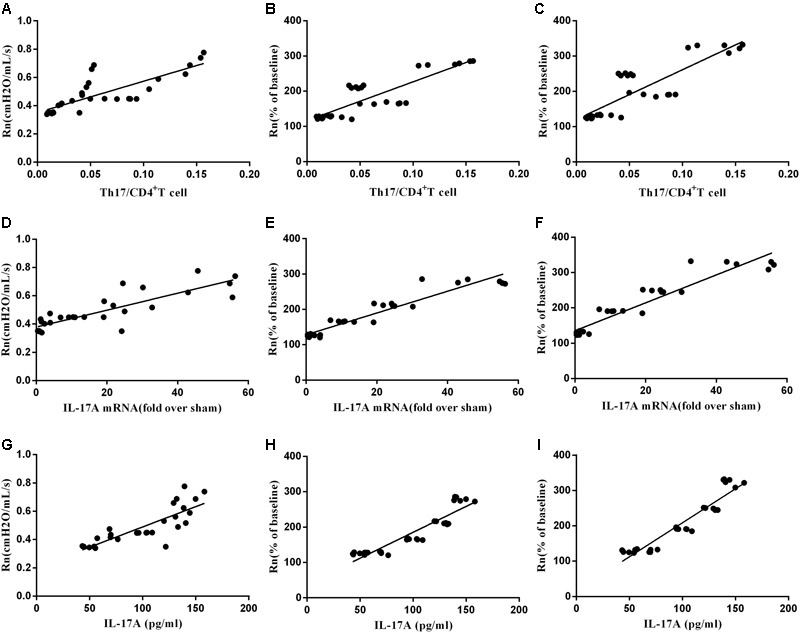
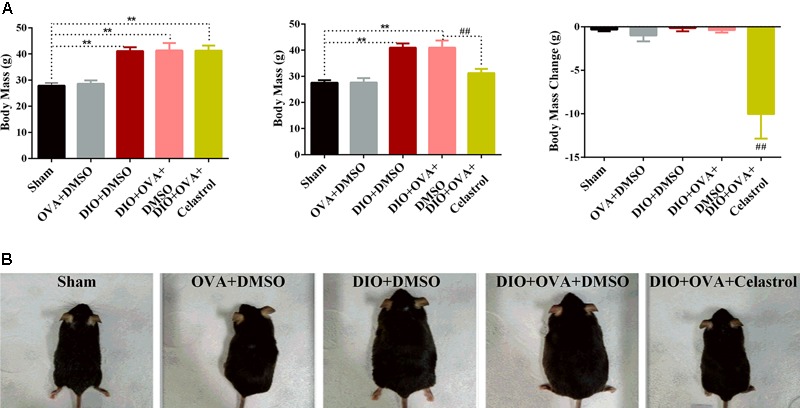
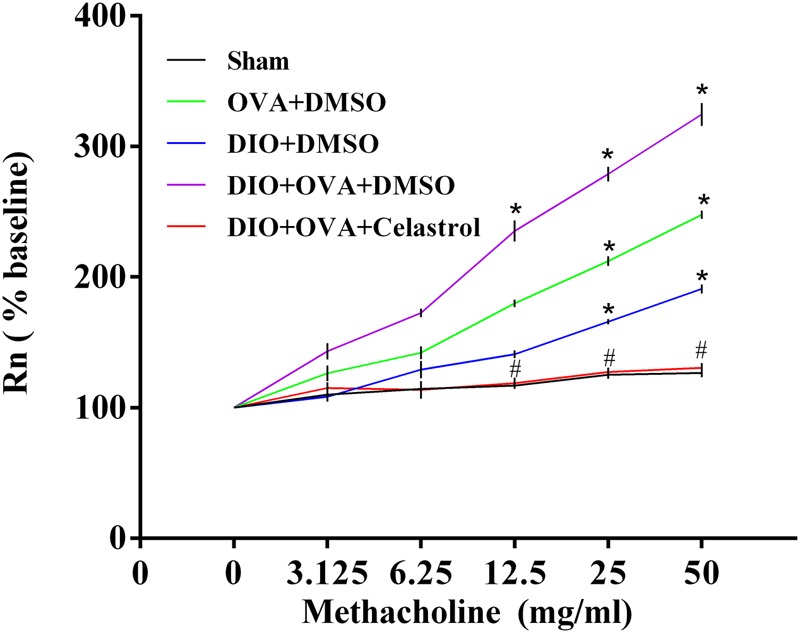
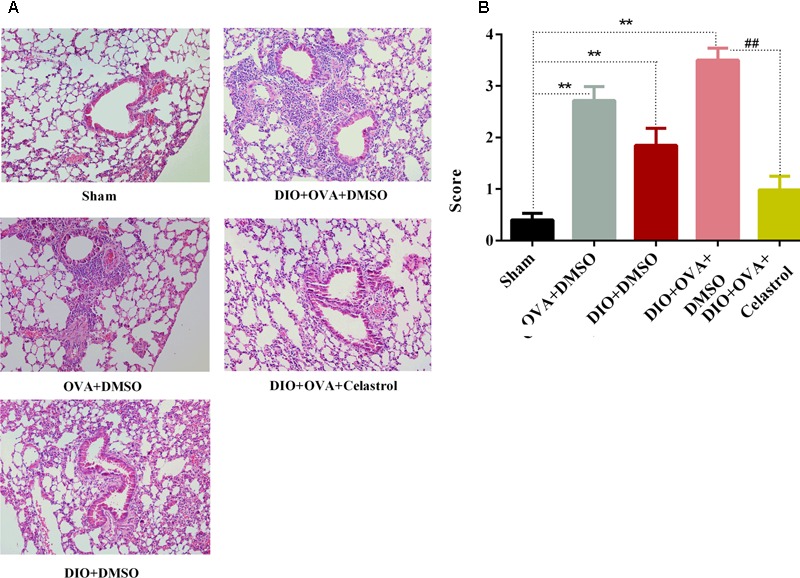
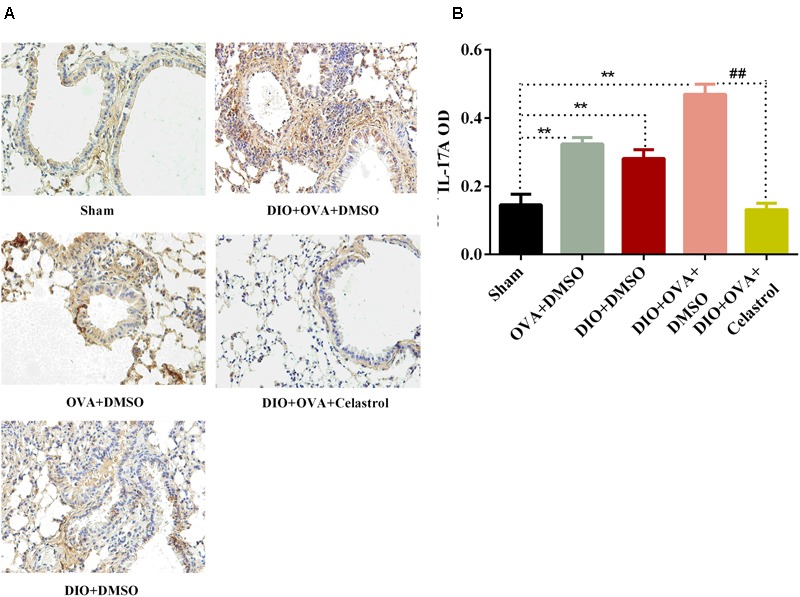
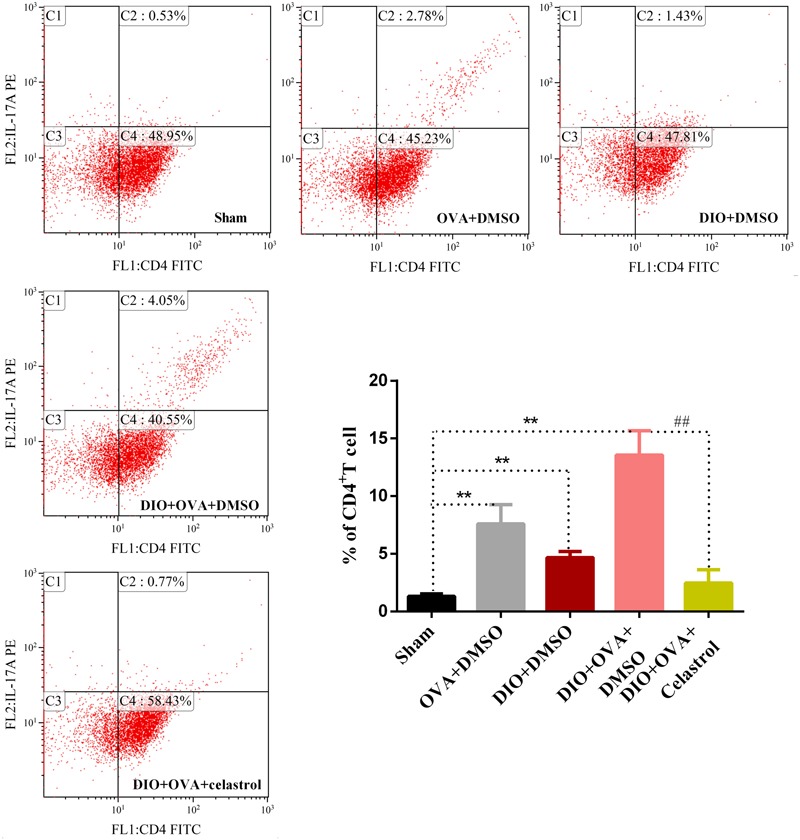
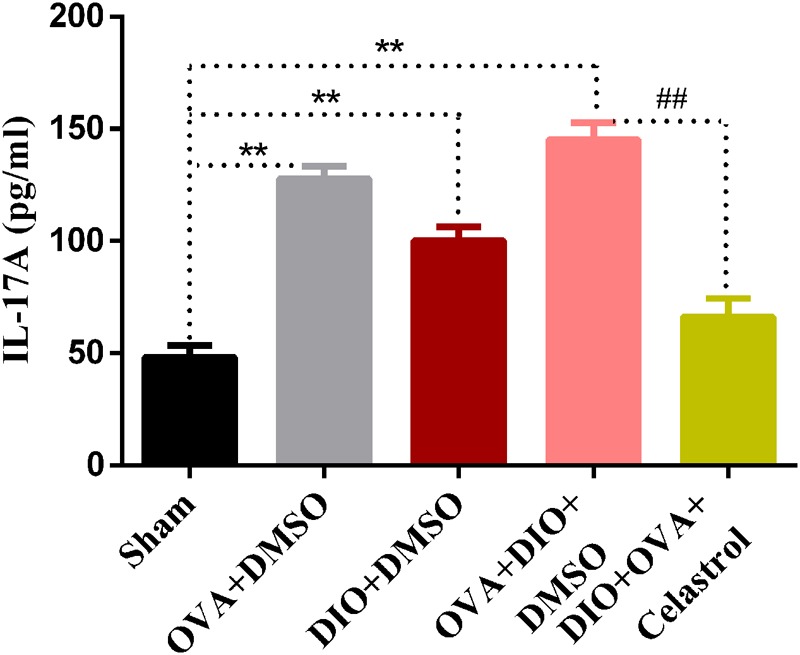
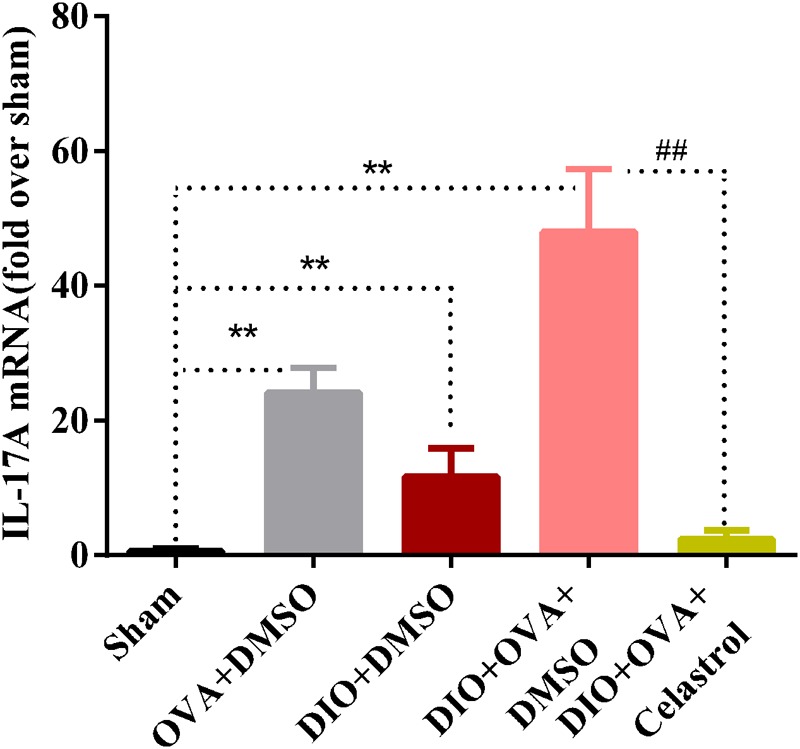
Severe airway hyperresponsiveness (AHR) is a clinical feature of asthma, which has been associated with obesity and has shown a poor response to standard asthma treatments such as glucocorticoids. Numerous studies have shown that Interleukin (IL)-17 producing CD4T cells (Th17 cells), which could be inhibited by celastrol, is essential in mediating steroid-resistant AHR. The following study investigates the impact of celastrol and its mechanism on the regulation of AHR in murine model of obesity and asthma. C57BL/6 mice were sensitized by intraperitoneal injection of ovalbumin (OVA) on day 1 and 13 starting from 12th week, which was followed by aerosol OVA challenge that lasted for 30 min per daily for 7 consecutive days starting from 16th week. Diet-induced obesity (DIO) mice were fed a high fat diet (HFD) for 16 weeks. Celastrol was administrated orally for 7 consecutive days, 30 min before every challenge in DIO-OVA-induced mice. Lung functions were analyzed by measuring the airway resistance (Rn) and methacholine (MCh) AHR, while H&E staining was used to examine histological changes in the lungs. Immunohistochemistry was used to observe IL-17A protein in lung tissues; flow cytometry to detect the proportion of Th17 cells in CD4T cells. The concentration of cytokines IL-17A in serum was assessed by standardized sandwich ELISA, while the expression of IL-17A mRNA in lung was examined by quantitative real-time RT-PCR. Briefly, our data indicated that celastrol reduced body mass in DIO-OVA-induced obesity and asthma. Both baseline Rn and MCh AHR were significantly lower in celastrol group. Moreover, celastrol treatment decreased the frequency of Th17 cell expansion and reduced the production of IL-17A in both lung and serum. To sum up, our findings indicated that Th17 and its cytokine measured in the spleen and lung were closely associated with AHR. In addition, celastrol has shown the ability to suppress AHR through Th17 inhibition in obese asthmatic mice.
严重气道高反应性(AHR)是哮喘的临床特征,它与肥胖有关,并且对糖皮质激素等标准哮喘治疗反应不佳。大量研究表明,可被雷公藤红素抑制的产生白细胞介素(IL)-17的CD4T细胞(Th17细胞)在介导激素抵抗性AHR中起关键作用。以下研究调查了雷公藤红素对肥胖和哮喘小鼠模型中AHR调节的影响及其机制。从第12周开始,在第1天和第13天通过腹腔注射卵清蛋白(OVA)使C57BL/6小鼠致敏,随后从第16周开始进行OVA雾化激发,每天持续30分钟,连续7天。饮食诱导肥胖(DIO)小鼠喂食高脂饮食(HFD)16周。在DIO-OVA诱导的小鼠每次激发前30分钟,连续7天口服给予雷公藤红素。通过测量气道阻力(Rn)和乙酰甲胆碱(MCh)AHR分析肺功能,同时用苏木精-伊红(H&E)染色检查肺组织学变化。用免疫组织化学观察肺组织中IL-17A蛋白;用流式细胞术检测CD4T细胞中Th17细胞的比例。通过标准化夹心酶联免疫吸附测定(ELISA)评估血清中细胞因子IL-17A的浓度,同时用定量实时逆转录聚合酶链反应(RT-PCR)检测肺中IL-17A mRNA的表达。简而言之,我们的数据表明雷公藤红素可降低DIO-OVA诱导的肥胖和哮喘小鼠的体重。雷公藤红素组的基线Rn和MCh AHR均显著降低。此外,雷公藤红素治疗降低了Th17细胞扩增频率,并减少了肺和血清中IL-17A的产生。总之,我们的研究结果表明,在脾脏和肺中检测到的Th17及其细胞因子与AHR密切相关。此外,雷公藤红素已显示出通过抑制肥胖哮喘小鼠的Th17来抑制AHR的能力。