Stevanato Piergiorgio, Broccanello Chiara, Moliterni Vita M C, Mandolino Giuseppe, Barone Valeria, Lucini Luigi, Bertoldo Giovanni, Bertaggia Marco, Cagnin Massimo, Pizzeghello Diego, Baglieri Andrea, Squartini Andrea, Concheri Giuseppe, Nardi Serenella
Department of Agronomy, Food, Natural Resources, Animals and Environment, University of Padova, Padova, Italy.
Council for Agricultural Research and Economics, Genomics Research Centre, Fiorenzuola d'Arda, Italy.
Front Plant Sci. 2018 Jan 31;9:14. doi: 10.3389/fpls.2018.00014. eCollection 2018.
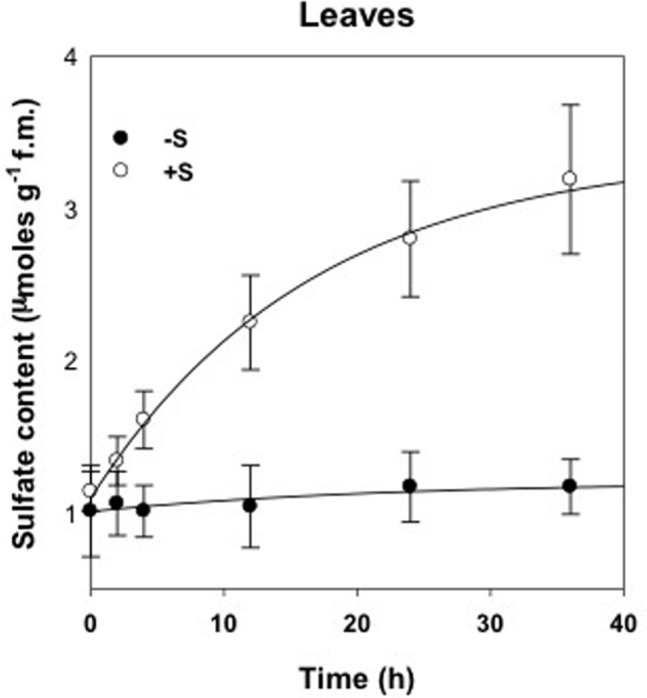
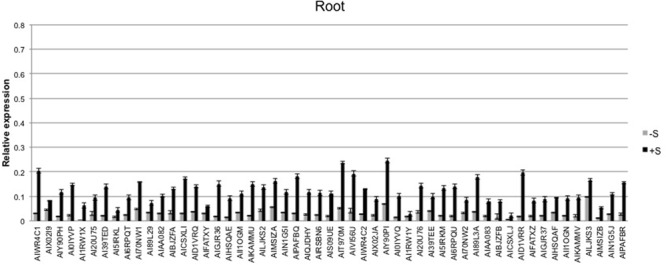
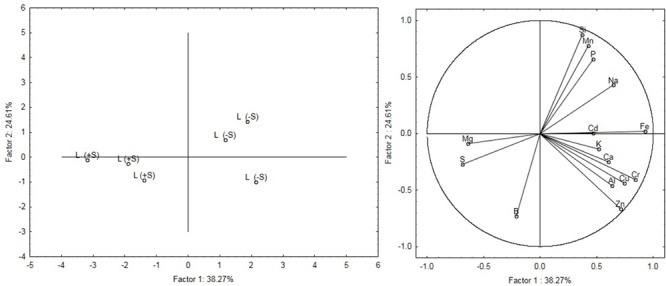
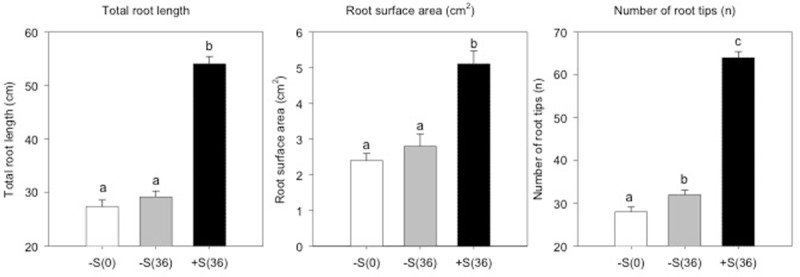
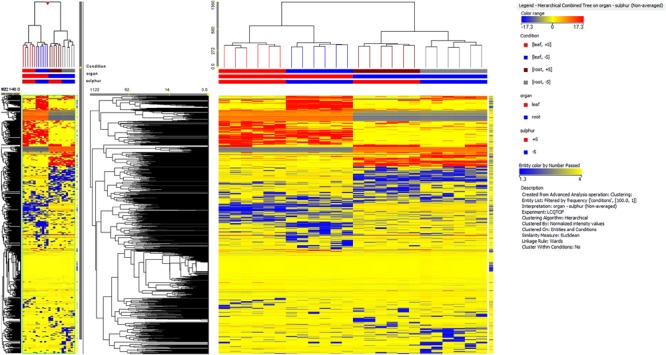
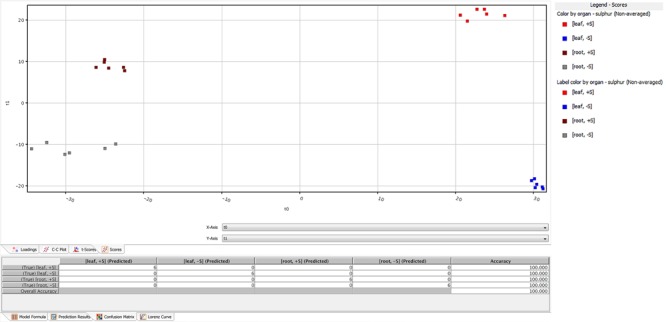
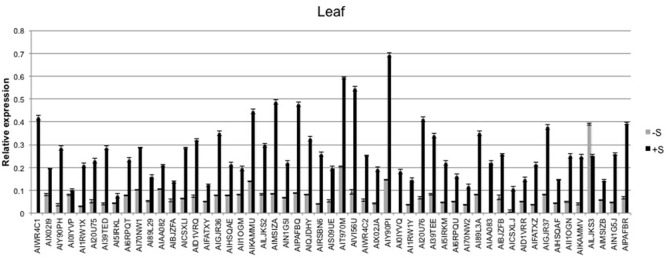
In this study, a system based on omics profiling was set-up for sugar beet ( L. subsp. ) evaluation after changes in sulfate availability. Seedlings were grown on sulfate-deprived Hoagland solution. Six days after germination, 100 μM MgSO was added to the solution. Root samples were collected 36 h after treatments. WinRHIZO root-scanning approach was used for the automated image analysis of plant root morphology. Inductively Coupled Plasma Spectrometry (ICP-OES) and quadrupole-time-of-flight mass spectrometry (Q-TOF) were used for ionomic and metabolic analysis, respectively. Nanofluidic real-time PCR (OpenArray system) was used for molecular profiling. OpenArray chips were designed with TaqMan probes for 53 sugar beet genes putatively involved in sulfate nutrition. At morphological level treated seedlings showed significantly higher values ( < 0.01) than untreated plants for root traits related to soil exploration and nutrient uptake, such as total root length, fine roots length and root tips number. ICP-OES, Q-TOF and transcriptomic data revealed changes due to sulfate availability in sugar beet samples. Two key results are highlighted in sulfate-supplied roots and leaves. Firstly, high expression levels of auxin efflux carrier component 1 (PIN) and 5-phosphoribosyl-anthranilate, precursor of tryptophan and auxin synthesis, were observed in roots. Secondly, high levels of 2-Cys peroxiredoxin BAS1, chloroplastic, thioredoxin reductase (NADPH) and cysteine synthase, chloroplastic/chromoplastic, acetylserine sulfhydrylase, involved in protection against oxidative stress and cysteine synthase activity, respectively, were observed in leaves. Based on our findings, the combination of evaluated omics approaches could become a key system for the evaluation of the nutritional status of sugar beet under different nutrient availability conditions.
在本研究中,建立了一个基于组学分析的系统,用于评估硫酸根供应变化后甜菜(亚种)的情况。幼苗在缺硫的霍格兰溶液中生长。发芽6天后,向溶液中添加100μM硫酸镁。处理36小时后采集根样本。使用WinRHIZO根系扫描方法对植物根系形态进行自动图像分析。电感耦合等离子体质谱仪(ICP - OES)和四极杆飞行时间质谱仪(Q - TOF)分别用于离子组学和代谢分析。纳米流体实时定量PCR(OpenArray系统)用于分子分析。OpenArray芯片设计了TaqMan探针,用于检测53个推测参与硫营养的甜菜基因。在形态学水平上,处理后的幼苗在与土壤探索和养分吸收相关的根系性状方面,如总根长、细根长度和根尖数量,显示出显著高于未处理植株的值(<0.01)。ICP - OES、Q - TOF和转录组数据揭示了甜菜样本中因硫酸根供应而产生的变化。在供应硫酸根的根和叶中突出显示了两个关键结果。首先,在根中观察到生长素外排载体组分1(PIN)和色氨酸及生长素合成前体5 - 磷酸核糖基 - 邻氨基苯甲酸的高表达水平。其次,在叶中观察到高水平的2 - Cys过氧化物酶BAS1、叶绿体硫氧还蛋白还原酶(NADPH)和参与抗氧化应激保护的叶绿体/有色体半胱氨酸合酶、乙酰丝氨酸巯基化酶以及半胱氨酸合酶活性。基于我们的研究结果,所评估的组学方法的组合可能成为评估不同养分供应条件下甜菜营养状况的关键系统。