Kim Eun Sun, Park Kyoung Un, Lee Sang Hoon, Lee Yeon Joo, Park Jong Sun, Cho Young-Jae, Yoon Ho Il, Lee Choon-Taek, Lee Jae Ho
Department of Internal Medicine, Seoul National University College of Medicine, Seoul, Republic of Korea.
Division of Pulmonary and Critical Care Medicine, Department of Internal Medicine, Seoul National University Bundang Hospital, Seongnam-si, Gyeonggi-do, Republic of Korea.
PLoS One. 2018 Feb 15;13(2):e0192893. doi: 10.1371/journal.pone.0192893. eCollection 2018.
Although viruses are known to be the second most common etiological factor in community-acquired pneumonia (CAP), the respiratory viral profile of the patients with healthcare-associated pneumonia (HCAP) has not yet been elucidated. We investigated the prevalence and the clinical impact of respiratory virus infection in adult patients with HCAP.
Patients admitted with HCAP or CAP, between January and December 2016, to a tertiary referral hospital in Korea, were prospectively enrolled, and virus identification was performed using reverse-transcription polymerase chain reaction (RT-PCR).
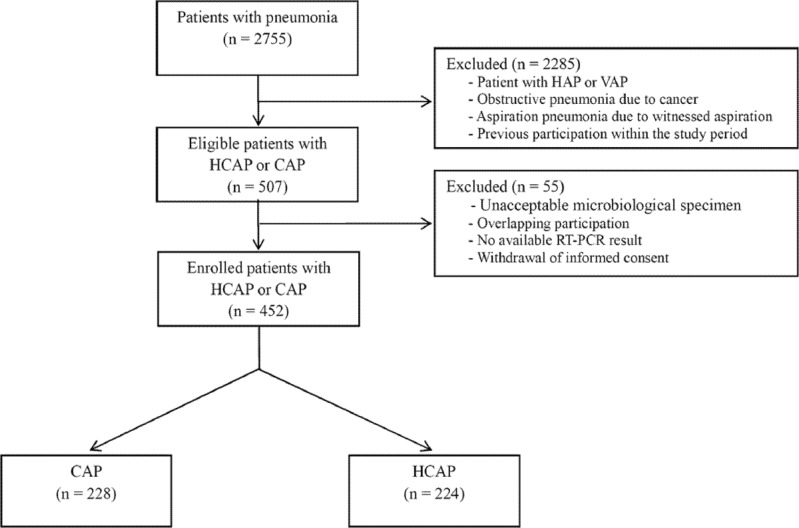
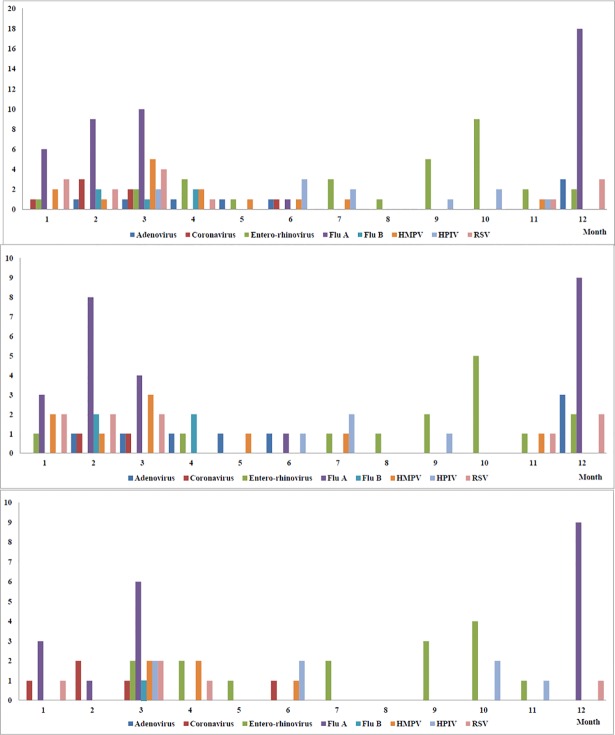
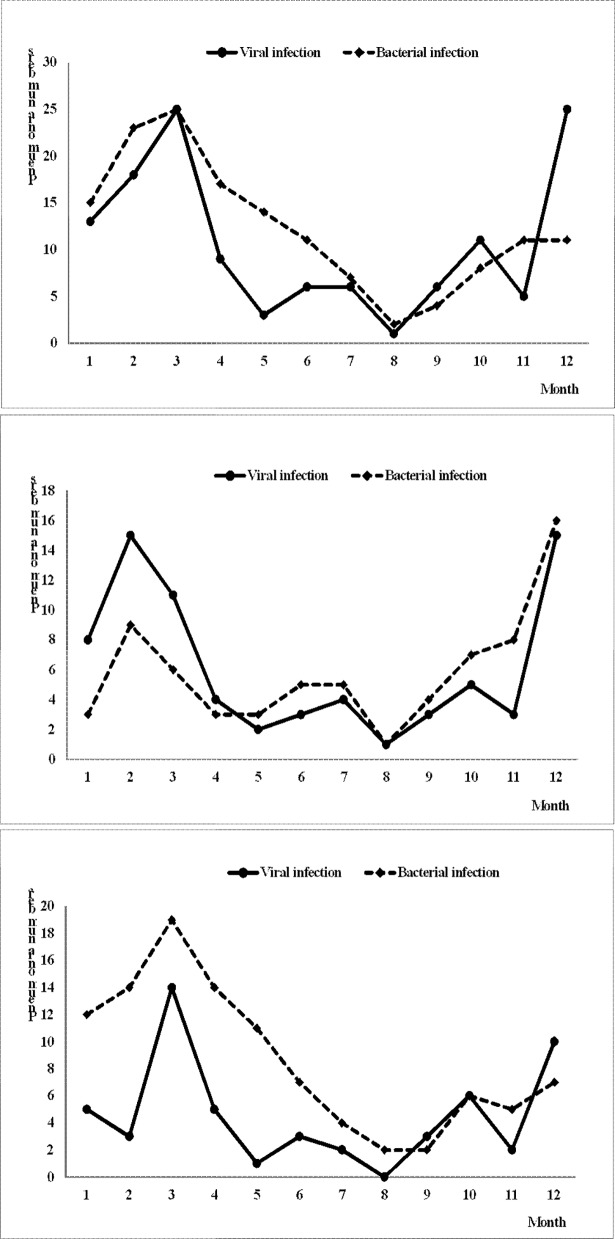
Among 452 enrolled patients (224 with HCAP, 228 with CAP), samples for respiratory viruses were collected from sputum or endotracheal aspirate in 430 (95.1%) patients and from nasopharyngeal specimens in 22 (4.9%) patients. Eighty-seven (19.2%) patients had a viral infection, and the proportion of those with viral infection was significantly lower in the HCAP than in the CAP group (13.8% vs 24.6%, p = 0.004). In both the HCAP and CAP groups, influenza A was the most common respiratory virus, followed by entero-rhinovirus. The seasonal distributions of respiratory viruses were also similar in both groups. In the HCAP group, the viral infection resulted in a similar length of hospital stay and in-hospital mortality as viral-bacterial coinfection and bacterial infection, and the CAP group showed similar results.
The prevalence of viral infection in patients with HCAP was lower than that in patients with CAP, and resulted in a similar prognosis as viral-bacterial coinfection or bacterial infection.
尽管已知病毒是社区获得性肺炎(CAP)的第二大常见病因,但医疗保健相关肺炎(HCAP)患者的呼吸道病毒谱尚未阐明。我们调查了成人HCAP患者呼吸道病毒感染的患病率及其临床影响。
前瞻性纳入2016年1月至12月在韩国一家三级转诊医院因HCAP或CAP入院的患者,并使用逆转录聚合酶链反应(RT-PCR)进行病毒鉴定。
在452例纳入患者中(224例HCAP患者,228例CAP患者),430例(95.1%)患者的呼吸道病毒样本取自痰液或气管内吸出物,22例(4.9%)患者的样本取自鼻咽标本。87例(19.2%)患者发生病毒感染,HCAP组病毒感染患者的比例显著低于CAP组(13.8%对24.6%,p = 0.004)。在HCAP组和CAP组中,甲型流感都是最常见的呼吸道病毒,其次是肠道鼻病毒。两组呼吸道病毒的季节分布也相似。在HCAP组中,病毒感染导致的住院时间和住院死亡率与病毒-细菌混合感染和细菌感染相似,CAP组也有类似结果。
HCAP患者的病毒感染患病率低于CAP患者,且其预后与病毒-细菌混合感染或细菌感染相似。