Markovitch Omer, Krasnogor Natalio
Interdisciplinary Computing and Complex Bio-Systems research group, School of Computing Science, Newcastle University, Newcastle upon Tyne, United-Kingdom.
PLoS One. 2018 Feb 15;13(2):e0192871. doi: 10.1371/journal.pone.0192871. eCollection 2018.
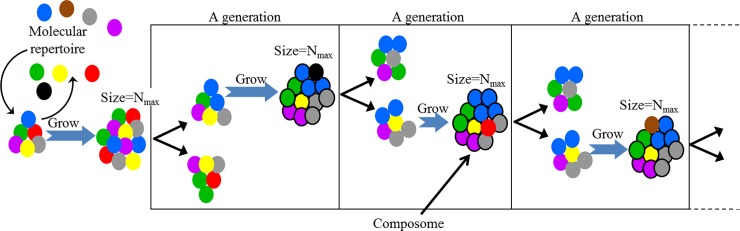
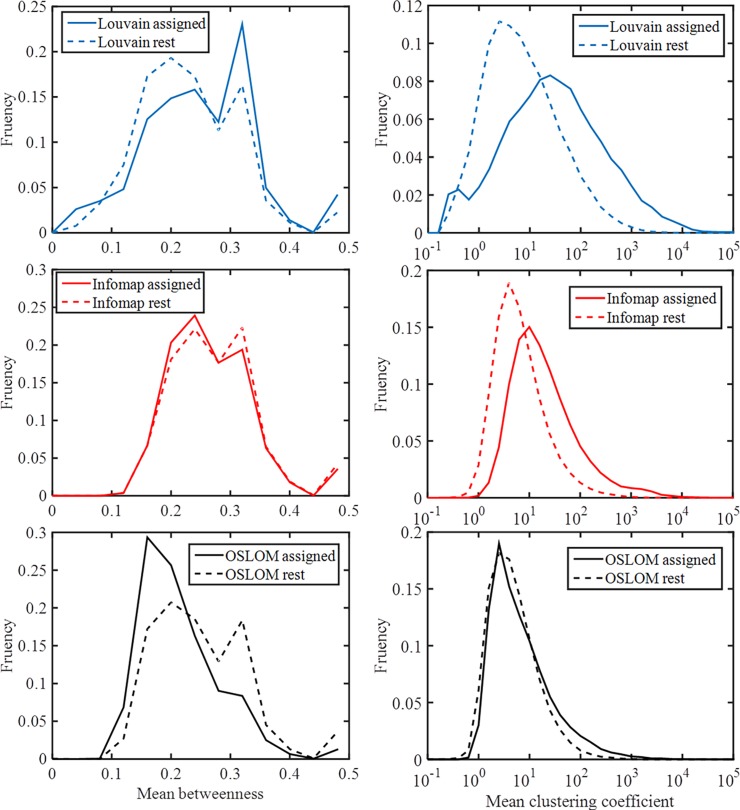
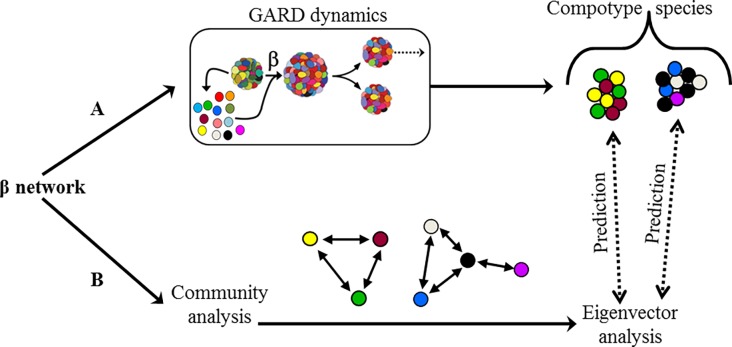
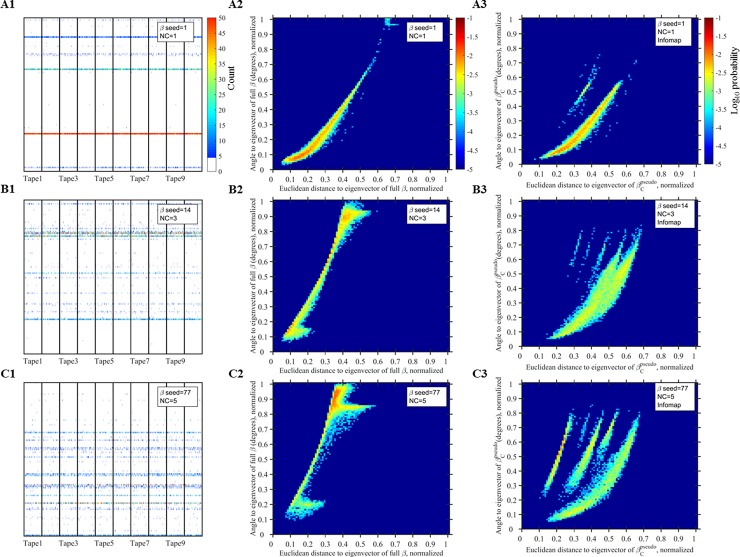
An intriguing question in evolution is what would happen if one could "replay" life's tape. Here, we explore the following hypothesis: when replaying the tape, the details ("decorations") of the outcomes would vary but certain "invariants" might emerge across different life-tapes sharing similar initial conditions. We use large-scale simulations of an in silico model of pre-biotic evolution called GARD (Graded Autocatalysis Replication Domain) to test this hypothesis. GARD models the temporal evolution of molecular assemblies, governed by a rates matrix (i.e. network) that biases different molecules' likelihood of joining or leaving a dynamically growing and splitting assembly. Previous studies have shown the emergence of so called compotypes, i.e., species capable of replication and selection response. Here, we apply networks' science to ascertain the degree to which invariants emerge across different life-tapes under GARD dynamics and whether one can predict these invariant from the chemistry specification alone (i.e. GARD's rates network representing initial conditions). We analysed the (complex) rates' network communities and asked whether communities are related (and how) to the emerging species under GARD's dynamic, and found that the communities correspond to the species emerging from the simulations. Importantly, we show how to use the set of communities detected to predict species emergence without performing any simulations. The analysis developed here may impact complex systems simulations in general.
进化中一个引人入胜的问题是,如果能够“重播”生命的磁带会发生什么。在这里,我们探讨以下假设:当重播磁带时,结果的细节(“装饰”)会有所不同,但在具有相似初始条件的不同生命磁带中可能会出现某些“不变量”。我们使用一种名为GARD(分级自催化复制域)的益生元进化计算机模型进行大规模模拟来检验这一假设。GARD对分子组装的时间演化进行建模,由一个速率矩阵(即网络)控制,该矩阵使不同分子加入或离开动态生长和分裂的组装的可能性产生偏差。先前的研究已经表明出现了所谓的竞争型,即能够进行复制和选择反应的物种。在这里,我们应用网络科学来确定在GARD动力学下不同生命磁带中不变量出现的程度,以及是否仅从化学规范(即代表初始条件的GARD速率网络)就能预测这些不变量。我们分析了(复杂的)速率网络群落,并询问群落与GARD动态下出现的物种是否相关(以及如何相关),结果发现群落与模拟中出现的物种相对应。重要的是,我们展示了如何使用检测到的群落集来预测物种出现,而无需进行任何模拟。这里开展的分析可能会对一般的复杂系统模拟产生影响。