Department of Medicine, Royal Melbourne Hospital, The University of Melbourne, Parkville, VIC, 3050, Australia.
Inflammation Division, The Walter and Eliza Hall Institute of Medical Research, 1G Royal Parade, Parkville, VIC, 3052, Australia.
Cell Death Dis. 2018 Feb 15;9(3):267. doi: 10.1038/s41419-018-0332-4.
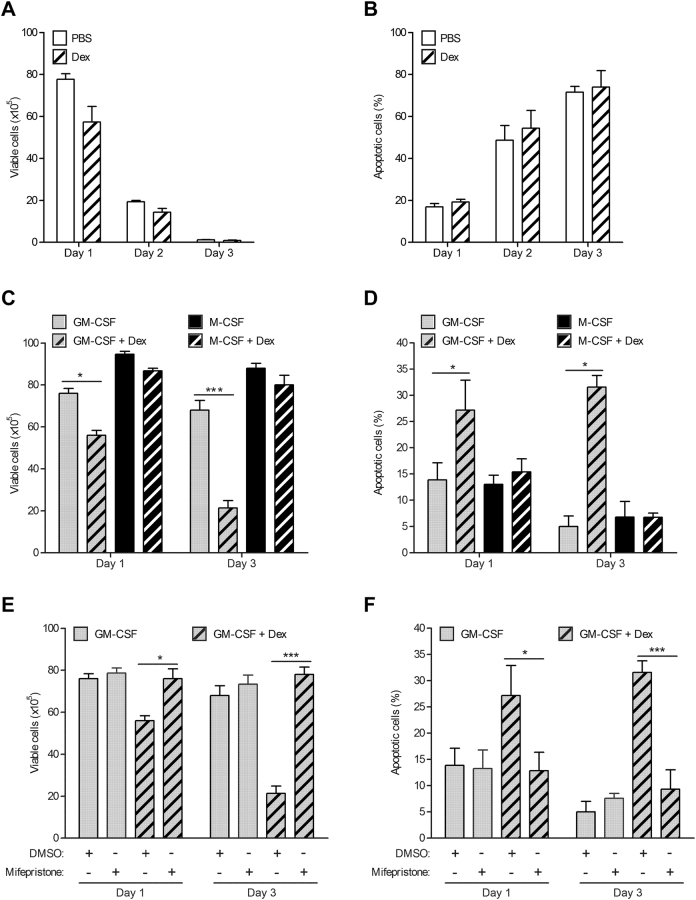
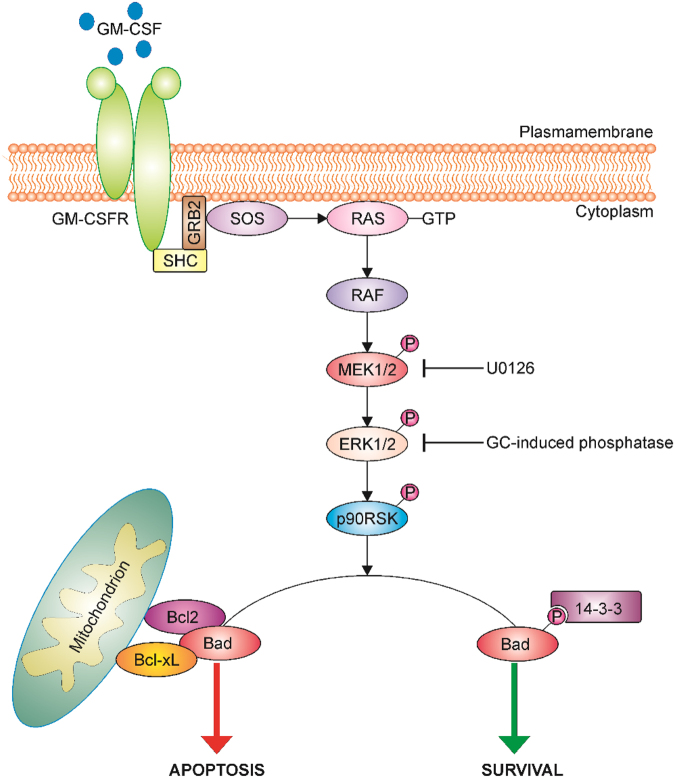
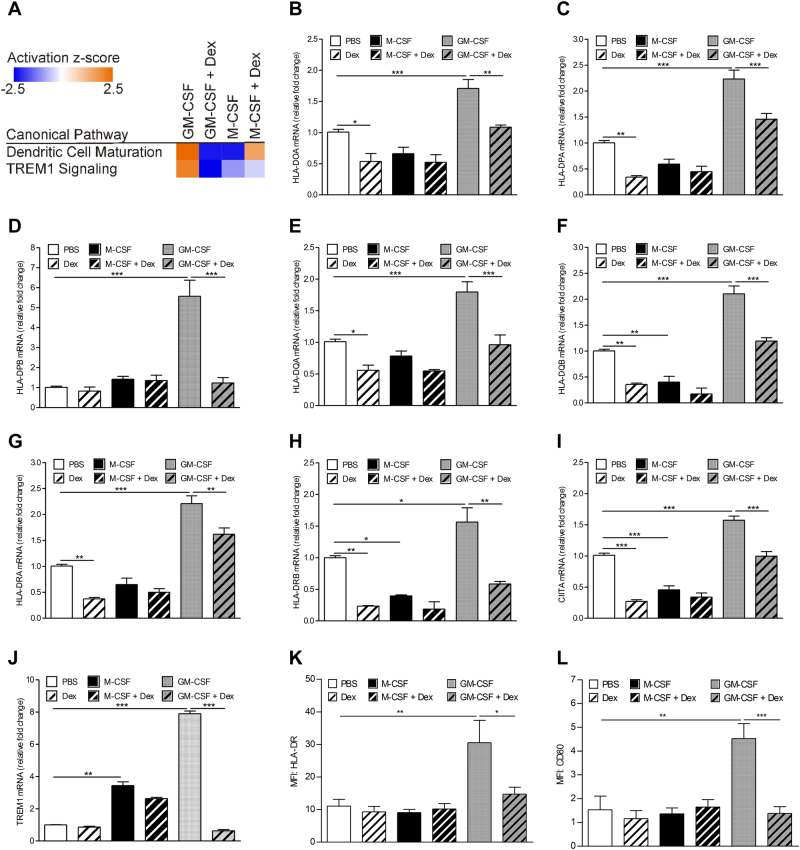
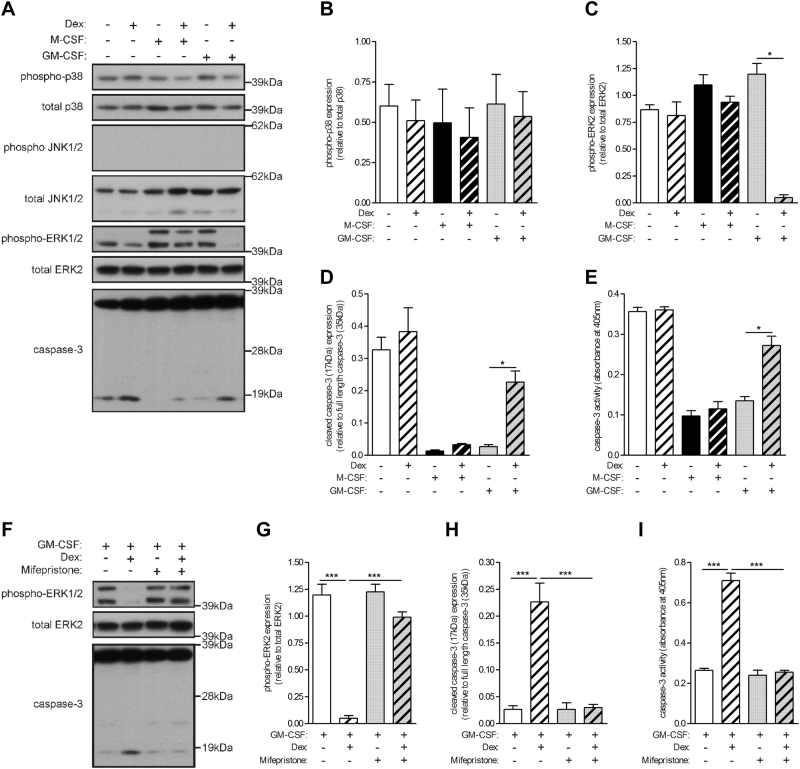
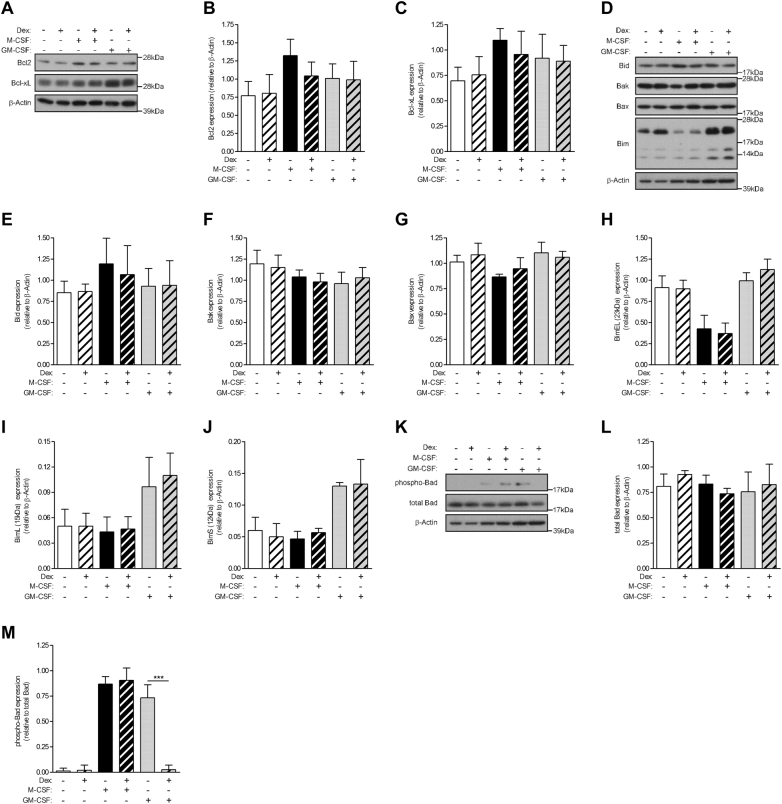
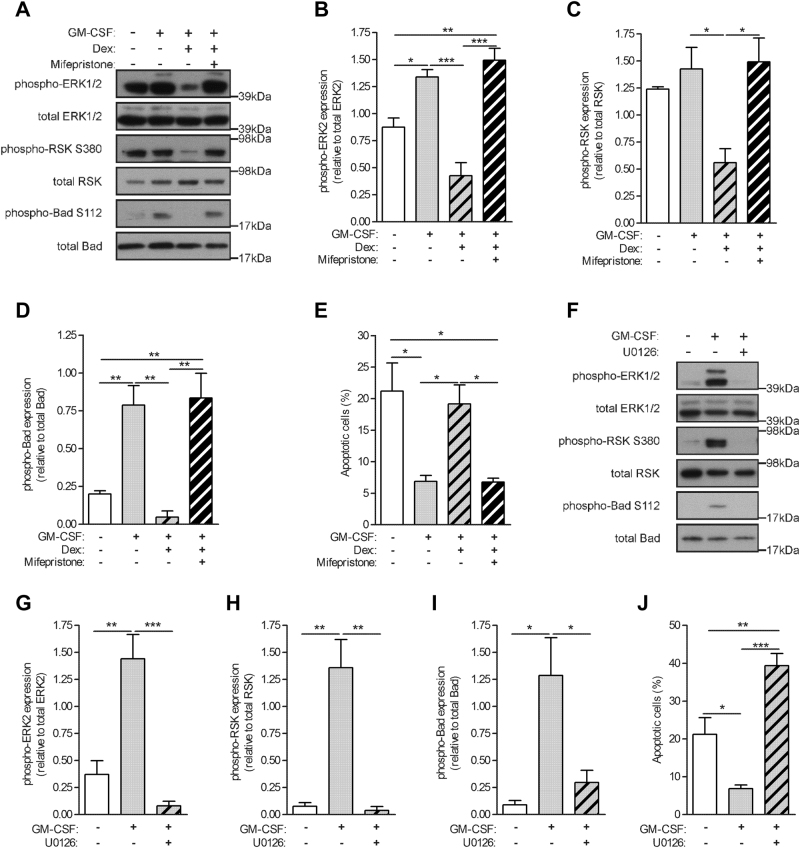
Glucocorticoids (GCs) are potent anti-inflammatory drugs whose mode of action is complex and still debatable. One likely cellular target of GCs are monocytes/macrophages. The role of GCs in monocyte survival is also debated. Although both granulocyte macrophage-colony stimulating factor (GM-CSF) and macrophage-CSF (M-CSF) are important regulators of macrophage lineage functions including their survival, the former is often associated with proinflammatory functions while the latter is important in lineage homeostasis. We report here that the GC, dexamethasone, induces apoptosis in GM-CSF-treated human monocytes while having no impact on M-CSF-induced monocyte survival. To understand how GCs, GM-CSF, and M-CSF are regulating monocyte survival and other functions during inflammation, we firstly examined the transcriptomic changes elicited by these three agents in human monocytes, either acting alone or in combination. Transcriptomic and Ingenuity pathway analyses found that dexamethasone differentially modulated dendritic cell maturation and TREM1 signaling pathways in GM-CSF-treated and M-CSF-treated monocytes, two pathways known to be regulated by ERK1/2 activity. These analyses led us to provide evidence that the GC inhibits ERK1/2 activity selectively in GM-CSF-treated monocytes to induce apoptosis. It is proposed that this inhibition of ERK1/2 activity leads to inactivation of p90 ribosomal-S6 kinase and Bad dephosphorylation leading in turn to enhanced caspase-3 activity and subsequent apoptosis. Furthermore, pharmacological inhibition of GC receptor activity restored the ERK1/2 signaling and prevented the GC-induced apoptosis in GM-CSF-treated monocytes. Increased tissue macrophage numbers, possibly from enhanced survival due to mediators such as GM-CSF, can correlate with inflammatory disease severity; also reduction in these numbers can correlate with the therapeutic benefit of a number of agents, including GCs. We propose that the ERK1/2 signaling pathway promotes survival of GM-CSF-treated proinflammatory monocytes, which can be selectively targeted by GCs as a novel mechanism to reduce local monocyte/macrophage numbers and hence inflammation.
糖皮质激素(GCs)是一种有效的抗炎药物,其作用机制复杂且仍有争议。GCs 的一个可能的细胞靶点是单核细胞/巨噬细胞。GCs 对单核细胞存活的作用也存在争议。虽然粒细胞巨噬细胞集落刺激因子(GM-CSF)和巨噬细胞集落刺激因子(M-CSF)都是调节巨噬细胞谱系功能(包括其存活)的重要调节剂,但前者通常与促炎功能相关,而后者在谱系稳态中很重要。我们在这里报告,GC 地塞米松诱导 GM-CSF 处理的人单核细胞凋亡,而对 M-CSF 诱导的单核细胞存活没有影响。为了了解 GCs、GM-CSF 和 M-CSF 如何在炎症过程中调节单核细胞的存活和其他功能,我们首先检查了这三种试剂单独或联合作用于人单核细胞时引起的转录组变化。转录组和 Ingenuity 途径分析发现,地塞米松在 GM-CSF 处理和 M-CSF 处理的单核细胞中差异调节树突状细胞成熟和 TREM1 信号通路,这两个通路已知受 ERK1/2 活性调节。这些分析使我们能够提供证据表明,GC 选择性抑制 GM-CSF 处理的单核细胞中的 ERK1/2 活性以诱导凋亡。据推测,这种 ERK1/2 活性的抑制导致 p90 核糖体-S6 激酶失活和 Bad 去磷酸化,从而导致 caspase-3 活性增强和随后的凋亡。此外,GC 受体活性的药理学抑制恢复了 ERK1/2 信号通路,并防止了 GM-CSF 处理的单核细胞中的 GC 诱导的凋亡。组织中巨噬细胞数量的增加,可能是由于 GM-CSF 等介质增强了存活,与炎症性疾病的严重程度相关;这些数量的减少也与包括 GCs 在内的许多药物的治疗益处相关。我们提出,ERK1/2 信号通路促进 GM-CSF 处理的促炎单核细胞的存活,GC 可以作为一种新的机制选择性地靶向这些细胞,以减少局部单核细胞/巨噬细胞数量并因此减轻炎症。