Graduate Institute of Clinical Medical Sciences, College of Medicine, Chang Gung University, Taoyuan, 302, Taiwan.
Division of Hepato-Gastroenterology, Department of Internal Medicine, Chang Gung Memorial Hospital-Kaohsiung Medical Center, Kaohsiung, 833, Taiwan.
Sci Rep. 2018 Feb 15;8(1):3081. doi: 10.1038/s41598-018-21361-6.
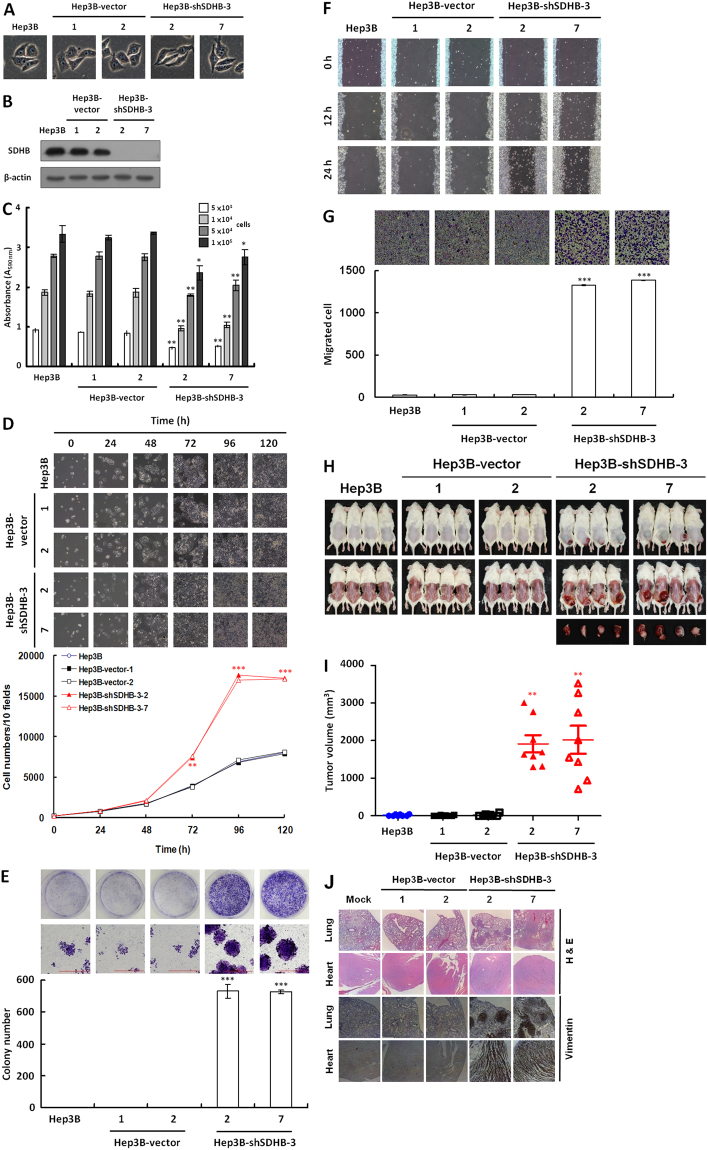
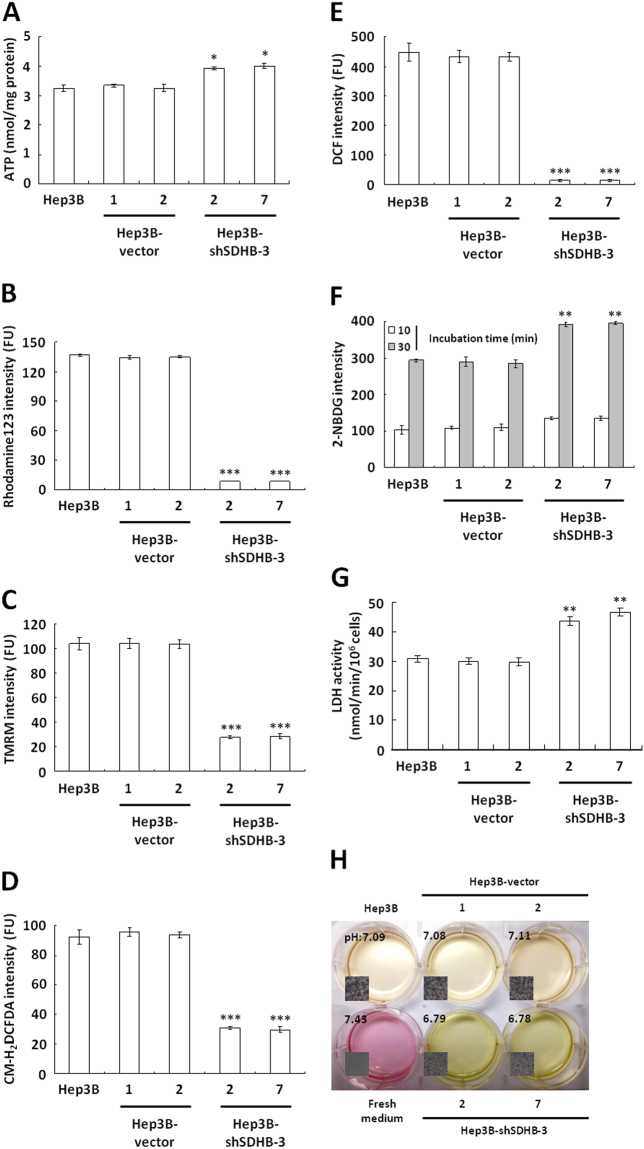
Changes in TCA cycle enzymes or respiratory activity are possible mechanisms of aerobic glycolysis that contributes to tumor progression. To clarify whether the decrease of succinate dehydrogenase B (SDHB) alters energy metabolism, induces the Warburg effect and results in tumor malignancy, SDHB expression was examined and modulated in hepatocellular carcinoma (HCC) tissues and cells, respectively. SDHB level was often decreased in malignant HCC cells and tissues. Furthermore, the reduced SDHB expression was associated with advanced tumor stage and poor survival rate. Moreover, silencing of SDHB altered energy metabolism switched from aerobic respiration to glycolysis, resulted in the Warburg effect, and enhanced cell proliferation and motility. In contrast, the SDHB overexpression deregulated bioenergetic metabolism and decreased cell growth and migration. In mouse xenograft models, subcutaneous implantation and tail vein injection with SDHB knockdown cells resulted in a larger tumor volume and accelerated cancer metastasis, respectively. A mutation or decrease in SDHB induced the switch from aerobic respiration to glycolysis. This metabolic alteration was associated with tumor cell dedifferentiation, proliferation, motility and overall patient survival in HCC.
三羧酸循环酶或呼吸活性的变化可能是有氧糖酵解的机制之一,有助于肿瘤的进展。为了阐明琥珀酸脱氢酶 B(SDHB)的减少是否改变了能量代谢,诱导了瓦伯格效应,并导致肿瘤恶性转化,分别在肝癌(HCC)组织和细胞中检查和调节 SDHB 的表达。SDHB 水平在恶性 HCC 细胞和组织中经常降低。此外,SDHB 表达的减少与肿瘤晚期和生存率降低有关。此外,SDHB 的沉默改变了能量代谢,从有氧呼吸转变为糖酵解,导致瓦伯格效应,并增强了细胞增殖和迁移。相比之下,SDHB 的过表达使生物能量代谢失调,降低了细胞生长和迁移。在小鼠异种移植模型中,皮下植入和尾静脉注射 SDHB 敲低细胞分别导致肿瘤体积增大和癌症转移加速。SDHB 的突变或减少诱导了从有氧呼吸到糖酵解的转变。这种代谢改变与 HCC 中的肿瘤细胞去分化、增殖、迁移和患者总体生存有关。