VIB Center for Inflammation Research, Ghent, Belgium.
Department of Internal Medicine, Ghent University, Ghent, Belgium.
Front Immunol. 2018 Feb 1;9:93. doi: 10.3389/fimmu.2018.00093. eCollection 2018.
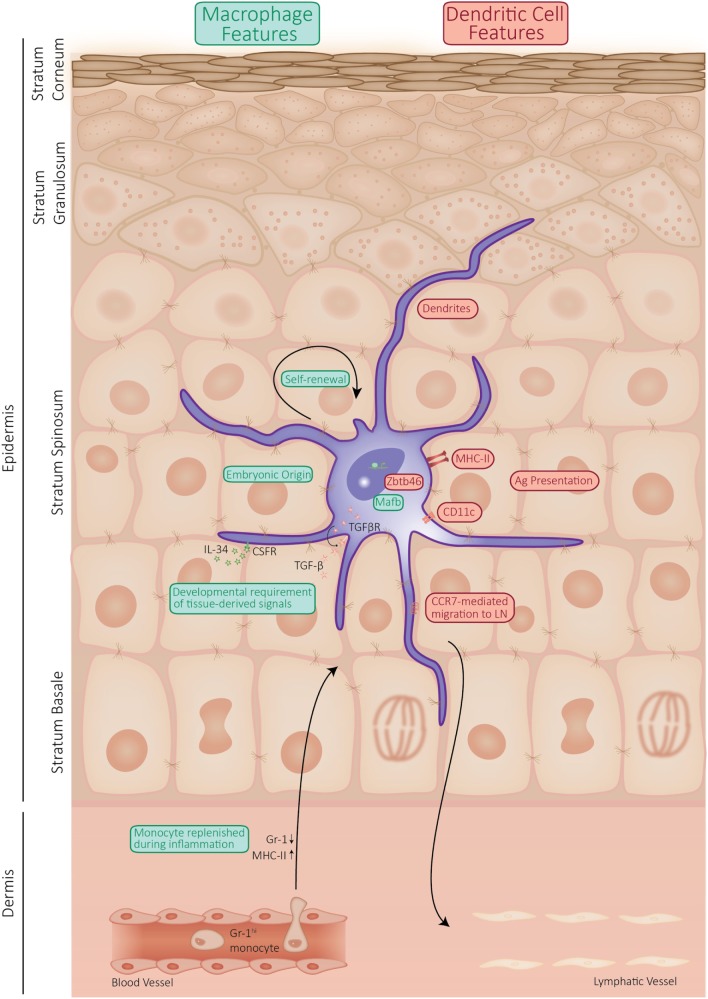
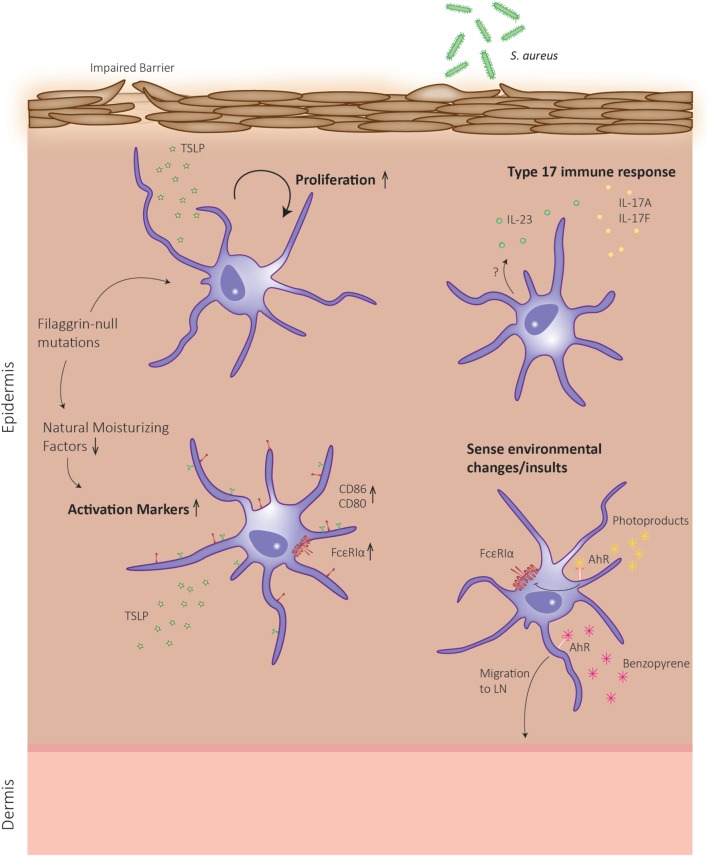
In the last few decades, our understanding of Langerhans cells (LCs) has drastically changed based on novel findings regarding the developmental origin and biological functions of these epidermis-specific resident immune cells. It has become clear that LCs not only exert pivotal roles in immune surveillance and homeostasis but also impact on pathology by either inducing tolerance or mediating inflammation. Their unique capabilities to self-renew within the epidermis, while also being able to migrate to lymph nodes in order to present antigen, place LCs in a key position to sample the local environment and decide on the appropriate cutaneous immune response. Exciting new data distinguishing LCs from Langerin dermal dendritic cells (DCs) on a functional and ontogenic level reveal crucial roles for LCs in trauma and various skin pathologies, which will be thoroughly discussed here. However, despite rapid progress in the field, the exact role of LCs during immune responses has not been completely elucidated. This review focuses on what mouse models that have been developed in order to enable the study of murine LCs and other Langerin-expressing DCs have taught us about LC development and function.
在过去的几十年中,由于对这些表皮特异性常驻免疫细胞的发育起源和生物学功能的新发现,我们对朗格汉斯细胞 (LCs) 的理解发生了巨大变化。现在已经清楚的是,LCs 不仅在免疫监视和体内平衡中发挥关键作用,而且还可以通过诱导耐受或介导炎症来影响病理。它们在表皮内自我更新的独特能力,同时也能够迁移到淋巴结以呈递抗原,使 LCs 处于能够采样局部环境并决定适当的皮肤免疫反应的关键位置。在功能和发生学水平上区分 LCs 和朗格汉斯皮肤树突状细胞 (DCs) 的令人兴奋的新数据揭示了 LCs 在创伤和各种皮肤病理中的重要作用,本文将对此进行深入讨论。然而,尽管该领域取得了快速进展,但 LCs 在免疫反应中的确切作用尚未完全阐明。这篇综述重点介绍了为了研究小鼠 LCs 和其他表达朗格汉斯蛋白的 DCs 而开发的小鼠模型,让我们对 LCs 的发育和功能有了哪些了解。