Centre de Recherche du CHUM, Université de Montréal, Quebec, Canada; Montreal Diabetes Research Centre, Université de Montréal, Quebec, Canada; Department of Neuroscience, Université de Montréal, Quebec, Canada.
Centre de Recherche du CHUM, Université de Montréal, Quebec, Canada; Montreal Diabetes Research Centre, Université de Montréal, Quebec, Canada; Department of Nutrition, Université de Montréal, Quebec, Canada.
Mol Metab. 2018 Apr;10:1-13. doi: 10.1016/j.molmet.2018.01.018. Epub 2018 Jan 31.
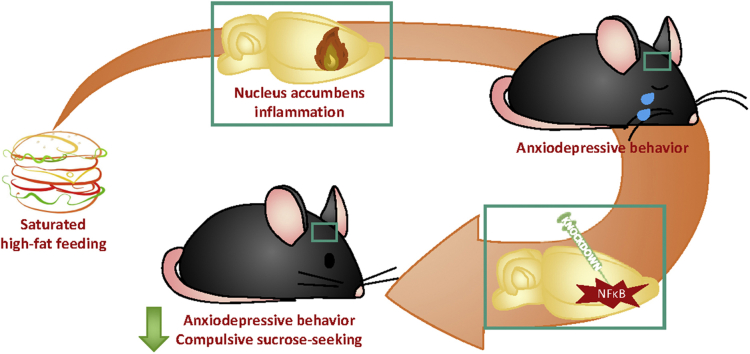
The incidence of depression is significantly compounded by obesity. Obesity arising from excessive intake of high-fat food provokes anxiodepressive behavior and elicits molecular adaptations in the nucleus accumbens (NAc), a region well-implicated in the hedonic deficits associated with depression and in the control of food-motivated behavior. To determine the etiology of diet-induced depression, we studied the impact of different dietary lipids on anxiodepressive behavior and metabolic and immune outcomes and the contribution of NAc immune activity.
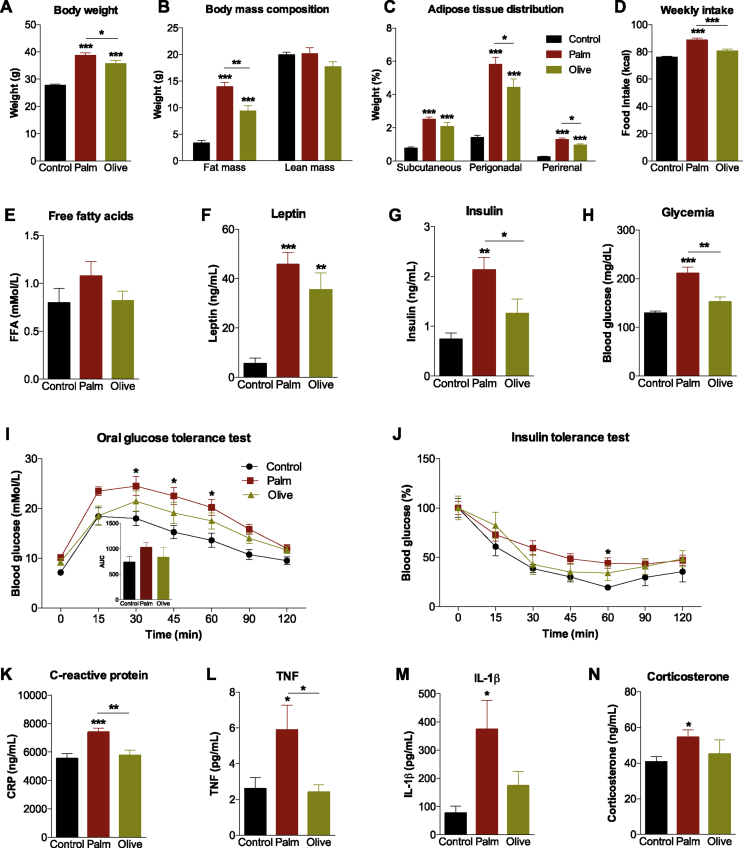
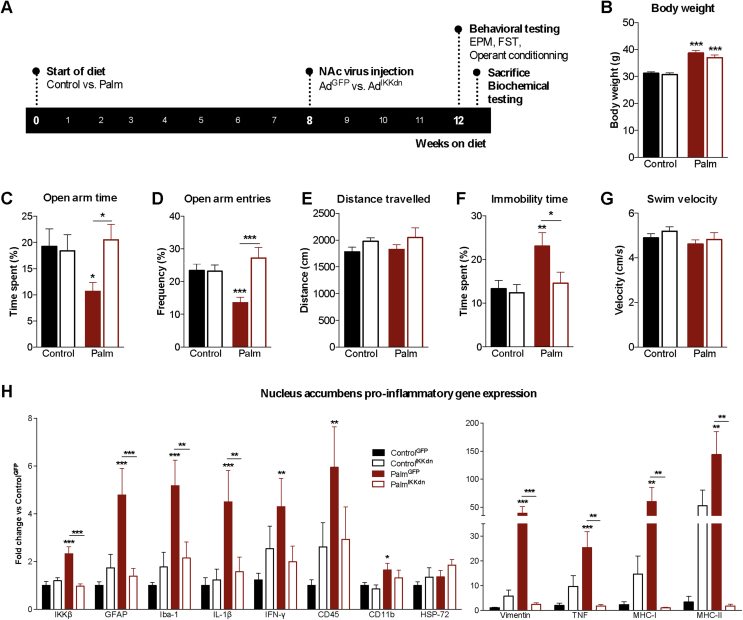
Adult C57Bl/6 mice were subjected to isocaloric high-fat/high-sucrose diets (HFD), enriched in either saturated or monounsaturated fat, or a control low-fat diet (LFD). Metabolic responses, anxiodepressive behavior, and plasma and NAc inflammatory markers were assessed after 12 weeks. In separate experiments, an adenoviral construct inhibiting IKKβ, an upstream component of the nuclear factor kappa-b (NFkB) pathway, was a priori injected into the NAc.
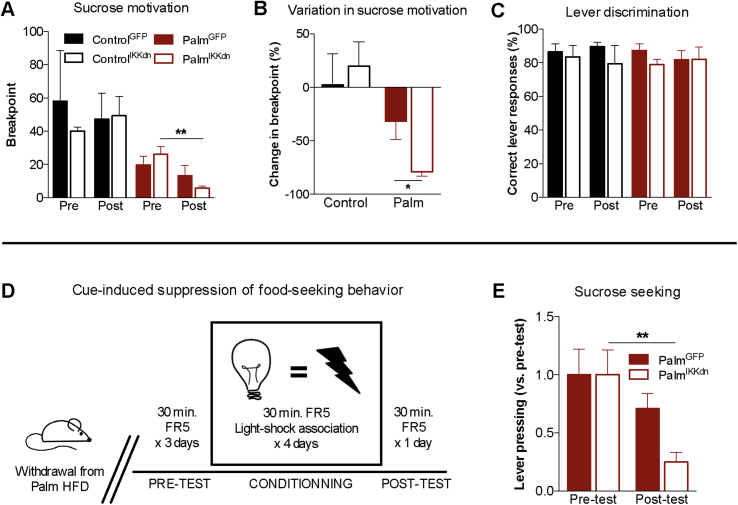
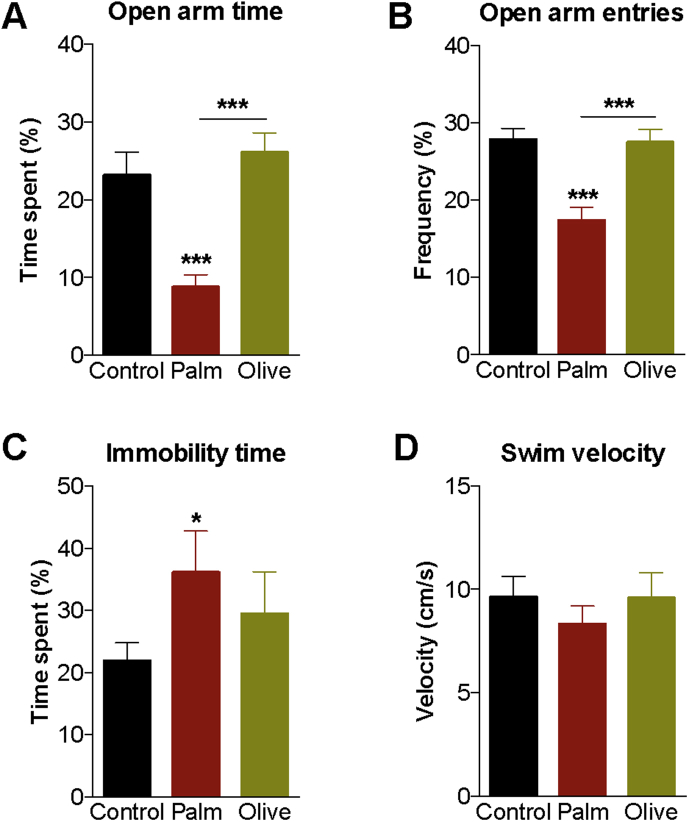
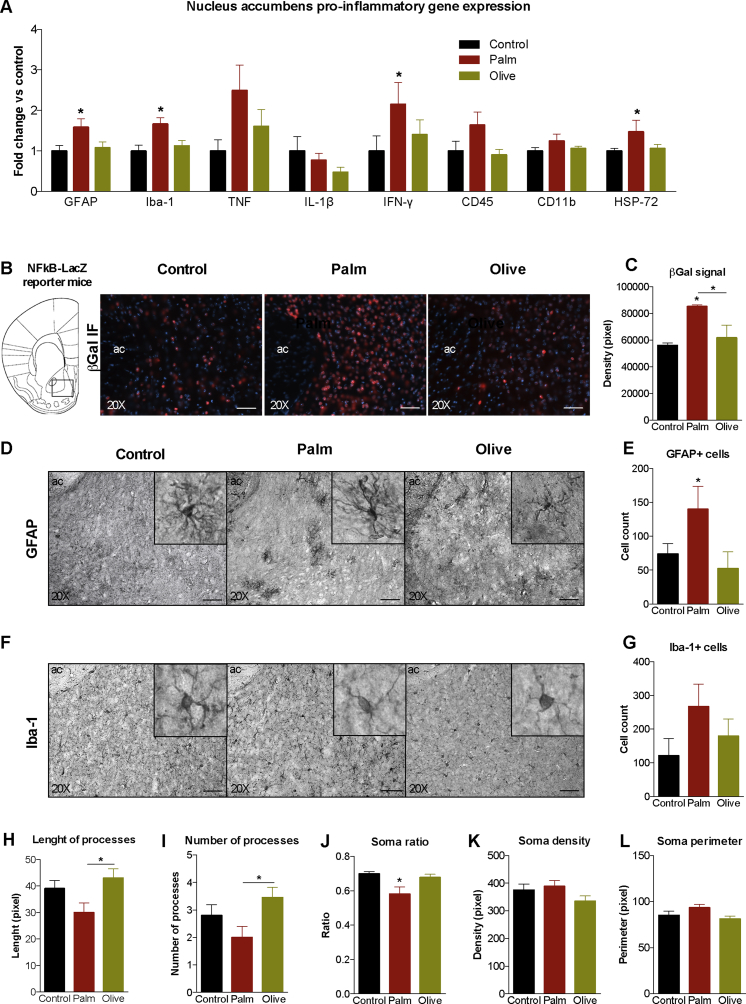
Both HFDs resulted in obesity and hyperleptinemia; however, the saturated HFD uniquely triggered anxiety-like behavior, behavioral despair, hyperinsulinemia, glucose intolerance, peripheral inflammation, and multiple pro-inflammatory signs in the NAc, including reactive gliosis, increased expression of cytokines, antigen-presenting markers and NFкB transcriptional activity. Selective NAc IKKβ inhibition reversed the upregulated expression of inflammatory markers, prevented anxiodepressive behavior and blunted compulsive sucrose-seeking in mice fed the saturated HFD.
Metabolic inflammation and NFкB-mediated neuroinflammatory responses in the NAc contribute to the expression of anxiodepressive behavior and heightened food cravings caused by a diet high in saturated fat and sugar.
肥胖会使抑郁症的发病率显著增加。由于高脂肪食物摄入过多而导致的肥胖会引发焦虑抑郁行为,并引起伏隔核(NAc)的分子适应,NAc 与抑郁相关的快感缺失以及对食物动机行为的控制密切相关。为了确定饮食引起的抑郁症的病因,我们研究了不同膳食脂质对焦虑抑郁行为以及代谢和免疫结果的影响,以及 NAc 免疫活性的贡献。
成年 C57Bl/6 小鼠接受等热量高脂肪/高蔗糖饮食(HFD),富含饱和脂肪或单不饱和脂肪,或对照低脂饮食(LFD)。12 周后评估代谢反应、焦虑抑郁行为以及血浆和 NAc 炎症标志物。在单独的实验中,一种抑制 IKKβ的腺病毒构建物(核因子 kappa-b(NFkB)途径的上游成分)被预先注射到 NAc 中。
两种 HFD 均导致肥胖和高瘦素血症;然而,饱和 HFD 独特地引发了焦虑样行为、行为绝望、高胰岛素血症、葡萄糖不耐受、外周炎症以及 NAc 中的多种促炎迹象,包括反应性神经胶质增生、细胞因子、抗原呈递标记物和 NFкB 转录活性的表达增加。选择性 NAc IKKβ抑制逆转了炎症标志物的上调表达,防止了喂食饱和 HFD 的小鼠出现焦虑抑郁行为和强迫性蔗糖寻求行为。
代谢性炎症和 NAc 中的 NFкB 介导的神经炎症反应导致了由高饱和脂肪和糖饮食引起的焦虑抑郁行为和增强的食物渴望的表达。