Bakoyiannis Ioannis, Ducourneau Eva Gunnel, N'diaye Mateo, Fermigier Alice, Ducroix-Crepy Celine, Bosch-Bouju Clementine, Coutureau Etienne, Trifilieff Pierre, Ferreira Guillaume
University of Bordeaux, INRAE, Bordeaux INP, NutriNeuro, UMR 1286, F-33077, Bordeaux, France.
University of Bordeaux, CNRS, INCIA, UMR 5287, 33077, Bordeaux, France.
Elife. 2024 Mar 4;13:e80388. doi: 10.7554/eLife.80388.
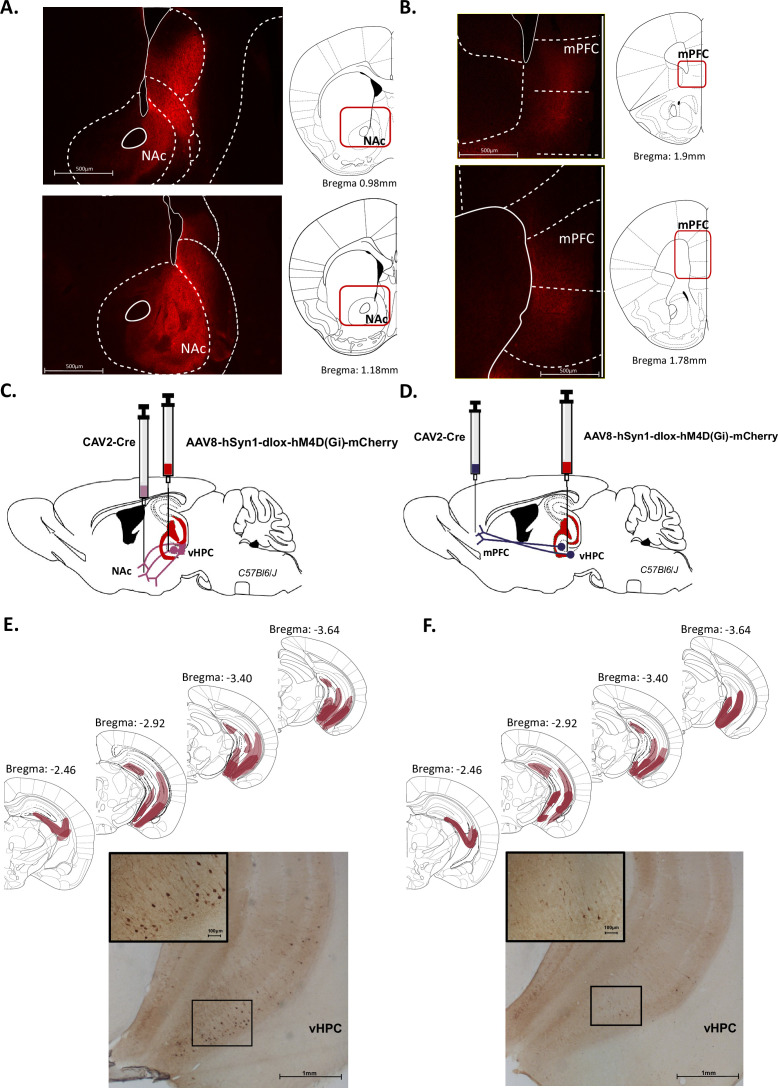
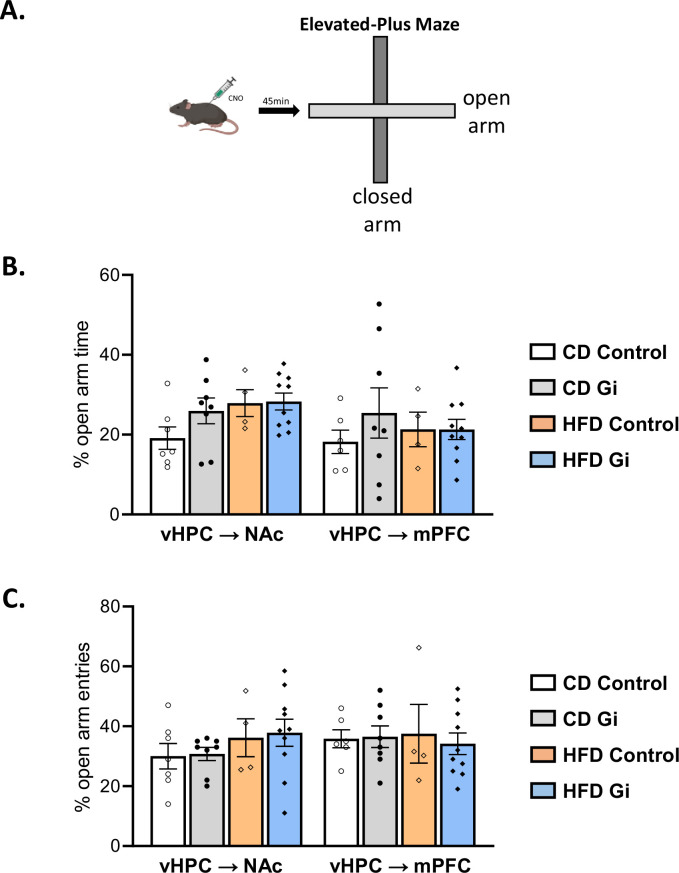
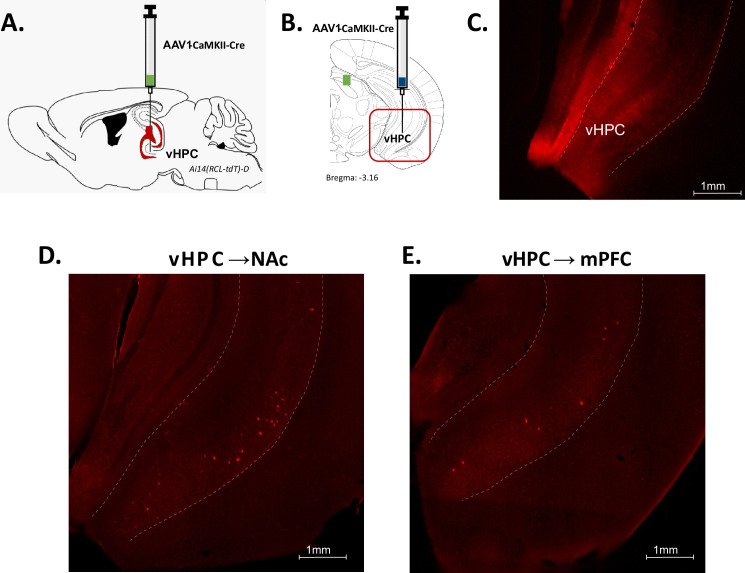
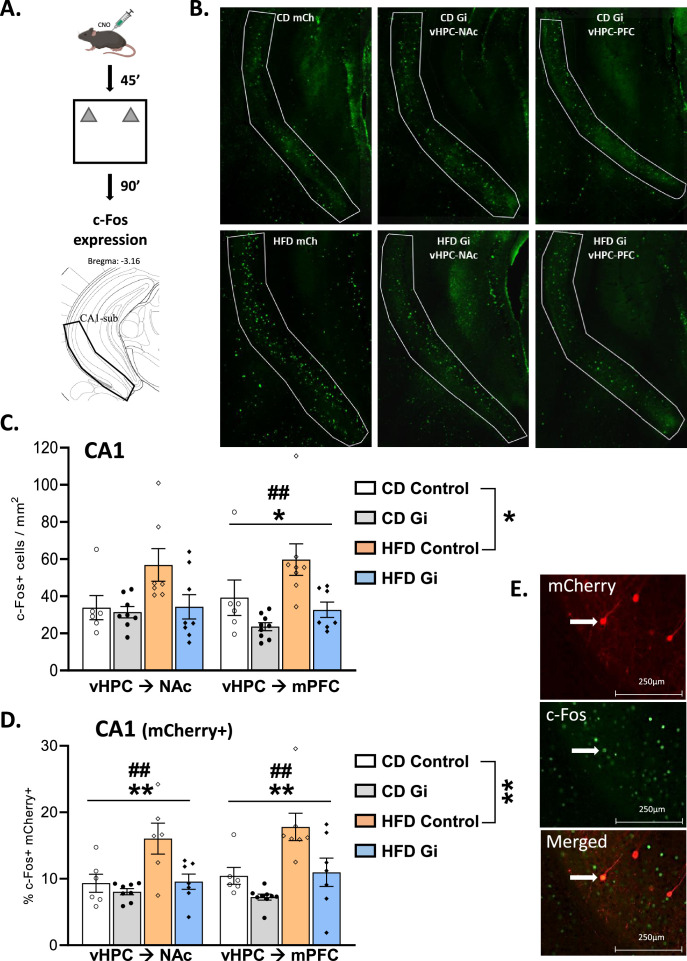
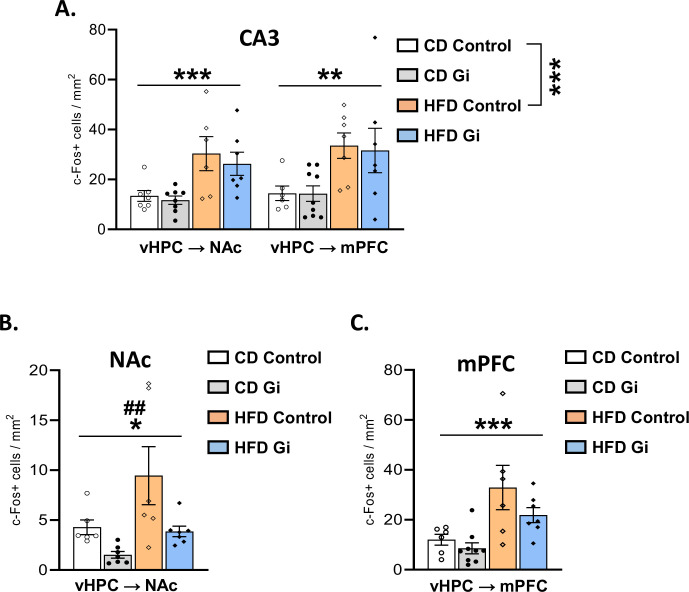
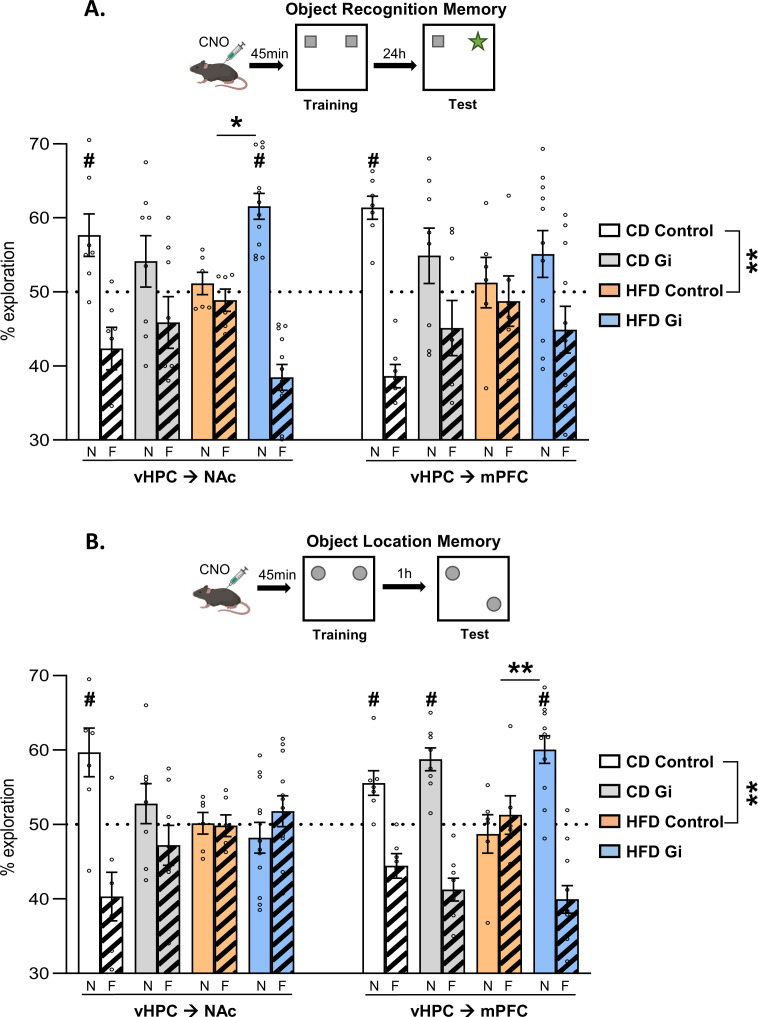
Obesity is associated with neurocognitive dysfunction, including memory deficits. This is particularly worrisome when obesity occurs during adolescence, a maturational period for brain structures critical for cognition. In rodent models, we recently reported that memory impairments induced by obesogenic high-fat diet (HFD) intake during the periadolescent period can be reversed by chemogenetic manipulation of the ventral hippocampus (vHPC). Here, we used an intersectional viral approach in HFD-fed male mice to chemogenetically inactivate specific vHPC efferent pathways to nucleus accumbens (NAc) or medial prefrontal cortex (mPFC) during memory tasks. We first demonstrated that HFD enhanced activation of both pathways after training and that our chemogenetic approach was effective in normalizing this activation. Inactivation of the vHPC-NAc pathway rescued HFD-induced deficits in recognition but not location memory. Conversely, inactivation of the vHPC-mPFC pathway restored location but not recognition memory impairments produced by HFD. Either pathway manipulation did not affect exploration or anxiety-like behaviour. These findings suggest that HFD intake throughout adolescence impairs different types of memory through overactivation of specific hippocampal efferent pathways and that targeting these overactive pathways has therapeutic potential.
肥胖与神经认知功能障碍有关,包括记忆缺陷。当肥胖发生在青春期时,这尤其令人担忧,因为青春期是对认知至关重要的脑结构的成熟时期。在啮齿动物模型中,我们最近报告说,在青春期前后摄入致肥胖的高脂饮食(HFD)所诱导的记忆障碍可以通过对腹侧海马体(vHPC)进行化学遗传学操作来逆转。在这里,我们在喂食HFD的雄性小鼠中使用了一种交叉病毒方法,在记忆任务期间对特定的vHPC传出通路进行化学遗传学失活,这些通路分别通向伏隔核(NAc)或内侧前额叶皮质(mPFC)。我们首先证明,HFD在训练后增强了这两条通路的激活,并且我们的化学遗传学方法有效地使这种激活正常化。vHPC-NAc通路的失活挽救了HFD诱导的识别缺陷,但没有挽救位置记忆缺陷。相反,vHPC-mPFC通路的失活恢复了HFD产生的位置记忆缺陷,但没有恢复识别记忆缺陷。对任何一条通路的操作都不会影响探索行为或焦虑样行为。这些发现表明,整个青春期摄入HFD会通过特定海马传出通路的过度激活损害不同类型的记忆,并且针对这些过度活跃的通路具有治疗潜力。