Department of Medicine, Division of Hematology and Oncology, Vanderbilt University Medical Center, Nashville, TN 37232, USA.
Vanderbilt-Ingram Cancer Center, Vanderbilt University Medical Center, Nashville, TN 37232, USA.
Mol Cancer. 2018 Feb 19;17(1):58. doi: 10.1186/s12943-018-0782-4.
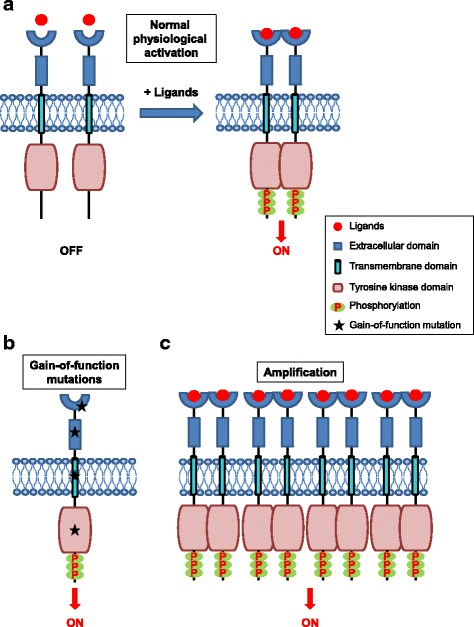
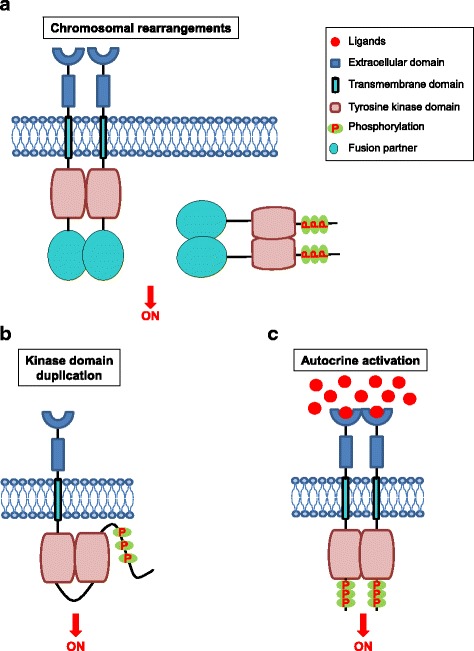
Receptor tyrosine kinases (RTKs) play an important role in a variety of cellular processes including growth, motility, differentiation, and metabolism. As such, dysregulation of RTK signaling leads to an assortment of human diseases, most notably, cancers. Recent large-scale genomic studies have revealed the presence of various alterations in the genes encoding RTKs such as EGFR, HER2/ErbB2, and MET, amongst many others. Abnormal RTK activation in human cancers is mediated by four principal mechanisms: gain-of-function mutations, genomic amplification, chromosomal rearrangements, and / or autocrine activation. In this manuscript, we review the processes whereby RTKs are activated under normal physiological conditions and discuss several mechanisms whereby RTKs can be aberrantly activated in human cancers. Understanding of these mechanisms has important implications for selection of anti-cancer therapies.
受体酪氨酸激酶(RTKs)在多种细胞过程中发挥重要作用,包括生长、运动、分化和代谢。因此,RTK 信号转导的失调会导致各种人类疾病,尤其是癌症。最近的大规模基因组研究揭示了编码 RTKs 的基因(如 EGFR、HER2/ErbB2 和 MET 等)存在各种改变。人类癌症中异常的 RTK 激活是由四种主要机制介导的:功能获得性突变、基因扩增、染色体重排和/或自分泌激活。在本文中,我们回顾了 RTK 在正常生理条件下被激活的过程,并讨论了 RTK 在人类癌症中异常激活的几种机制。对这些机制的理解对选择抗癌疗法具有重要意义。