Laboratory of Molecular Oncology, Cancer Research Institute, Biomedical Research Center of the Slovak Academy of Sciences, Dubravska cesta 9, 845 05, Bratislava, Slovakia.
Mol Cancer. 2018 Feb 19;17(1):26. doi: 10.1186/s12943-018-0795-z.
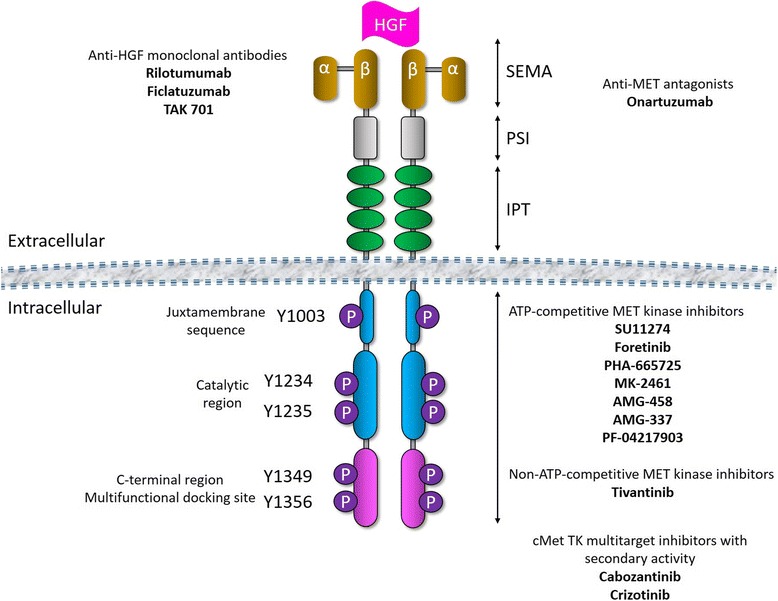
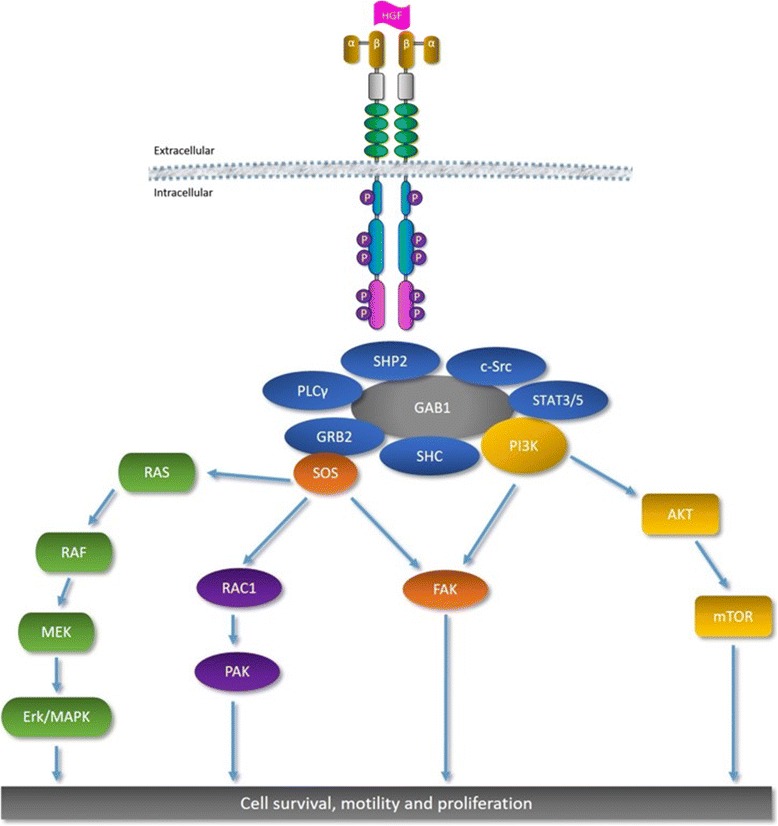
Metastatic disease in a cancer patient still remains a therapeutic challenge. Metastatic process involves many steps, during which malignant cells succeed to activate cellular pathways promoting survival in hostile environment, engraftment and growth at the distant site from the primary tumor. Melanoma is known for its high propensity to produce metastases even at the early stages of the disease. Here we summarize the most important molecular mechanisms which were associated with the melanoma metastasis. Then, we specifically focus on the signaling pathway mediated by hepatocyte growth factor (HGF) and its receptor c-Met, which play an important role during physiological processes and were been associated with tumorigenesis. We also focus on the effect of the small molecule inhibitors of the tyrosine kinase domain of the c-Met receptor and its effects on properties of melanoma cell. We summarize recent studies, which involved inhibition of the HGF/c-Met signaling in order to decrease melanoma growth and metastatic capacity.
癌症患者的转移性疾病仍然是一个治疗挑战。转移过程涉及多个步骤,在此期间,恶性细胞成功激活了促进在恶劣环境中生存、在远离原发肿瘤的部位定植和生长的细胞途径。黑色素瘤以其在疾病早期就具有很高的转移倾向而闻名。在这里,我们总结了与黑色素瘤转移相关的最重要的分子机制。然后,我们特别关注由肝细胞生长因子 (HGF) 和其受体 c-Met 介导的信号通路,该通路在生理过程中发挥重要作用,并与肿瘤发生有关。我们还关注 c-Met 受体酪氨酸激酶结构域的小分子抑制剂的作用及其对黑色素瘤细胞特性的影响。我们总结了最近的研究,这些研究涉及抑制 HGF/c-Met 信号以降低黑色素瘤的生长和转移能力。