Translational Research Institute, Academic Health System, Hamad Medical Corporation, PO Box 3050, Doha, State of Qatar.
Medical Research Center, Hamad Medical Corporation, Doha, State of Qatar.
Mol Cancer. 2018 Feb 19;17(1):31. doi: 10.1186/s12943-018-0788-y.
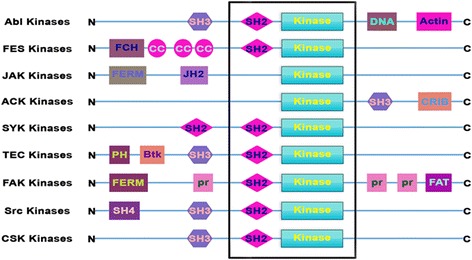
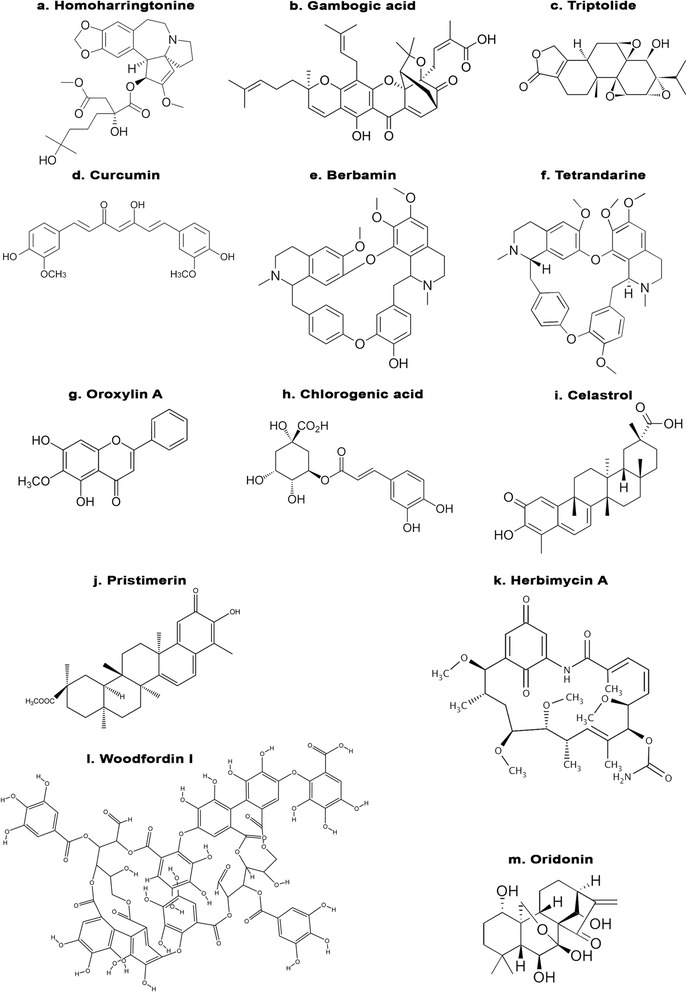
Tyrosine kinases belong to a family of enzymes that mediate the movement of the phosphate group to tyrosine residues of target protein, thus transmitting signals from the cell surface to cytoplasmic proteins and the nucleus to regulate physiological processes. Non-receptor tyrosine kinases (NRTK) are a sub-group of tyrosine kinases, which can relay intracellular signals originating from extracellular receptor. NRTKs can regulate a huge array of cellular functions such as cell survival, division/propagation and adhesion, gene expression, immune response, etc. NRTKs exhibit considerable variability in their structural make up, having a shared kinase domain and commonly possessing many other domains such as SH2, SH3 which are protein-protein interacting domains. Recent studies show that NRTKs are mutated in several hematological malignancies, including lymphomas, leukemias and myelomas, leading to aberrant activation. It can be due to point mutations which are intragenic changes or by fusion of genes leading to chromosome translocation. Mutations that lead to constitutive kinase activity result in the formation of oncogenes, such as Abl, Fes, Src, etc. Therefore, specific kinase inhibitors have been sought after to target mutated kinases. A number of compounds have since been discovered, which have shown to inhibit the activity of NRTKs, which are remarkably well tolerated. This review covers the role of various NRTKs in the development of hematological cancers, including their deregulation, genetic alterations, aberrant activation and associated mutations. In addition, it also looks at the recent advances in the development of novel natural compounds that can target NRTKs and perhaps in combination with other forms of therapy can show great promise for the treatment of hematological malignancies.
酪氨酸激酶属于酶家族的一种,可介导磷酸基团向靶蛋白酪氨酸残基的转移,从而将信号从细胞膜传递到细胞质蛋白和细胞核,以调节生理过程。非受体酪氨酸激酶(NRTK)是酪氨酸激酶的一个亚群,可传递源自细胞外受体的细胞内信号。NRTK 可以调节细胞存活、分裂/增殖和黏附、基因表达、免疫反应等多种细胞功能。NRTK 在结构组成上具有相当大的可变性,具有共享的激酶结构域,通常还具有许多其他结构域,如 SH2、SH3 等,这些结构域是蛋白质-蛋白质相互作用的结构域。最近的研究表明,NRTK 在几种血液恶性肿瘤中发生突变,包括淋巴瘤、白血病和骨髓瘤,导致异常激活。这可能是由于点突变(基因内变化)或基因融合导致染色体易位。导致组成性激酶活性的突变导致癌基因的形成,如 Abl、Fes、Src 等。因此,人们一直在寻找针对突变激酶的特异性激酶抑制剂。此后发现了许多化合物,这些化合物已被证明能抑制 NRTK 的活性,而且耐受性良好。本综述涵盖了各种 NRTK 在血液癌症发展中的作用,包括其失调、遗传改变、异常激活和相关突变。此外,还研究了新型天然化合物靶向 NRTK 的最新进展,这些化合物可能与其他形式的治疗联合使用,为血液恶性肿瘤的治疗带来很大的希望。