Quinn Mark, Agha Amar
Department of Endocrinology, Beaumont Hospital and School of Medicine, Royal College Surgeons in Ireland, Dublin, Ireland.
Front Endocrinol (Lausanne). 2018 Feb 2;9:8. doi: 10.3389/fendo.2018.00008. eCollection 2018.
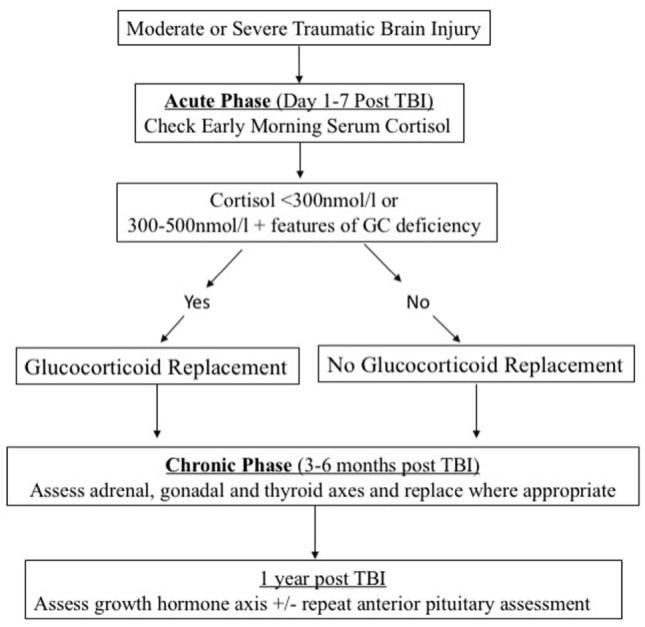
Traumatic brain injury (TBI) remains a major, global public health concern. Over the last 15 years, a significant body of evidence has emerged demonstrating that post-traumatic hypopituitarism (PTHP) is a common and clinically significant consequence of TBI. Non-specific symptomology and the lack of an agreed approach to screening for PTHP has led to significant under-diagnosis of this debilitating disease. In this review, we will discuss the frequency and clinical significance of acute and chronic PTHP as described in the current literature highlighting the evidence base for screening and hormone replacement in these patients. We will also offer a pragmatic approach to identifying relevant anterior pituitary dysfunction after TBI and a follow-up strategy for those patients. Specific controversies and remaining unanswered questions will be addressed.
创伤性脑损伤(TBI)仍然是一个重大的全球性公共卫生问题。在过去15年中,大量证据表明,创伤后垂体功能减退(PTHP)是TBI常见且具有临床意义的后果。非特异性症状以及缺乏公认的PTHP筛查方法导致这种使人衰弱的疾病诊断严重不足。在本综述中,我们将讨论当前文献中描述的急性和慢性PTHP的发生率及临床意义,强调这些患者筛查和激素替代的证据基础。我们还将提供一种实用的方法来识别TBI后相关的垂体前叶功能障碍以及针对这些患者的随访策略。将探讨具体的争议和尚未解答的问题。