Leger Thibault, Hininger-Favier Isabelle, Capel Frédéric, Geloen Alain, Rigaudière Jean-Paul, Jouve Chrystèle, Pitois Elodie, Pineau Gaelle, Vaysse Carole, Chardigny Jean-Michel, Michalski Marie-Caroline, Malpuech-Brugère Corinne, Demaison Luc
Université Clermont Auvergne, INRA, UNH, Unité de Nutrition Humaine, CRNH Auvergne, 58 rue Montalembert, BP 321, 63009 Clermont-Ferrand cedex 1, France.
2Univ. Grenoble Alpes, INSERM, LBFA, 38000 Grenoble, France.
Nutr Metab (Lond). 2018 Feb 13;15:15. doi: 10.1186/s12986-018-0252-4. eCollection 2018.
Obesity progressively leads to cardiac failure. Omega-3 polyunsaturated fatty acids (PUFA) have been shown to have cardio-protective effects in numerous pathological situations. It is not known whether rapeseed oil, which contains α-linolenic acid (ALA), has a similar protective effect. Omega-3 PUFAs are sensitive to attack by reactive oxygen species (ROS), and lipid peroxidation products could damage cardiac cells. We thus tested whether dietary refined rapeseed oil (RSO) associated with or without different antioxidants (vitamin E, coenzyme Q10 and canolol) is cardio-protective in a situation of abdominal obesity.
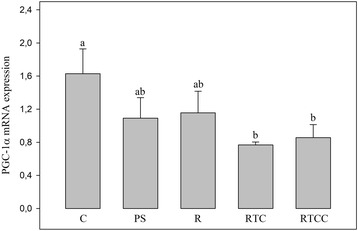
Sixty male Wistar rats were subdivided into 5 groups. Each group was fed a specific diet for 11 weeks: a low-fat diet (3% of lipids, C diet) with compositionally-balanced PUFAs; a high-fat diet rich in palm oil (30% of lipids, PS diet); the PS diet in which 40% of lipids were replaced by RSO (R diet); the R diet supplemented with coenzyme Q10 (CoQ10) and vitamin E (RTC diet); and the RTC diet supplemented with canolol (RTCC diet). At the end of the diet period, the rats were sacrificed and the heart was collected and immediately frozen. Fatty acid composition of cardiac phospholipids was then determined. Several features of cardiac function (fibrosis, inflammation, oxidative stress, apoptosis, metabolism, mitochondrial biogenesis) were also estimated.
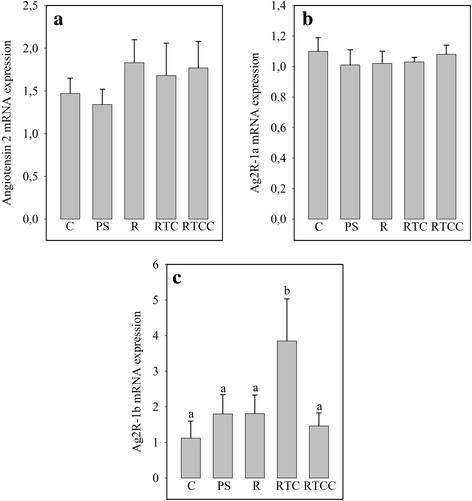
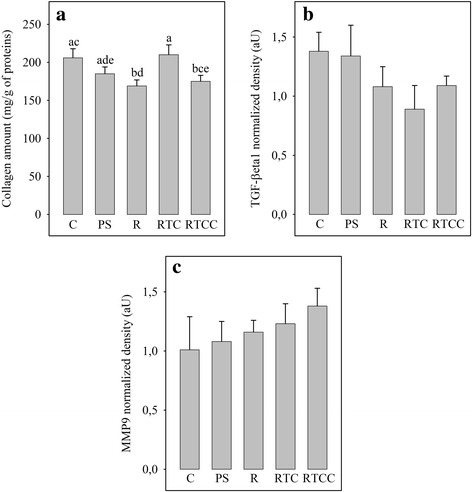
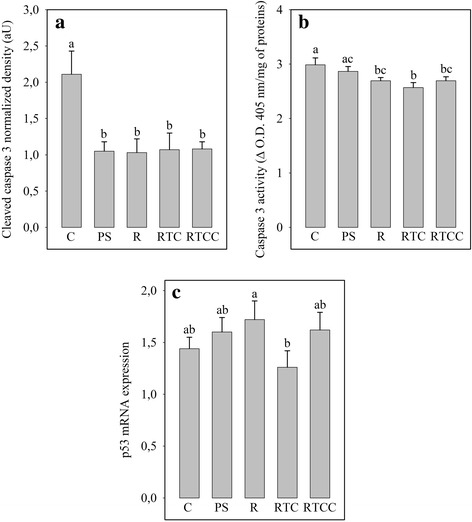
Abdominal obesity reduced cardiac oxidative stress and apoptosis rate by increasing the proportion of arachidonic acid (AA) in membrane phospholipids. Dietary RSO had the same effect, though it normalized the proportion of AA. Adding vitamin E and CoQ10 in the RSO-rich high fat diet had a deleterious effect, increasing fibrosis by increasing angiotensin-2 receptor-1b (Ag2R-1b) mRNA expression. Overexpression of these receptors triggers coronary vasoconstriction, which probably induced ischemia. Canolol supplementation counteracted this deleterious effect by reducing coronary vasoconstriction.
Canolol was found to counteract the fibrotic effects of vitamin E + CoQ10 on cardiac fibrosis in the context of a high-fat diet enriched with RSO. This effect occurred through a restoration of cardiac Ag2R-1b mRNA expression and decreased ischemia.
肥胖会逐渐导致心力衰竭。ω-3多不饱和脂肪酸(PUFA)已被证明在多种病理情况下具有心脏保护作用。尚不清楚含有α-亚麻酸(ALA)的菜籽油是否具有类似的保护作用。ω-3多不饱和脂肪酸对活性氧(ROS)的攻击敏感,脂质过氧化产物可能会损伤心脏细胞。因此,我们测试了与不同抗氧化剂(维生素E、辅酶Q10和菜籽酚)联合或不联合使用的膳食精炼菜籽油(RSO)在腹部肥胖情况下是否具有心脏保护作用。
将60只雄性Wistar大鼠分为5组。每组喂食特定饮食11周:一种低脂饮食(脂质含量为3%,C饮食),其多不饱和脂肪酸组成平衡;一种富含棕榈油的高脂饮食(脂质含量为30%,PS饮食);用RSO替代40%脂质的PS饮食(R饮食);补充辅酶Q10(CoQ10)和维生素E的R饮食(RTC饮食);以及补充菜籽酚的RTC饮食(RTCC饮食)。在饮食期结束时,处死大鼠并收集心脏,立即冷冻。然后测定心脏磷脂的脂肪酸组成。还评估了心脏功能的几个特征(纤维化、炎症、氧化应激、细胞凋亡、代谢、线粒体生物发生)。
腹部肥胖通过增加膜磷脂中花生四烯酸(AA)的比例降低了心脏氧化应激和细胞凋亡率。膳食RSO也有同样的效果,尽管它使AA的比例正常化。在富含RSO的高脂饮食中添加维生素E和CoQ10有有害作用,通过增加血管紧张素2受体-1b(Ag2R-1b)mRNA表达增加纤维化。这些受体的过表达会引发冠状动脉收缩,这可能会导致缺血。补充菜籽酚通过减轻冠状动脉收缩抵消了这种有害作用。
发现在富含RSO的高脂饮食背景下,菜籽酚可抵消维生素E + CoQ10对心脏纤维化的纤维化作用。这种作用是通过恢复心脏Ag2R-1b mRNA表达和减少缺血而发生的。