Zhang Jue, Xu Meng, Gao Han, Guo Jin-Chen, Guo Yu-Lin, Zou Miao, Wu Xu-Feng
Department of Gynecology, Maternal and Child Health Hospital of Hubei Province, Wuhan, Hubei 430070, P.R. China.
Shantou University Medical College, Shantou, Guangdong 515041, P.R. China.
Oncol Lett. 2018 Mar;15(3):3669-3675. doi: 10.3892/ol.2018.7778. Epub 2018 Jan 12.
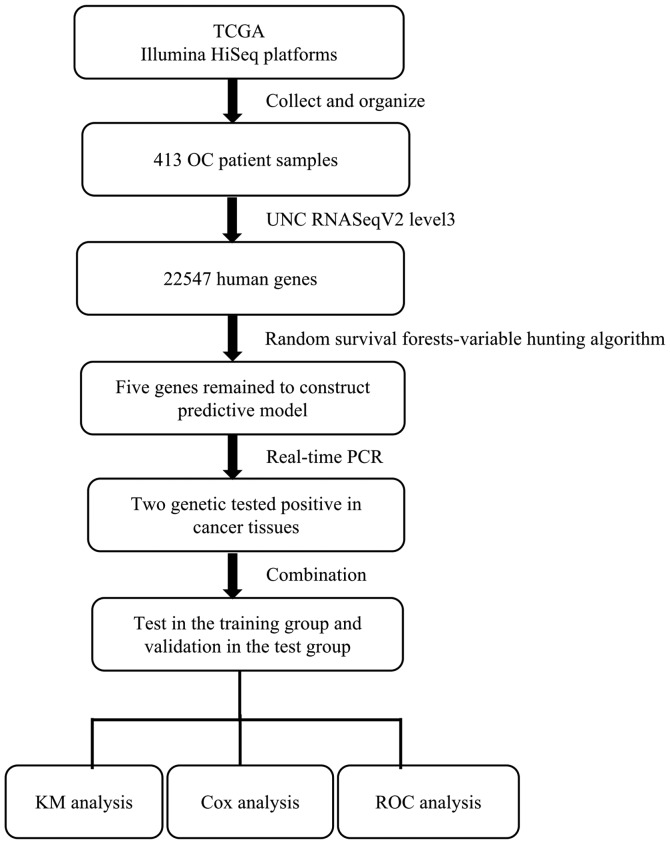
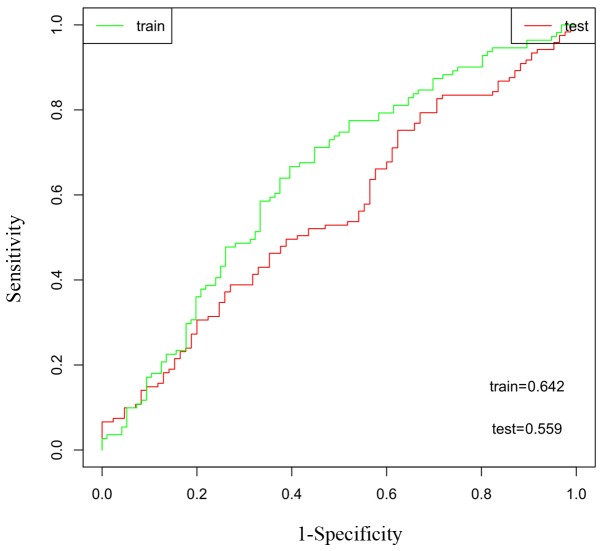
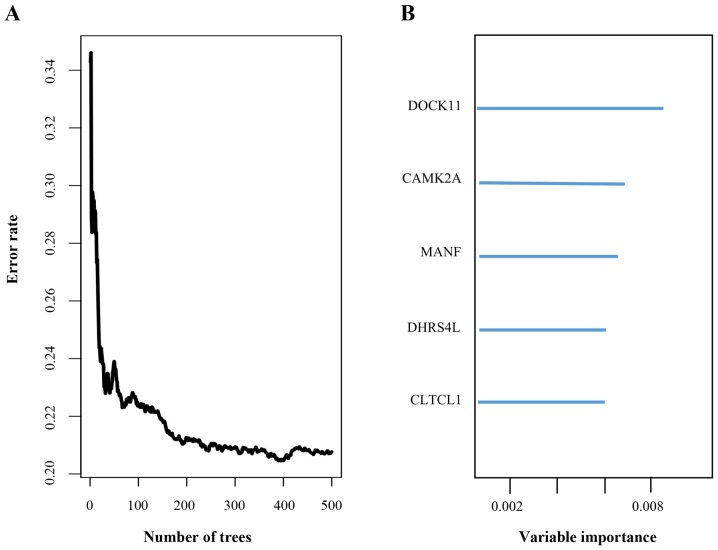
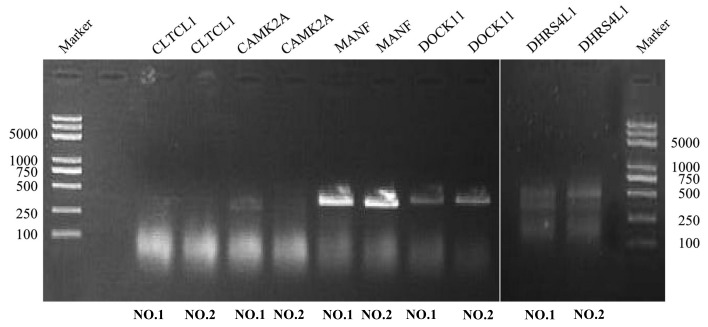
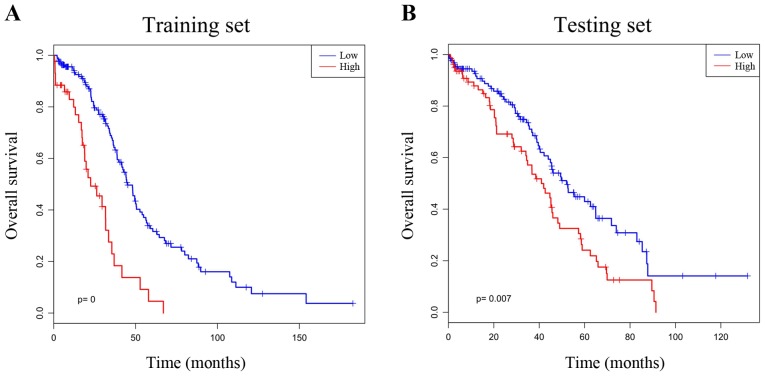
Ovarian cancer is the seventh most common type of cancer and the eighth most common cause of cancer-associated mortality among women. A number of studies have hypothesized that the expression status of certain genes may be used to predict prognosis in ovarian cancer. In the present study, the RNA expression data from next-generation sequencing and the clinical information of 413 patients from The Cancer Genome Atlas dataset was downloaded to identify the association between gene-expression level and the survival time of the patients with ovarian serous cystadenocarcinoma. A five-gene model was predicted to be significantly associated with patient survival in ovarian serous cystadenocarcinoma by using random survival forests variable hunting algorithm and Cox analysis. A total of two genes, mesencephalic astrocyte-derived neurotrophic factor and dedicator of cytokinesis 11, of the predicted five genes demonstrated positive expression in the ovarian serous cystadenocarcinoma cancer tissues by polymerase chain reaction analysis. Kaplan-Meier and Receiver Operating Characteristic analysis confirmed that the model of the two genes exhibited high sensitivity and specificity to predict the prognostic survival of patients. In conclusion, the expression of the two genes in the two-gene model was associated with the prognostic outcomes of patients with ovarian serous cystadenocarcinoma; the model demonstrated potential as a novel prognostic indicator, which may have important clinical significance.
卵巢癌是女性中第七常见的癌症类型,也是癌症相关死亡的第八大常见原因。许多研究推测,某些基因的表达状态可用于预测卵巢癌的预后。在本研究中,下载了来自癌症基因组图谱数据集的413例患者的下一代测序RNA表达数据和临床信息,以确定基因表达水平与卵巢浆液性囊腺癌患者生存时间之间的关联。通过使用随机生存森林变量搜索算法和Cox分析,预测了一个五基因模型与卵巢浆液性囊腺癌患者的生存显著相关。通过聚合酶链反应分析,预测的五个基因中的两个基因,即中脑星形胶质细胞衍生的神经营养因子和胞质分裂 dedicator 11,在卵巢浆液性囊腺癌组织中呈阳性表达。Kaplan-Meier和受试者工作特征分析证实,这两个基因的模型在预测患者的预后生存方面表现出高敏感性和特异性。总之,双基因模型中两个基因的表达与卵巢浆液性囊腺癌患者的预后结果相关;该模型显示出作为一种新型预后指标的潜力,可能具有重要的临床意义。