Tarıkçı Kılıç Ebru, Aydın Gaye
a Anesthesiology Department , Ümraniye Training and Research Hospital , İstanbul , Turkey.
b Anesthesiology Department , Tepecik Training and Research Hospital , İzmir , Turkey.
Libyan J Med. 2018 Dec;13(1):1436845. doi: 10.1080/19932820.2018.1436845.
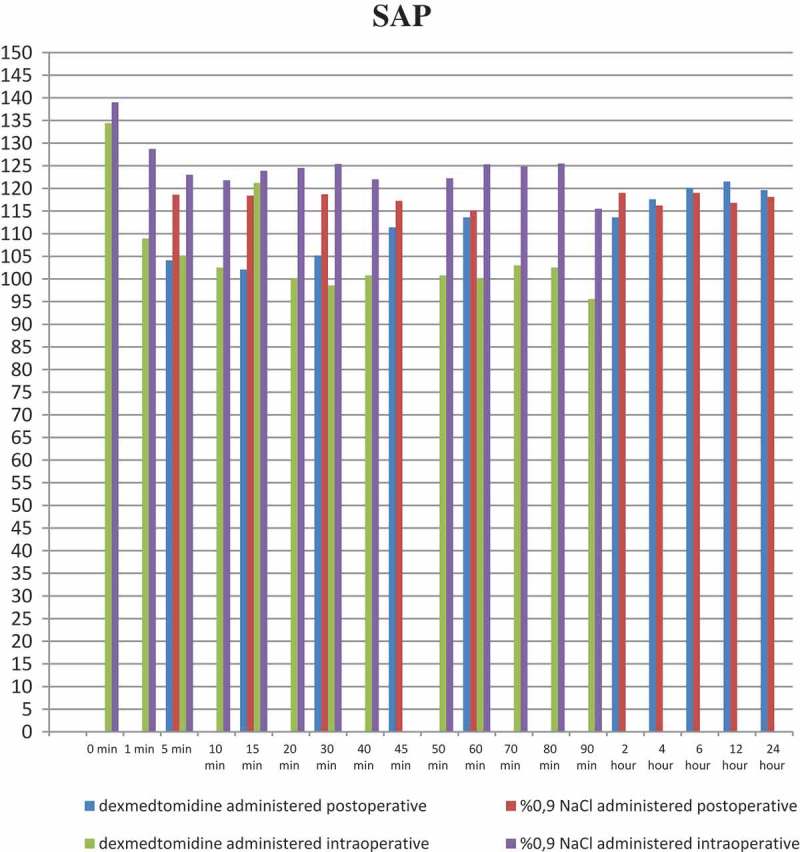
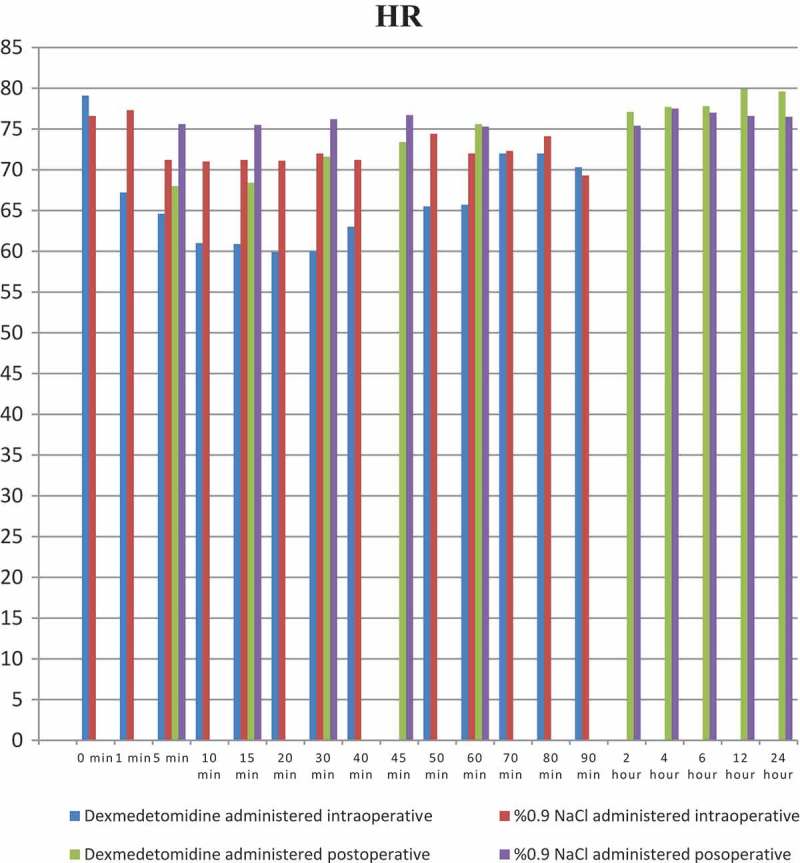
We evaluated the effects of intravenous dexmedetomidine during spinal anesthesia on hemodynamics, respiratory rate, oxygen saturation, sedpain, and compared them with those of saline infusion. Sixty American Society of Anesthesiologists physical status I and II cases were randomly divided into two groups. Patients were connected to the monitor after premedication, and spinal anesthesia was administered. Sensory and motor blockades were assessed using pinprick test and Bromage scale, respectively. Group I received dexmedetomidine infusion and Group II received saline infusion. Throughout the infusion process, hemodynamic data, respiratory rate, oxygen saturation, sedation, pain, Bromage score, amnesia, bispectral index, and side effects were recorded. Postoperative hemodynamic measurements, oxygen saturation, sedation, pain scores were obtained. Sedation and pain were evaluated using the Ramsay and visual analog scales, respectively. Analgesics were administered in cases with high scores on the visual analog scale. Postoperative analgesic consumption, side effects, treatments were recorded. No significant differences were found between the groups with respect to oxygen saturation, respiratory rate, pain, and side effects in the intraoperative period. Time to onset of sensorial block, maximum sensorial block, onset of motor block, and maximum motor block; bispectral index values; and apex heartbeat until 80 min of infusion, systolic arterial blood pressure until 90 min, and diastolic arterial blood pressure until 50 min were lower, whereas amnesia and sedation levels were higher in dexmedetomidine group. Postoperative pain and analgesic requirement were not different. Apex heartbeat at 15 min and systolic arterial blood pressure at 30 min were lower and sedation scores were higher in the dexmedetomidine infusion group. We demonstrated dexmedetomidine infusion had a hemodynamic depressant effect intraoperatively whereas it had no significant effect on peripheral oxygen saturation, respiratory rate, visual analog scale scores, and side effects. Dexmedetomidine infusion enhanced motor and sensory blockade quality and induced amnesia and sedation.
我们评估了脊髓麻醉期间静脉输注右美托咪定对血流动力学、呼吸频率、血氧饱和度、镇静和疼痛的影响,并将其与输注生理盐水的情况进行比较。60例美国麻醉医师协会身体状况I级和II级的患者被随机分为两组。患者在术前用药后连接监测仪,然后实施脊髓麻醉。分别使用针刺试验和布罗玛杰分级评估感觉和运动阻滞情况。I组接受右美托咪定输注,II组接受生理盐水输注。在整个输注过程中,记录血流动力学数据、呼吸频率、血氧饱和度、镇静、疼痛、布罗玛杰评分、失忆、脑电双频指数及副作用。获得术后血流动力学测量值、血氧饱和度、镇静和疼痛评分。分别使用拉姆齐评分和视觉模拟评分评估镇静和疼痛情况。视觉模拟评分高的患者给予镇痛药。记录术后镇痛药消耗量、副作用及治疗情况。两组在术中血氧饱和度、呼吸频率、疼痛和副作用方面未发现显著差异。感觉阻滞起效时间、最大感觉阻滞、运动阻滞起效时间和最大运动阻滞;脑电双频指数值;以及输注80分钟时的最高心率、输注90分钟时的收缩动脉血压和输注50分钟时的舒张动脉血压,右美托咪定组均较低,而失忆和镇静水平较高。术后疼痛和镇痛需求无差异。右美托咪定输注组在15分钟时的最高心率和30分钟时的收缩动脉血压较低,镇静评分较高。我们证明,右美托咪定输注在术中具有血流动力学抑制作用,而对周围血氧饱和度、呼吸频率、视觉模拟评分及副作用无显著影响。右美托咪定输注可提高运动和感觉阻滞质量,并引起失忆和镇静。