Department of Anaesthesia and Intensive Care, The Chinese University of Hong Kong, Hong Kong, China.
Institute of Digestive Diseases and State Key Laboratory of Digestive Diseases, LKS Institute of Health Sciences and Department of Medicine and Therapeutics, The Chinese University of Hong Kong, Hong Kong, China.
Sci Rep. 2018 Feb 19;8(1):3287. doi: 10.1038/s41598-018-21573-w.
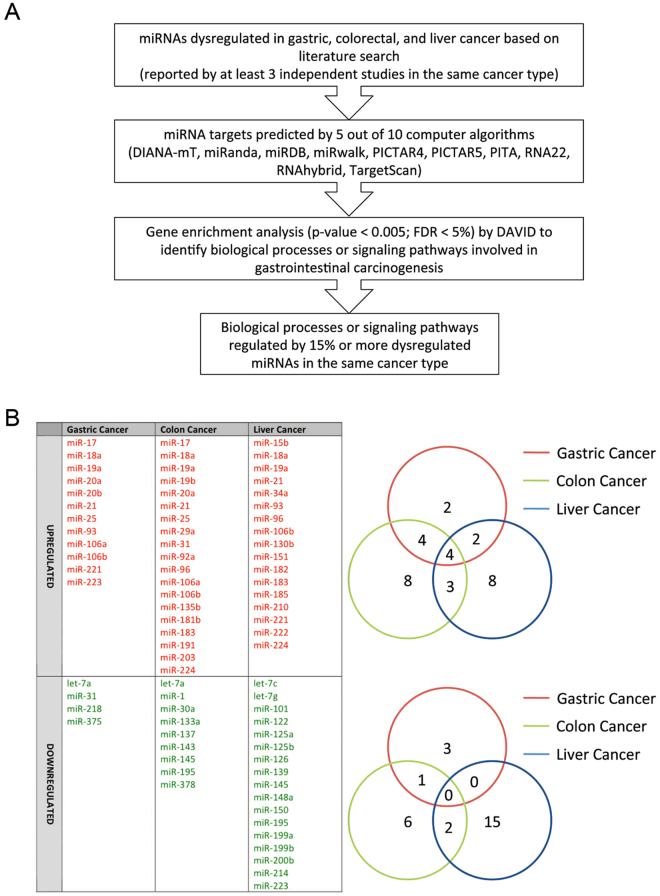
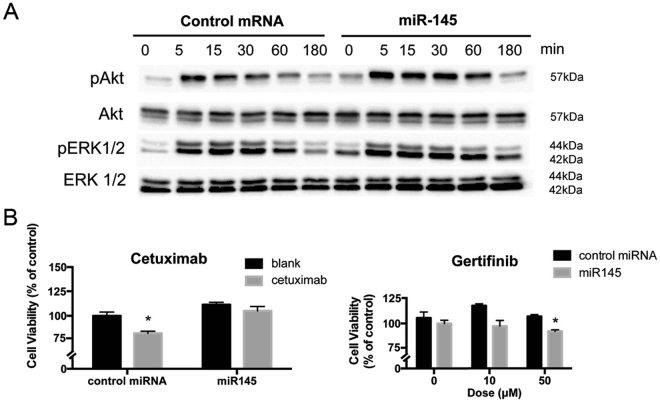
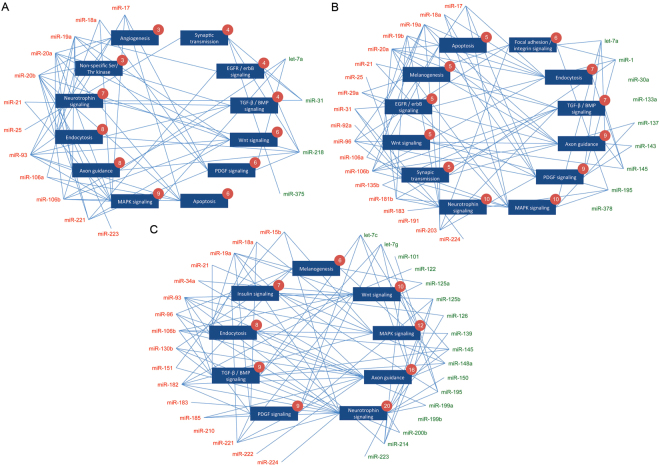
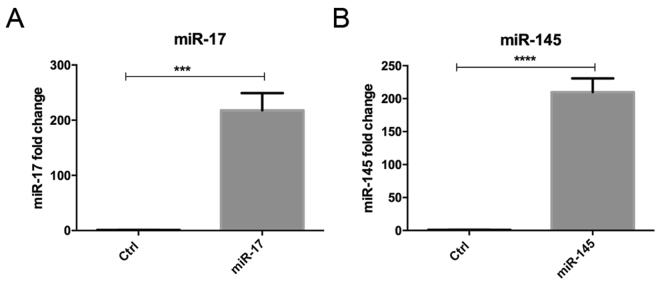
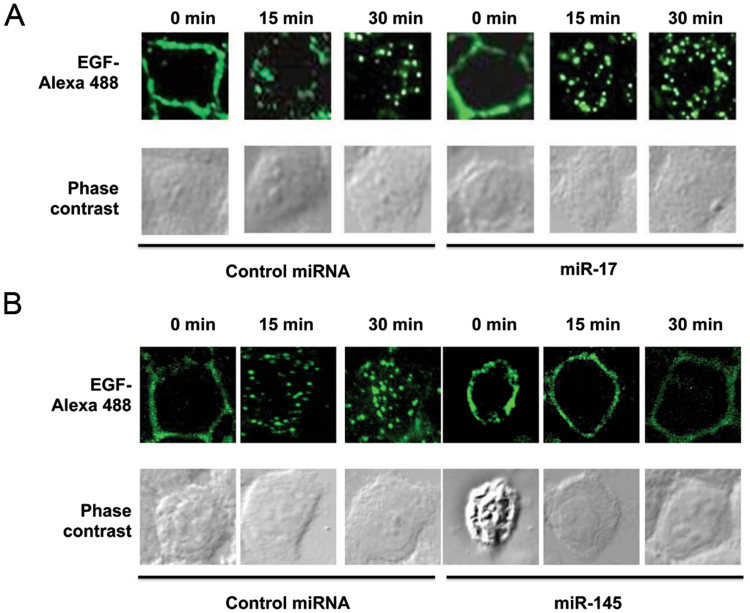
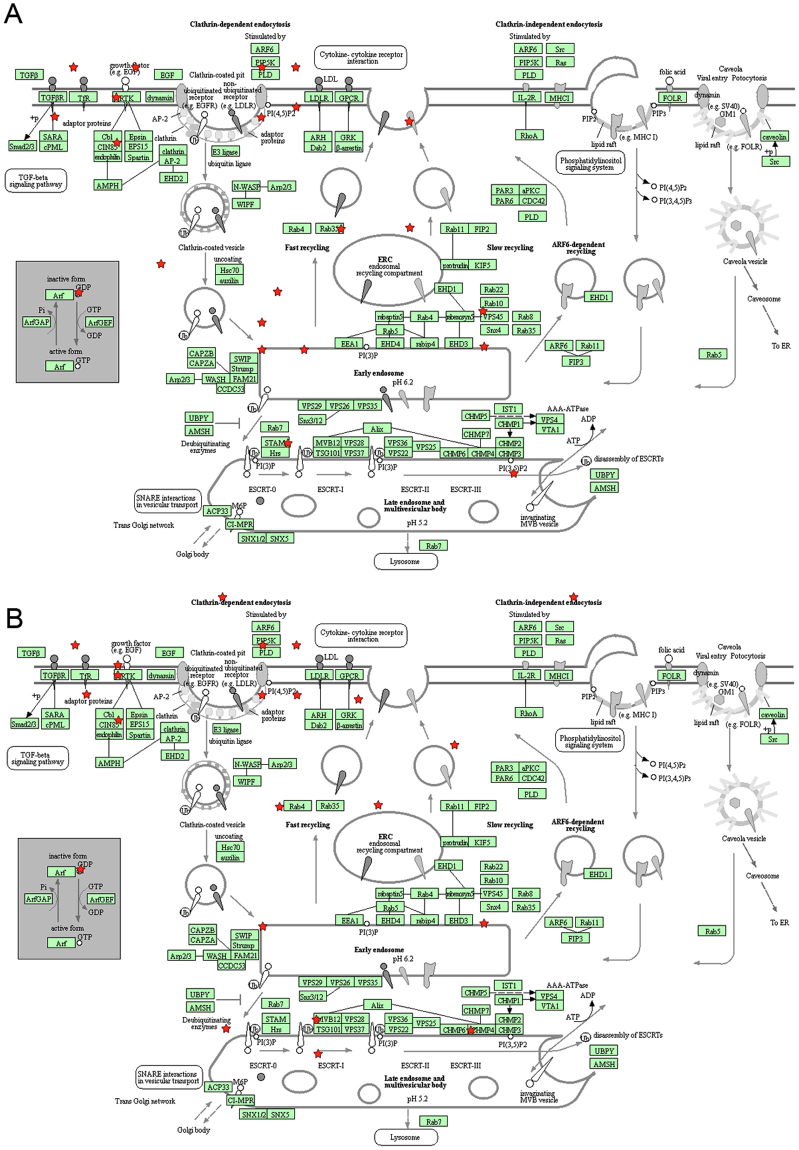
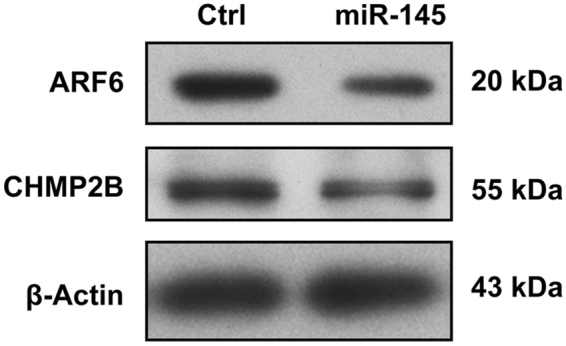
MicroRNAs are frequently dysregulated in human neoplasms, including gastrointestinal cancers. Nevertheless, the global influence of microRNA dysregulation on cellular signaling is still unknown. Here we sought to elucidate cellular signaling dysregulation by microRNAs in gastrointestinal cancers at the systems biology level followed by experimental validation. Signature dysregulated microRNAs in gastric, colorectal and liver cancers were defined based on our previous studies. Targets of signature dysregulated miRNAs were predicted using multiple computer algorithms followed by gene enrichment analysis to identify biological processes perturbed by dysregulated microRNAs. Effects of microRNAs on endocytosis were measured by epidermal growth factor (EGF) internalization assay. Our analysis revealed that, aside from well-established cancer-related signaling pathways, several novel pathways, including axon guidance, neurotrophin/nerve growth factor signaling, and endocytosis, were found to be involved in the pathogenesis of gastrointestinal cancers. The regulation of EGF receptor (EGFR) endocytosis by two predicted miRNAs, namely miR-17 and miR-145, was confirmed experimentally. Functionally, miR-145, which blocked EGFR endocytosis, prolonged EGFR membrane signaling and altered responsiveness of colon cancer cells to EGFR-targeting drugs. In conclusion, our analysis depicts a comprehensive picture of cellular signaling dysregulation, including endocytosis, by microRNAs in gastrointestinal cancers.
microRNAs 在人类肿瘤中经常失调,包括胃肠道癌症。然而,microRNA 失调对细胞信号的全局影响仍不清楚。在这里,我们试图在系统生物学水平上阐明胃肠道癌症中 microRNA 失调对细胞信号的影响,然后进行实验验证。基于我们之前的研究,定义了胃癌、结直肠癌和肝癌中特征失调的 microRNAs。使用多种计算机算法预测特征失调 microRNA 的靶标,然后进行基因富集分析,以确定受 microRNA 失调影响的生物学过程。通过表皮生长因子(EGF)内化测定测量 microRNAs 对内吞作用的影响。我们的分析表明,除了已确立的癌症相关信号通路外,还发现了几个新的通路,包括轴突导向、神经营养因子/神经生长因子信号转导和内吞作用,参与了胃肠道癌症的发病机制。通过实验证实了两个预测的 microRNAs,即 miR-17 和 miR-145,对 EGF 受体(EGFR)内吞作用的调节。在功能上,miR-145 阻断 EGFR 内吞作用,延长 EGFR 膜信号,并改变结肠癌细胞对 EGFR 靶向药物的反应性。总之,我们的分析描绘了一幅 microRNAs 在胃肠道癌症中失调的全面细胞信号图,包括内吞作用。